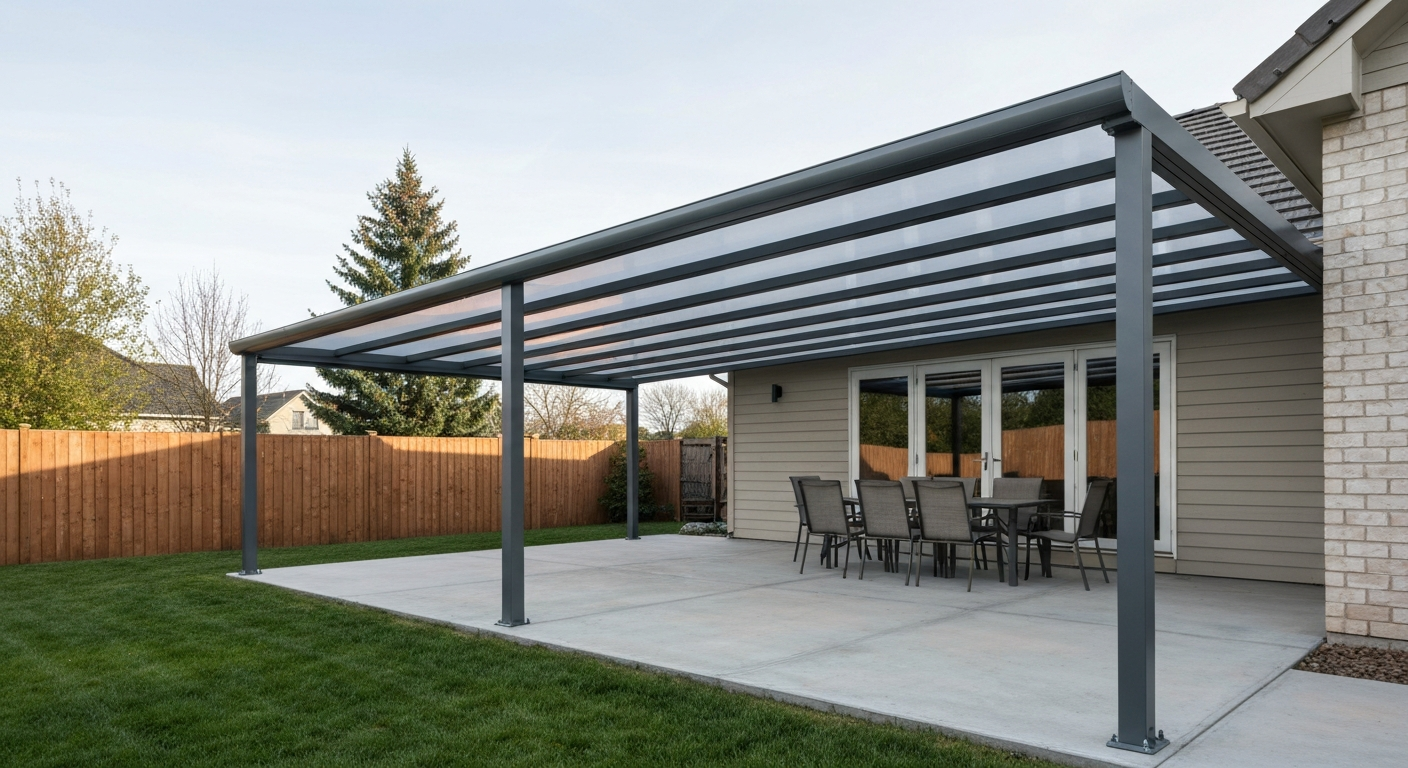
The Palram Sierra patio cover is a solid, DIY-friendly aluminum-and-polycarbonate structure that delivers genuine weather protection at a mid-range price ($2,000–$2,700 for popular sizes). Sierra Patio Covers | Canopia By Palram (product listing) notes that Palram/Canopia markets the Sierra patio cover in many preset sizes (examples: 7.5×7.5 ft up to 10×32 ft), multiple structure colors (Gray, White) and glazing options (clear/grey/bronze/opaque twin‑wall or multi‑wall polycarbonate). It handles moderate snow loads (up to 50 kg/m² on standard Sierra models, and up to 100 kg/m² on Cabrio variants per manufacturer specs), resists UV degradation well, and assembles without specialized trade skills. That said, it is not the right fit for every homeowner: the polycarbonate panels can rattle in high winds, shipping logistics occasionally frustrate buyers, and contractor-installed systems like Elitewood will outlast it in demanding climates. Read on for the full picture.
Palram Sierra Patio Cover Reviews: Models, Durability & Value

Quick Take: What You Need to Know Before You Buy
The Palram Sierra is a well-engineered kit patio cover aimed at homeowners who want a permanent-looking roof over their deck or patio without paying contractor labor rates. It scores best on UV protection, aluminum frame quality, and modular sizing flexibility. It scores lower on panel noise in wind and the patience required to assemble dozens of small parts. For buyers in mild-to-moderate climates who want a clean modern look and are comfortable with a weekend DIY project, it represents strong value. For buyers in heavy-snow regions or those who want zero maintenance and a lifetime warranty, contractor-installed alternatives deserve a serious look.
- Verdict: Recommended for DIYers in mild-to-moderate climates
- Best for: Homeowners wanting a semi-permanent polycarbonate roof without contractor costs
- Skip if: You live in a high-snow or severe-wind region, or strongly dislike multi-part assembly
- Price range: ~$2,032 (10×18 ft) to ~$2,608 (10×30 ft) at major U.S. retailers
- Warranty: 7-year limited on Cabrio models; check specific model for exact coverage
- Overall rating: 4.0 / 5.0
Palram Sierra Product Overview: Models, Materials, and Sizes
Palram, operating its patio cover line under the Canopia by Palram brand, offers the Sierra in a wide range of preset footprints, from 7.5×7.5 ft on the compact end up to 10×32 ft for larger outdoor spaces. The structural frame is powder-coated aluminum, available in Gray or White. Roof panels are polycarbonate, and buyers choose from several glazing options: clear, grey-tinted, bronze-tinted, or opaque twin-wall and multi-wall polycarbonate. Twin-wall panels are standard across most configurations; multi-wall panels appear on larger or premium variants and provide better insulation value and greater panel rigidity.
The Sierra Cabrio is the upgraded variant in the line. It adds a screw-free sliding glazing system (panels slot in without exposed fasteners on the face), integrated adjustable gutter heads for drainage, and, according to Canopia's product pages, an enhanced structural rating: tested to withstand winds up to 90 km/h (about 56 mph) and snow loads up to 100 kg/m² (about 20.5 lb/ft²). The base Sierra Declaration of Performance (DoP No. 0104, dated January 1, 2023) references EN1090/EN1990/EN1991/EN1999 European structural standards and lists a maximum wind zone of 24.5 m/s and snow zone of 0.50 kN/m² (50 kg/m²). Always cross-check the specific model's documentation against your local climate and code requirements, because the base Sierra and the Cabrio carry different certified limits.
The EZ-Link extension kit is a genuine plus for anyone thinking long-term. Palram publishes official assembly PDFs and parts lists for linking and expanding existing Sierra structures, so if you start with a 10×18 and later want to extend to a 10×24, the system accommodates that rather than requiring a full replacement. That kind of modular thinking is not common across all kit-cover brands.
Key Specs and Notable Features
| Spec | Sierra (Base) | Sierra Cabrio |
|---|---|---|
| Frame material | Powder-coated aluminum | Powder-coated aluminum |
| Available colors | Gray, White | Gray, White |
| Panel options | Twin-wall polycarbonate (clear/grey/bronze/opaque) | Twin-wall or multi-wall polycarbonate |
| Size range | 7.5×7.5 ft up to 10×32 ft | Varies by model (e.g., 10×14, 10×18 ft) |
| Max wind rating | 24.5 m/s (~55 mph, DoP certificate) | 90 km/h (~56 mph, per product page) |
| Max snow load | 0.50 kN/m² (~10.2 lb/ft² / 50 kg/m²) | 100 kg/m² (~20.5 lb/ft²) |
| UV protection | 100% (UV-protected polycarbonate panels) | 100% (UV-protected polycarbonate panels) |
| Glazing attachment | Standard fastened system | Screw-free sliding system |
| Gutter system | Standard | Integrated adjustable gutter heads |
| Expandability | EZ-Link extension kit available | EZ-Link extension kit available |
| Warranty | Varies by model (see warranty section) | 7-year limited |
| Fire resistance class | Class A (per DoP EN1090) | Class A |
Performance Ratings: Weather Resistance, UV Protection, and Structural Strength
How These Ratings Are Determined
The ratings below combine three inputs: published manufacturer specifications and certified declarations (including Palram's DoP No. 0104 and official product pages), aggregated verified user reviews from retailer sites like Home Depot and Lowe's, and observations from DIY community forums and independent inspection notes. Each performance dimension is scored on a 1-to-5 scale. No single source drives the score; where user experience contradicts manufacturer claims, the discrepancy is noted and factored down.
Weather Resistance
Rating: 3.8 / 5. The aluminum frame holds up well against rain and humidity. The polycarbonate panels are inherently rust-proof and resist moisture intrusion at joints when silicone sealant is applied correctly during assembly (the manual requires sealant at multiple points). The vulnerability is wind: user reports on Reddit and retailer review sections include complaints about panels rattling in sustained wind, and a smaller number of reports describe panels shifting or dislodging in severe storms. The Sierra's certified wind limit of 24.5 m/s for the base model is adequate for most continental U.S. locations but worth checking against your local design wind speed, especially in coastal or open-terrain settings. The Cabrio's published 90 km/h threshold gives more confidence in windier zones. Snow performance on base Sierra models is moderate at 50 kg/m² (about 10.2 lb/ft²); the manual explicitly warns to keep the roof clear of heavy snow accumulation and debris, so passive snow management is not something you can ignore in northern climates.
UV Protection
Rating: 4.7 / 5. This is where the Sierra earns its strongest marks. Palram's polycarbonate panels are UV-protected at the manufacturing level, and the brand has a well-established track record in greenhouse polycarbonate. In practice, furniture and surfaces beneath the Sierra panels are shielded from UV degradation, and the panels themselves resist yellowing better than budget acrylic or thin plastic alternatives. Owners in sunny climates specifically call out UV blocking as a reason they chose polycarbonate over wood or fabric pergola options. A minor demerit: bronze and grey-tinted panels reduce light transmission substantially, so buyers in dim climates should preview both clear and tinted options before committing.
Structural Strength
Rating: 3.9 / 5. The aluminum extrusions feel substantial once the structure is fully assembled and properly anchored. Palram's EN1090-referenced Declaration of Performance provides a level of certified documentation that most DIY kit brands do not publish, which is a meaningful transparency point. The caveat is that structural integrity is heavily dependent on correct installation: the manual is explicit that anchoring to a solid, level base is required, and that improper or incomplete anchoring voids the warranty. Buyers who rush or skip the anchoring steps are the primary source of negative structural reports. Properly installed, owners report the frame feels rigid and shows no flex over multiple years of use.
Construction and Fit Quality: Frame, Panels, Hardware, and Finish
The aluminum frame components are extruded and powder-coated, not painted sheet metal. That distinction matters for longevity: powder coating bonds at a higher temperature and resists chipping and fading better than spray-applied finishes. Users consistently report that bolt holes align well and that the fit between extruded components is tight. This is not a given in the kit-cover market; several competing brands draw complaints about misaligned holes and inconsistent tolerances.
The polycarbonate panels are pre-cut to size for each kit configuration, which eliminates field cutting for most standard installations. The twin-wall profile adds some insulating dead air, though this is a patio cover, not an insulated roof, so do not expect meaningful thermal performance in extreme cold. Multi-wall panels on Cabrio models are noticeably stiffer and less prone to the minor flexing that users of twin-wall panels occasionally mention.
Hardware quality is one area where reviewers are split. The supplied fasteners and brackets are functional and purpose-designed for the system, but several users mention the sheer number of small components: screws, end caps, sealing strips, connector clips, and gutter sections. Nothing is obviously cheap, but the volume of parts means that a single lost or missing piece during assembly can stall the project. A pre-assembly parts audit against the packing list is time well spent. Isolated reports of incorrect or missing parts in shipments appear in retailer Q&A sections, and Canopia's customer service responsiveness is rated as adequate but not exceptional in user feedback threads.
How Hard Is It to Install? Tools, Time, and Honest Expectations
Palram markets the Sierra as designed for self-assembly by two people, and that description is broadly accurate, though 'self-assembly' covers a wide range of difficulty. Most buyers without prior patio cover experience should budget a full weekend: one day for frame assembly and one day for panel installation, anchoring, and sealing. Experienced DIYers who have assembled similar kit structures report finishing the main work in half a day, but they are the exception. For a 10×30 ft configuration, plan on the longer end of that range.
The assembly instructions are detailed and include diagrams, but the manual is dense. Palram provides PDF manuals on the Canopia website, and downloading and pre-reading the manual before the kit arrives is one of the most useful things you can do. Community forum participants who struggled most with the installation consistently mention attempting to work from the paper copy alone rather than cross-referencing digital diagrams.
Tools You Will Need
- SDS hammer drill with masonry bits (required for anchoring to concrete or brick walls)
- Standard power drill and drill bit set
- Torque/driver bits matching supplied fastener heads
- Rubber mallet (for seating panel profiles without cracking)
- Level (24-inch minimum; longer preferred for rafter alignment)
- Tape measure
- Ladder (two are ideal for rafter installation)
- Silicone sealant gun and compatible neutral-cure silicone
- Safety glasses and work gloves
- Second person for rafter and panel steps
Installation Checklist and Common DIY Pitfalls
- Audit every part against the packing list before you start assembly
- Download and read the full manual PDF before opening boxes
- Confirm your mounting surface is solid, level, and clean
- Mark and pre-drill all wall anchor points before positioning the ledger beam
- Check level on the ledger/wall plate in both axes before anchoring permanently
- Assemble the front beam and posts on the ground before raising
- Have a second person present for raising rafters and setting posts
- Apply silicone sealant at all panel joints, end caps, and wall connections per manual
- Seat polycarbonate panels fully into profiles before fastening — partial seating causes rattling
- Install gutter sections and test drainage direction with a hose before finishing
- Anchor all posts to the ground per manual requirements (required for warranty validity)
- Perform a final level check on the completed frame before panel installation
Pitfalls That Catch Installers Off Guard
- Skipping the parts audit: a missing bracket discovered mid-assembly means stopping the project
- Under-drilling wall anchors into soft or hollow masonry, which creates an unstable ledger connection
- Not applying silicone sealant at every required joint, leading to water infiltration and panel noise
- Installing panels on a windy day before the frame is fully anchored and rigid
- Overtightening polycarbonate panel fasteners, which causes cracking along the panel edge
- Ignoring slope/drainage direction, resulting in water pooling on the roof
- Attempting the full install solo — the rafter and panel steps genuinely require two people
Maintenance Needs and Long-Term Durability
The Sierra's aluminum frame is essentially maintenance-free beyond keeping it clean. The powder coat does not require repainting under normal conditions, and aluminum will not rust. The polycarbonate panels are where ongoing attention pays off. Palram's care instructions specify cleaning with mild detergent and cold water rinse, using only a soft cloth or sponge. Avoid acetone, abrasive pads, aromatic solvents, or chlorine-based cleaners, all of these degrade polycarbonate surfaces and, if they compromise the panel coating, will void any warranty claim related to panel performance.
Gutter channels should be cleared of leaf debris and organic buildup at least twice a year, and in snowy climates after each significant snow event. The manufacturer warning is explicit: heavy snow accumulation on the roof creates unsafe structural loads and must be cleared. A soft roof rake (not a metal shovel or anything abrasive) is the appropriate tool. If panels are cleaned and gutters are maintained, user reports suggest the polycarbonate maintains optical clarity without significant yellowing for at least five to seven years under normal UV exposure, which aligns with the Cabrio's 7-year warranty period.
Maintenance Checklist
- Clean polycarbonate panels with mild detergent and cold water (soft cloth only) — twice a year or as needed
- Inspect and clear gutter channels of leaves and debris — spring and fall at minimum
- Clear snow from roof panels after heavy snowfall using a soft roof rake
- Inspect all silicone sealant joints annually; reapply where cracking or separation is visible
- Check post anchor fasteners annually and re-torque if any movement is detected
- Inspect panel seating in profiles; reseat and re-seal any panels that have shifted
- Check powder coat for chips or scratches; touch up with compatible aluminum paint to prevent oxidation at damaged spots
- Confirm gutter drainage direction is clear and water flows freely to downspout
Price Range, Options, and Value-for-Money
At major U.S. retailers (as of mid-2026), the Sierra 10×18 ft lists at approximately $2,032 at Home Depot, and the 10×30 ft sits around $2,608 at Lowe's. These prices include the full kit but not installation labor, ancillary tools, or local permit costs. Smaller footprints naturally come in lower. These prices put the Sierra in roughly the same cost band as other DIY aluminum kit systems: comparable DIY aluminum solid-top kits from vendors like Alumakits are priced around $2,399 for a 10×20 configuration in current market comparisons. So the Sierra is not a budget product, but it is also not overpriced relative to the DIY kit category.
The value proposition holds when you account for what you are getting: a certified structural system with published EN1090 documentation, UV-protective polycarbonate panels, an aluminum frame with a solid track record, and the ability to expand the structure later via EZ-Link kits. Where the value narrative weakens is against contractor-installed aluminum systems like Elitewood, which often span wider projections, carry lifetime warranties, and are installed by experienced crews in a single day. If you factor in your own labor time, a Palram Sierra weekend project is a genuine investment of effort, not just money. For buyers who enjoy DIY and want to control the project, that effort is part of the appeal. For buyers who want it done, the cost gap between the Sierra kit and a professionally installed alternative narrows more than it first appears.
Warranty, Returns, and What the Coverage Actually Means
The Sierra Cabrio carries a 7-year limited warranty per Canopia's product pages. Other Sierra variants in the Palram/Canopia lineup are covered by limited warranties that range from 10 to 12 years for certain product families, but the duration and coverage terms are model-specific, so you need to verify the warranty document for the exact SKU you are purchasing. Do not assume the longest warranty number you see online applies to your specific configuration.
The warranty conditions are where many buyers get caught out. Palram explicitly requires correct installation and complete anchoring for warranty validity. If you assemble the structure but skip the ground anchoring, or if you install on an unlevel or unsuitable base, you have voided the structural warranty before anything even goes wrong. The manual is clear on this; the fine print in the warranty document mirrors it. Returns through retailers like Home Depot and Lowe's follow standard large-item policies and typically require the product to be uninstalled and in original packaging, which is essentially impractical once the structure is erected. The realistic position is: inspect the parts carefully on arrival, report any damage or shortages before assembly begins, and treat the purchase as final once the posts go up.
What Owners and Experts Actually Report
Aggregating reviews across Lowe's, Home Depot, Reddit's r/HomeImprovement, and Trustpilot, a clear pattern emerges. Praise clusters around three things: the quality and alignment of the extruded aluminum components, the clean finished appearance of the installed cover, and the UV-blocking performance of the polycarbonate panels. These positives appear consistently across different climate zones and installer skill levels.
Complaints also cluster around predictable themes. The assembly time is consistently underestimated; buyers who expected a one-day project frequently report finishing over two days. Parts management is a genuine friction point: the volume of small components, clips, and end caps means the assembly floor looks chaotic even for organized installers. Shipping and logistics generate a steady stream of frustration: damaged panels in transit, incorrect parts included, and slow customer service response when replacements are needed. In severe weather, the panels are the weak link. A minority of reviewers in high-wind areas report panel rattling as an ongoing annoyance, and a smaller number report panels dislodging in intense storms (though these appear to be outliers concentrated in areas exceeding the product's certified wind ratings).
From a professional inspection standpoint, the frame engineering is considered competent for the price tier. The publication of a formal Declaration of Performance (DoP) referencing European structural standards is a level of documentation that many kit-cover competitors do not provide, and experienced contractors who have evaluated the Sierra note that the extrusion profiles and bracket system are more robust than typical imported aluminum gazebo or pergola kits in the same price range. The consensus professional critique is that polycarbonate panel systems of this type are inherently noisier and less thermally efficient than solid aluminum pan covers, and that for permanent installations in demanding climates, dealer-installed solid systems remain the more durable long-term choice.
Pros and Cons at a Glance
- PRO: Wide range of preset sizes, from compact 7.5×7.5 ft to large 10×32 ft
- PRO: 100% UV protection from polycarbonate panels; clear, tinted, and opaque options available
- PRO: Powder-coated aluminum frame with well-aligned components and solid extrusion quality
- PRO: Published EN1090 Declaration of Performance — certified structural limits are documented
- PRO: Modular EZ-Link expansion system allows future extension without full replacement
- PRO: Cabrio variant adds screw-free sliding glazing and integrated gutters for a cleaner install
- PRO: DIY-accessible with detailed manuals and 2-person assembly design
- PRO: Competitive pricing relative to other DIY aluminum kit systems
- CON: Polycarbonate panels can rattle in high winds, especially if not seated and sealed perfectly
- CON: Base Sierra snow load rating (50 kg/m²) is insufficient for heavy-snow climates without active clearing
- CON: Assembly involves a high volume of small parts; missing pieces can stall the project
- CON: Shipping damage and incorrect parts reports are more frequent than expected for a premium-priced kit
- CON: Warranty validity depends on correct installation and anchoring — voids easily with skipped steps
- CON: Not truly a solo install; two people are realistically necessary for key assembly steps
- CON: Returns are impractical once assembled; inspect everything before you start building
Palram Sierra vs. the Competition
Placing the Sierra against other options in this space shows both where it earns its price and where it falls short. The comparison below covers the five competitors most relevant to homeowners researching this category: Elitewood, Paradise Patio Covers, American Patio Designs, Booth Built, and fully custom patio structures.
| Brand / Option | Material | Installation | Durability | Snow/Wind Performance | Price Range (Approx.) | Warranty | DIY-Friendly |
|---|---|---|---|---|---|---|---|
| Palram Sierra | Powder-coated aluminum + polycarbonate panels | DIY kit (2 people, 1-2 days) | Good (frame excellent; panels vulnerable in severe weather) | Moderate (50–100 kg/m² snow; 24.5–25 m/s wind, model-dependent) | $2,000–$2,700+ (kit only) | 7-year limited (Cabrio); varies by model | Yes |
| Elitewood / Alumawood | Extruded/formed aluminum panels (solid or insulated) | Contractor-installed (dealer network) | Very Good to Excellent (thicker gauges, no polycarbonate vulnerability) | High (solid pan covers perform better in snow/wind) | $4,000–$10,000+ installed (varies widely) | Lifetime or long limited (contractor-dependent) | No — dealer install |
| Paradise Patio Covers | Aluminum (solid pan or lattice profiles) | Typically contractor-installed; some DIY kits available | Good to Very Good | Good (solid aluminum pan options handle snow better) | $2,500–$8,000+ depending on install/size | Varies by dealer/model | Limited |
| American Patio Designs | Aluminum (various profiles) | Contractor or dealer-installed | Good to Very Good | Good | $3,000–$9,000+ installed | Varies by contractor | No — generally contractor |
| Booth Built | Aluminum / custom fabrication | Contractor-installed / custom build | Very Good to Excellent | High (custom engineered to local loads) | $5,000–$15,000+ depending on scope | Contractor warranty | No — contractor |
| Custom Patio Structures | Wood, aluminum, steel (varies by builder) | Professional contractor only | Excellent (if quality builder) | Highest (engineered to local codes) | $8,000–$25,000+ depending on materials and scope | Builder warranty + material warranties | No — full contractor |
How the Competitors Stack Up: The Key Takeaways
Durability: The Sierra's aluminum frame is genuinely competitive with contractor-installed aluminum systems, but the polycarbonate panel component is the weak link versus solid aluminum pan covers used by Elitewood and similar brands. In climates with significant wind events or ice accumulation, the solid-panel systems simply carry less risk of panel damage or displacement. If you are comparing Palram Sierra reviews alongside options like Elitewood or custom contractor builds, that panel vulnerability is the single most important durability distinction to weigh.
Aesthetics: The Sierra looks clean and modern when installed correctly. The polycarbonate panels provide natural light transmission that solid aluminum covers cannot match, which is a genuine aesthetic advantage for buyers who want a bright covered space rather than a dark one. Tinted panel options let buyers tune the light level. Contractor-installed wood or composite custom structures offer more traditional or premium aesthetic appeal, but at substantially higher cost.
Cost: The Sierra's $2,000–$2,700 kit price (before tools and any permit fees) is lower than almost every contractor-installed alternative once labor is included. Even comparably priced DIY aluminum kit vendors like Alumakits land in a similar price range for a 10×20 footprint. The cost gap versus Elitewood or custom structures widens considerably: professionally installed systems routinely run $4,000 to $15,000 or more depending on size and materials. If labor cost is the deciding factor and you have the skills and time, the Sierra's DIY nature is a genuine financial advantage.
Installation complexity: The Sierra is the most DIY-accessible option in this comparison. Elitewood, Paradise, American Patio Designs, and Booth Built systems are typically dealer or contractor-installed, which removes the DIY option entirely for most buyers. Custom structures are always contractor work. The Sierra's complexity is real (it is a multi-part kit, not a simple canopy), but it is documented, manageable, and supported by manufacturer manuals and an active DIY community.
Who Should Buy the Palram Sierra: Final Recommendation by Buyer Profile
The Weekend DIYer
If you enjoy building things, have a helper, own a hammer drill, and are comfortable following detailed instructions over a full weekend, the Sierra is one of the best DIY patio cover values available. The engineering is solid, the components are quality, and the finished result looks like a permanent structure. Budget two full days, do the parts audit before you start, and apply the silicone sealant without shortcuts.
Buyers in Snowy or High-Wind Climates
Proceed carefully. The base Sierra's 50 kg/m² snow rating is adequate for moderate snowfall, but if you live in a region that regularly sees heavy accumulation or ice loads, the Cabrio variant (rated to 100 kg/m²) is the minimum I would consider, and you must commit to actively clearing snow after each significant event. For sustained high-wind coastal or mountain locations, the polycarbonate panel system's documented vulnerability makes a solid-aluminum contractor-installed system a more prudent long-term investment. Comparing the Sierra against options like Elitewood is worth the time if your climate is demanding.
Budget-Conscious Buyers
The Sierra is a reasonable value at its price point for a permanent-looking patio cover. There are cheaper shade options, fabric pergola canopies, basic wooden gazebo kits, but none of those deliver the same weather resistance, UV protection, and longevity. If the kit price feels steep, consider whether a smaller Sierra footprint meets your core needs rather than comparing down to structurally inferior products.
Premium or Low-Maintenance Buyers
If you want a set-and-forget solution with a lifetime warranty, zero tolerance for panel noise, or a custom aesthetic that matches a high-end home exterior, the Sierra will leave you wanting more. This is where Booth Built, Elitewood, American Patio Designs, or a fully custom structure earns its higher price. You will pay significantly more, but you get professional installation, thicker materials, and warranty coverage that does not hinge on your DIY assembly technique.
Suggested Images and Captions
- Product shot — Palram Sierra 10×18 ft in Gray installed on a concrete patio, angled view from 45 degrees to show both the frame profile and polycarbonate panel transparency. Caption: 'The Palram Sierra 10×18 in Gray, showing the aluminum frame profile and twin-wall polycarbonate panels from installation angle.'
- Close-up shot — Sierra Cabrio screw-free panel glazing system. Caption: 'The Cabrio's sliding glazing system eliminates exposed panel fasteners for a cleaner finished look.'
- Installation diagram — frame assembly exploded view from the Canopia manual, showing rafter positioning, ledger attachment, and post anchoring. Caption: 'Frame assembly overview from Palram's official Sierra installation manual — pay close attention to the anchoring sequence.'
- Comparison chart — visual bar chart comparing Sierra, Elitewood, Paradise, American Patio Designs, Booth Built, and custom structures across price, DIY accessibility, durability, and snow/wind rating. Caption: 'How the Palram Sierra stacks up against five competing patio cover options across the metrics that matter most to homeowners.'
- Maintenance photo — panel cleaning with soft cloth and bucket, gutter clearance in autumn. Caption: 'Semi-annual panel cleaning and gutter clearing are the two most important maintenance tasks for Sierra longevity.'
More Patio Cover Reviews Worth Reading
If the Palram Sierra is not quite the right fit, several other reviews on this site cover the alternatives referenced in the comparison above. Elitewood patio covers are worth exploring if you want a contractor-installed solid aluminum system with longer warranty coverage. Paradise patio covers are another contractor-installed option that competes in the mid-to-upper price range. For a detailed contractor perspective, see paradise patio covers reviews. For fully bespoke builds, the custom patio structures review walks through what to expect from a contractor-designed project in terms of cost, timeline, and material options. See our custom patio structures reviews for an in-depth look at contractor-designed projects, costs, and timelines. American Patio Designs and Booth Built reviews cover two more dealer-network brands that come up frequently in research for homeowners weighing DIY kits against professional installation. For detailed third-party evaluations, see our Booth Built patio products reviews for in-depth ratings and owner feedback. See our American Patio Designs review for a detailed evaluation of their dealer-network installations. Reading across those reviews alongside this one will give you a well-rounded picture of what the market offers at each price and effort level.
FAQ
What sizes, colors, and glazing options are available for the Palram Sierra patio cover line?
Palram/Canopia offers Sierra kits in a range of preset sizes (examples commonly sold: ~7.5×7.5 ft up to 10×32 ft). Structure finishes are typically powder‑coated aluminum in colors such as Gray and White. Roof glazing options include twin‑wall or multi‑wall polycarbonate panels in clear, grey, bronze or opaque variants. (Manufacturer product listings — Canopia/Palram.)
How well does the Sierra perform for weather resistance, UV protection, and structural strength?
Polycarbonate panels supplied for Sierra models include 100% UV protection per Palram product copy, so the roof blocks UV as advertised. Palram’s Declaration of Performance lists permitted structural limits (example: wind zone up to ~24.5 m/s and a snow limit of 0.50 kN/m² for the declared Sierra certificate), while some Sierra Cabrio product pages quote higher tested values for specific kit sizes (manufacturer product pages/manuals — verify the spec for the exact model). Real‑world user reports show good general resilience but isolated panel damage or rattling in severe storms, so performance depends on correct anchoring and local load expectations.
Is the Sierra a DIY‑friendly patio cover? How hard is installation and what tools are needed?
Palram designs the Sierra series for self‑assembly and states 'designed to be assembled by 2 people.' Many buyers complete assembly themselves; expect a full day or a weekend for most kits. Typical required tools include a level, drill/hammer‑drill, masonry anchors (if attaching to masonry), silicone sealant, measuring tools and common hand tools. The kit contains many parts and some lifting/positioning steps benefit from two people. (Manufacturer instructions and multiple verified buyer reports.)
What are the main maintenance needs and long‑term durability concerns?
Manufacturer care guidance: clean polycarbonate panels with mild detergent and cold water; avoid acetone or abrasive cleaners. Keep gutters and panels clear of leaves and snow; heavy, prolonged snow loads can damage the system. Periodic inspection of seals, fasteners and anchor points is recommended. User reports praise the finish and fit but note small‑parts corrosion or loose panels can occur if not maintained or if exposed to severe weather.
How long is the warranty and what does it cover?
Warranty terms vary by model: Sierra Cabrio product pages commonly list a 7‑year limited warranty for Cabrio. Palram offers different limited warranty durations across product families (some units list 10–12 years in other lines). Warranties often require proper installation, anchoring and maintenance for validity—consult the exact warranty document for the kit you buy. (Manufacturer product pages/manuals.)
What typical price range should homeowners expect, and is the Sierra good value for money?
Retail pricing for Sierra kits (U.S. listings) is commonly in the low‑to‑mid thousands of dollars depending on size — examples: ~ $2,000 for a 10×18 up to $2,600+ for a 10×30 at major retailers. That places Sierra in the same general DIY kit price band as many aluminum patio kits. Considering factory‑finished aluminum, polycarbonate glazing, modular expansion options and a multi‑year limited warranty, Sierra is generally a cost‑effective option for homeowners seeking a mid‑range DIY patio cover; custom contractor installs and premium dealer systems typically cost substantially more once labor is included.
American Patio Designs Reviews: Worth It for Your Patio?
American Patio Designs review: real comfort, build, weather resistance, value vs brands, plus buying checklist and commo