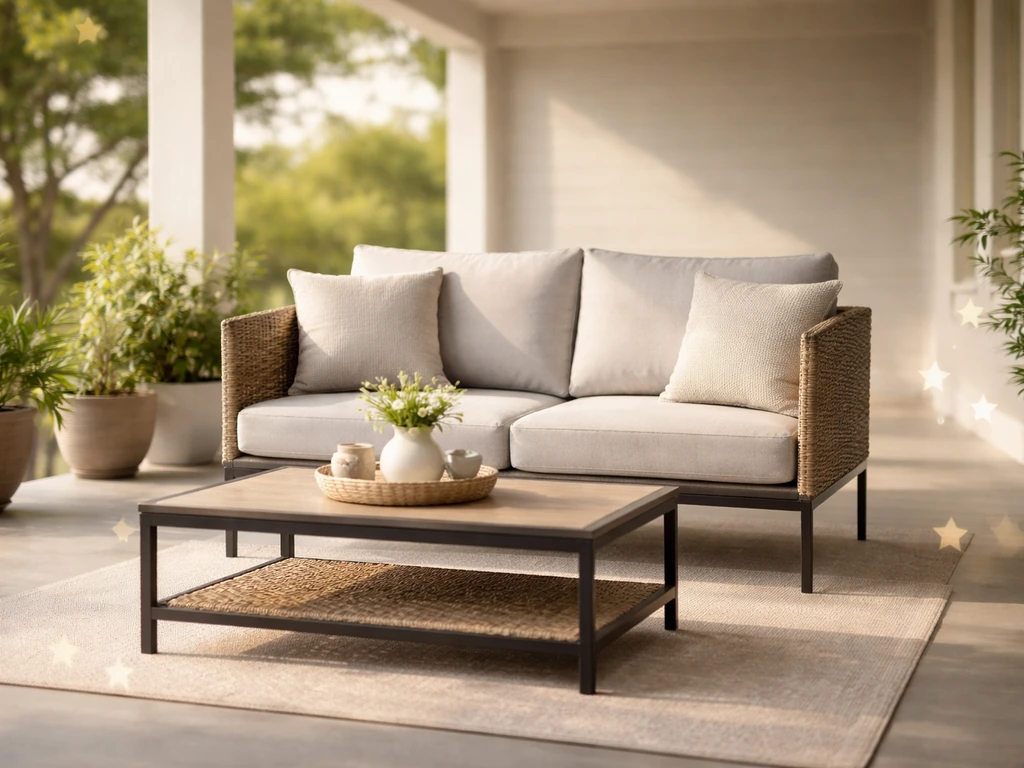
Most "rattan" patio furniture sold today is actually resin wicker wrapped around an aluminum frame, and that distinction matters a lot when you're reading reviews and trying to figure out what will still look good on your patio three summers from now. The best options at every price point share a few key traits: a rust-resistant aluminum frame, tight synthetic weave, UV-resistant resin, and cushions rated for outdoor exposure. Once you know what to look for in a review, comparing brands across the full spectrum from Costway to Frontgate becomes a lot less confusing.
Rattan Patio Furniture Reviews: What to Buy and Why

Holly Dawson
24 May 2026
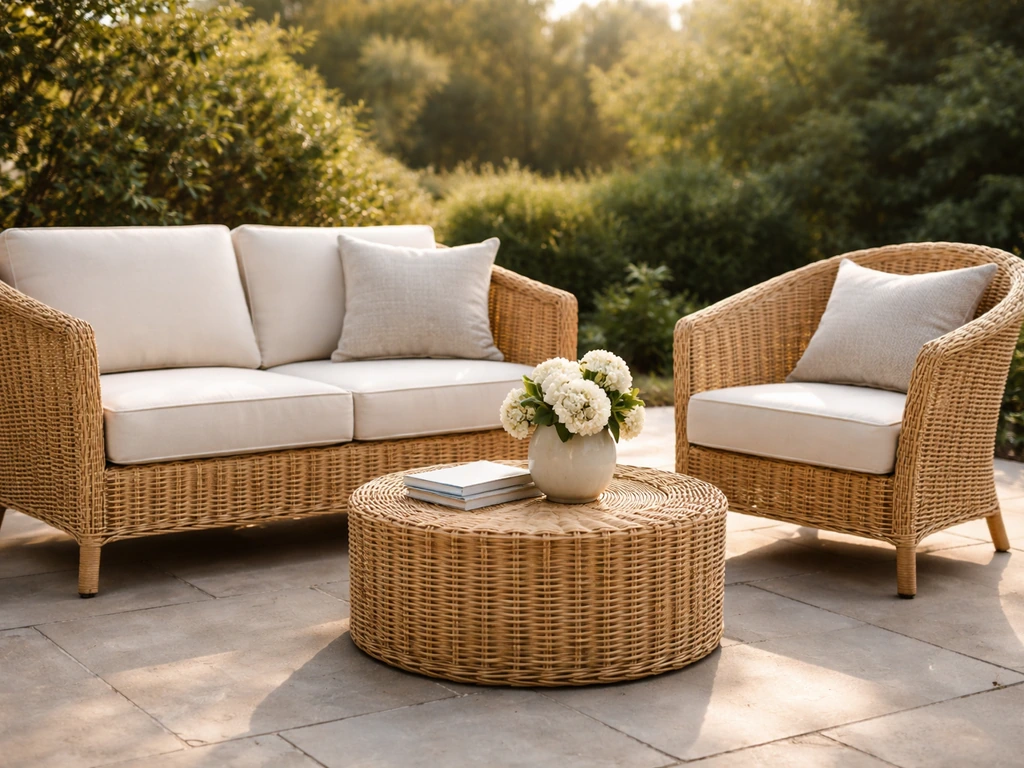
True rattan vs resin wicker: what you're actually buying
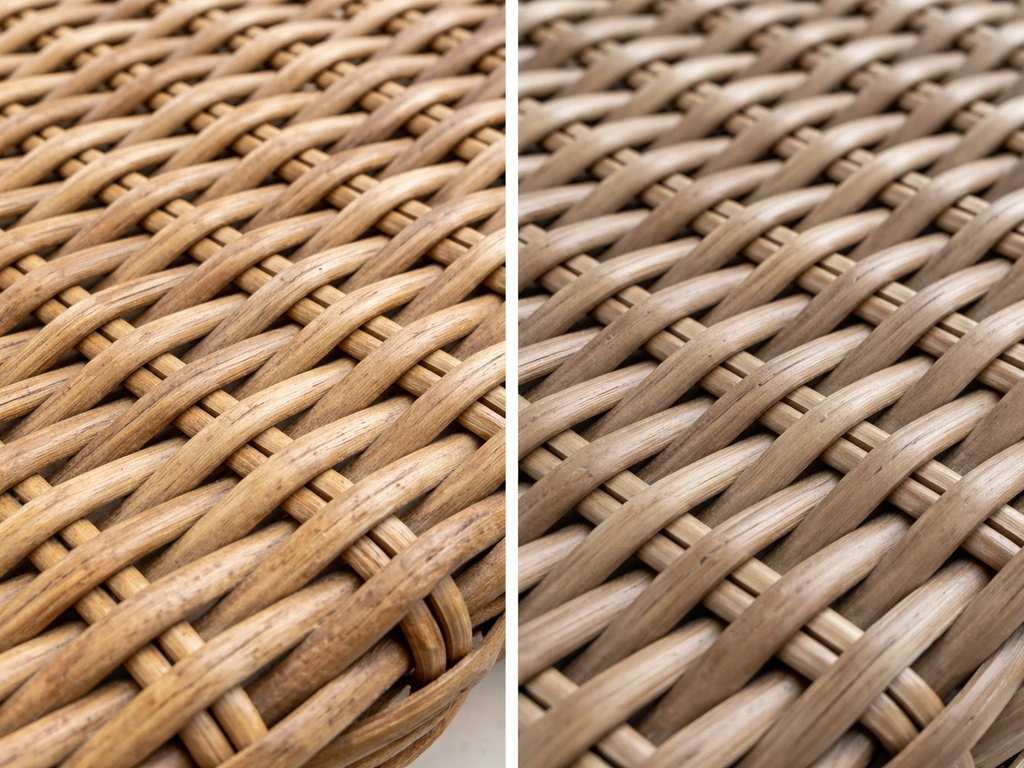
True rattan is a natural palm-derived material that's been woven into furniture for centuries. It looks beautiful, it's genuinely strong when dry, and it's the material you'll find in high-end indoor pieces and in some Southeast Asian imports. The problem outdoors is that natural rattan absorbs moisture, swells, cracks in cold temperatures, and fades quickly in direct sun. It simply isn't built for a patio that sees rain, humidity swings, or freezing winters.
What almost every patio furniture brand sells as "rattan" or "wicker" is actually synthetic resin wicker: strands of polyethylene or PVC resin woven over a powder-coated aluminum or steel frame. The resin mimics the look of natural wicker but resists moisture, UV rays, and temperature swings far better. Aluminum frames are the gold standard here because they don't rust. Steel frames are heavier and cheaper but need better coating to survive long-term. When you see terms like "all-weather wicker" or "resin wicker" in a product listing, that's the synthetic version, and for outdoor use, that's actually the smarter choice.
IKEA's own guidance specifically calls out that plastic rattan pieces can crack in freezing temperatures, which tells you something important: even synthetic resin isn't completely immune to harsh conditions. The quality of the resin compound and the thickness of the weave both affect how it holds up over years of seasonal temperature cycling.
What good patio furniture reviews actually tell you
Reading reviews for rattan-style patio furniture requires a little translation. A five-star review from week one tells you almost nothing about durability. The signals you want to look for are time-stamped feedback (reviews from people who've had the set for at least one full season), comments about how the weave held up after rain, whether the frame stayed solid or wobbled after assembly, and what the cushions looked like after extended sun exposure. If you are specifically looking up Tribesigns patio furniture reviews, focus on how long the weave, frame, and cushions actually hold up after seasonal weather exposure. One-star reviews are often more informative than five-star ones, especially when multiple people mention the same failure point.
- Look for reviews that mention a second or third season of use, not just unboxing impressions
- Check if reviewers mention the weave loosening, unraveling, or cracking at corners or stress points
- Watch for complaints about frame wobble after assembly, which often signals poor joint quality or thin-walled tubing
- Note whether cushion reviewers mention fading, flattening, or mold after being left outdoors
- Assembly complaints (stripped screws, missing hardware, poorly translated instructions) are common across budget brands and worth weighing
- Shipping and packaging damage mentions can indicate how well a brand handles logistics and customer service
One pattern that shows up repeatedly in reviews at every price tier: buyers who stored their cushions indoors or under covers consistently report far better long-term satisfaction than those who left everything outside year-round. That's a user behavior pattern, not just a product quality issue, and it skews review averages in ways that matter when you're comparing sets.
The outdoor performance factors that actually matter
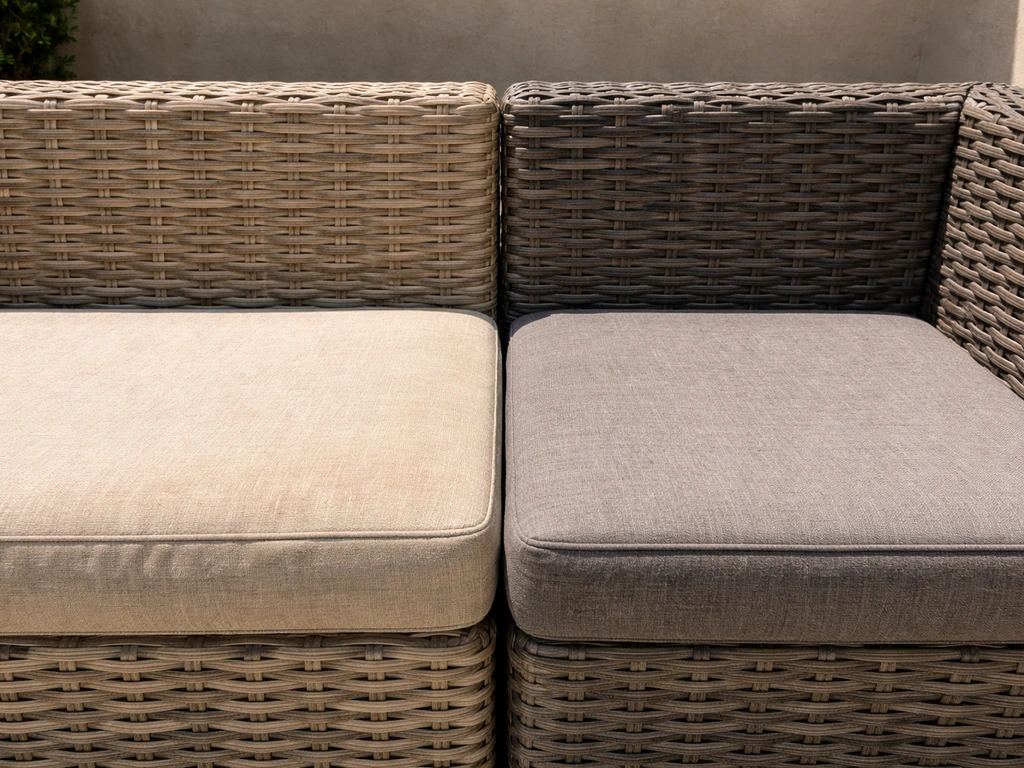
Weather and UV resistance
This is the biggest differentiator between budget and premium sets. The resin weave itself needs UV stabilizers to resist fading and becoming brittle over time. Higher-end brands like Frontgate specifically engineer their all-weather wicker to be naturally weather-resistant, and they back that claim with a 10-year structural frame warranty for residential use. That kind of warranty is meaningful because it signals the brand's confidence in the frame's longevity. Budget sets rarely offer more than a one-year warranty, which tells you what the manufacturer actually expects.
Frame stability and construction
Aluminum frames are consistently the best choice for outdoor resin wicker furniture. They're rust-resistant, lightweight enough to rearrange easily, and strong enough to support a solid woven structure. Frontgate's outdoor furniture line, for example, pairs all-weather wicker weaving with aluminum frames specifically for this reason. Steel frames can work, but they need thick powder coating and are a liability in coastal or high-humidity climates where rust can develop at joints within a few seasons.
Cushion quality
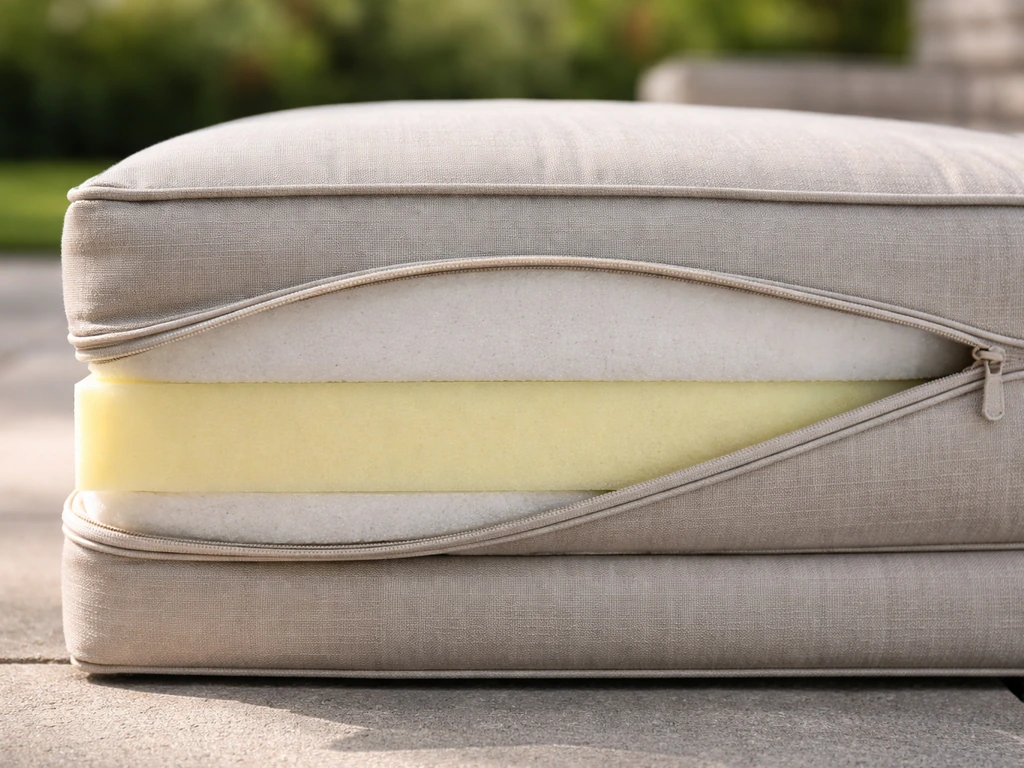
Cushions are often the first thing to fail on an otherwise solid set. Look for cushions with a 100% polyester outdoor cover, polyurethane foam fill wrapped in polyester fiber, and ideally a quick-dry construction. Pottery Barn's Torrey line uses exactly this configuration, and their replacement cushions are described as fade and weather-resistant and soft to the touch. At the premium end, Frontgate offers Sunbrella Rain cushions that are 100% waterproof with an encapsulated construction that prevents water from penetrating to the fill at all. That level of cushion engineering matters a lot if your furniture stays outside in a rainy climate.
Comfort and seat depth
Comfort is subjective but reviewers consistently flag a few objective issues: seat depth that's too shallow for relaxing (common in lower-cost sets), cushions that slide forward constantly, and armrest heights that feel awkward. Deep-seating collections generally score higher for comfort but require more substantial cushion sets to fill the frame properly. If you're buying for lounging rather than dining, prioritize sets with at least 22 to 24 inches of seat depth and cushion fills rated for regular use.
How to compare brands across the price spectrum
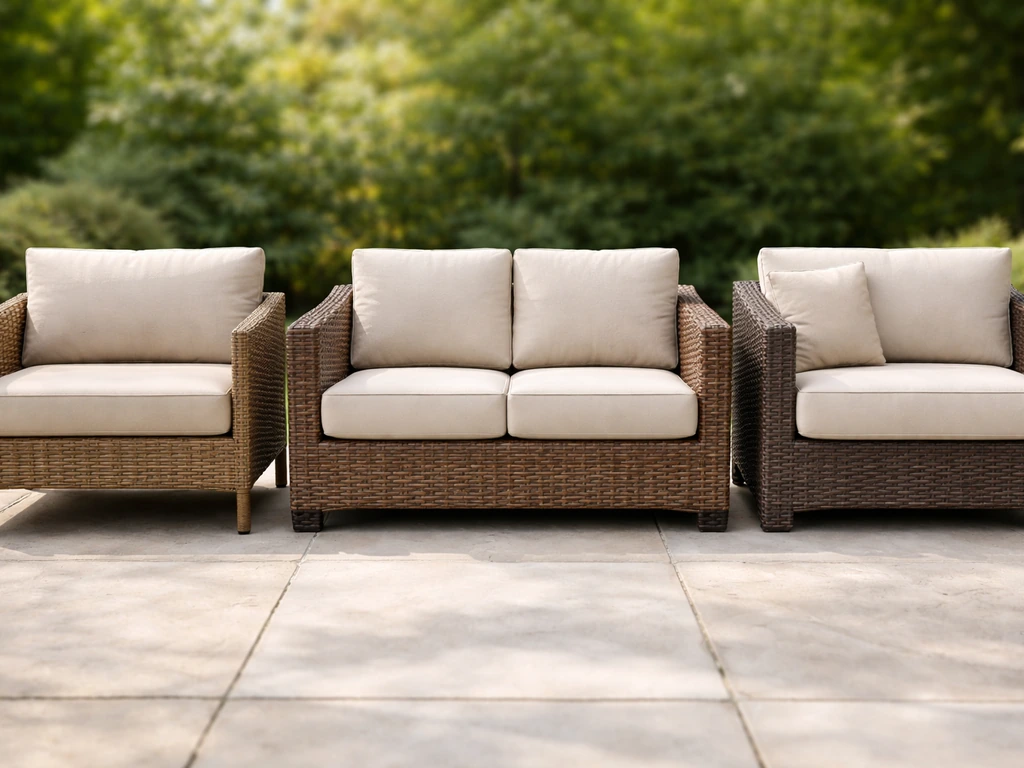
The honest way to compare rattan patio furniture across price tiers is to separate what you're paying for: materials and construction quality, design and aesthetics, after-sale support, and brand longevity. A $400 Costway set and a $3,000 Pottery Barn set can look superficially similar in a product photo but differ significantly in how they perform at the two-year mark.
| Price Tier | Typical Brands | Frame Material | Cushion Quality | Warranty | Best For |
|---|---|---|---|---|---|
| Budget ($200–$600) | Costway, Temu, Tangkula | Steel or thin aluminum | Basic polyester, minimal UV resistance | 90 days to 1 year | Covered patios, seasonal/occasional use, renters |
| Mid-range ($600–$1,500) | Home Depot private labels, Wayfair exclusives, Telescope | Aluminum or reinforced steel | Better outdoor poly fabric, some quick-dry | 1–3 years | Year-round use in mild climates, covered or partially covered patios |
| Premium ($1,500–$4,000+) | Pottery Barn, West Elm, Frontgate | Aluminum with quality powder coat | Sunbrella or equivalent, quick-dry, waterproof options | 5–10 years (Frontgate: 10-year frame) | Exposed patios, demanding climates, long-term investment buyers |
Budget-tier sets from brands like Costway or Temu can absolutely deliver on looks, and for a covered patio or seasonal apartment balcony, they're genuinely decent value. The trade-off is build consistency: frame wall thickness varies, weave tension is often looser, and cushion fabric fades faster. If you're comparing budget options, Temu patio furniture and Tangkula both serve the lower price point with varying reliability, and reviews across those brands show similar patterns of assembly frustration and cushion wear.
If you’re specifically looking into tangkula patio furniture reviews, focus on time-stamped durability feedback and how well cushions hold up after real weather exposure Temu patio furniture and Tangkula. If you're comparing specific brands, many people share Temu patio furniture reviews that highlight common issues like cushion fade and inconsistent frame build quality.
Mid-range sets are where value often peaks. Brands like Telescope (which produces contract-grade outdoor furniture) offer a meaningful step up in aluminum construction and weave quality without the premium brand markup. For more specific guidance on this, see telescope patio furniture reviews and what buyers report after full seasons outdoors. At this tier you're often getting the same frame materials as luxury brands but with less design detail and fewer fabric customization options.
Premium brands like Pottery Barn, West Elm, and Frontgate justify their prices through frame warranties, cushion upgrade programs, replacement part availability, and consistent quality control. Frontgate's 10-year structural frame warranty stands out as industry-leading and provides real peace of mind for a significant outdoor investment. Pottery Barn's Torrey line, for example, is designed so you can order replacement cushions years later, which is a meaningful long-term cost consideration. Ratana is another premium name worth knowing if you're comparing high-end construction at this level.
Maintenance and long-term care
Cleaning resin wicker
Resin wicker is low-maintenance compared to natural rattan, but it still needs regular attention. For routine cleaning, a soft brush or cloth with mild soapy water is enough to clear dust and pollen from the weave. For deeper cleaning, a garden hose works well, but let the furniture dry completely before putting cushions back or covering it. Trapped moisture between the weave and a cover is one of the main causes of mold on outdoor wicker furniture.
Cushion care
Pottery Barn's care guidance for outdoor sofas is direct: wipe spills immediately with a clean, dry cloth, and cover furniture with outdoor covers when it's not in use or during bad weather. That advice applies broadly across all wicker patio furniture. For cushions specifically, the best practice is to bring them inside or store them in a ventilated dry area when the furniture isn't in use for extended periods. Bed Bath & Beyond's outdoor care guidance reinforces this: cushions left in damp or off-season conditions develop mold and break down foam fill much faster. Even water-resistant cushions aren't meant to sit in standing water or stay damp under a cover for weeks.
Seasonal storage
If you're in a climate with freezing winters, you need a plan for your resin wicker furniture. IKEA's guidance explicitly warns that plastic rattan pieces can crack in freezing temperatures, and that applies to most synthetic wicker. Either bring the furniture into a garage or shed, or use well-fitted covers and accept that cold cycling over multiple winters may eventually cause weave brittleness. Before storing or covering for winter, clean and completely dry the frames and cushions first.
Frontgate recommends cleaning furniture thoroughly, drying it completely, then fitting covers, and storing the covers themselves in a warm dry place when not in use. Frontgate’s outdoor furniture buying guide also emphasizes letting furniture dry completely and includes guidance in its “Furniture Covers & Cushion Storage” section about proper coverage and ventilation before storing cushions or covering furniture Frontgate recommends cleaning furniture thoroughly, drying it completely, then fitting covers.
Your buying checklist before you pull the trigger
- Measure your outdoor space: note the total square footage and the dimensions of any specific zones (dining area, conversation area, walkways). Leave at least 36 inches for foot traffic paths around furniture.
- Decide on your exposure level: fully exposed patio, covered porch, or partially shaded space. Higher exposure demands better UV and moisture resistance, which means a higher minimum spend.
- Set a realistic budget that includes cushion covers or outdoor furniture covers. A good set without covers or cushion protection is a short-term investment.
- Check warranty terms before buying: look specifically for what the frame warranty covers and for how long. A 10-year frame warranty (like Frontgate's) versus a 1-year warranty signals very different build confidence.
- Search for replacement cushion availability: can you order replacement cushions from the brand two years from now? Budget brands often discontinue products quickly.
- Read reviews filtered by time: sort by most recent and look for second-season feedback. Filter by photos to see real-world weathering rather than staged product shots.
- Ask about assembly: check if hardware is clearly labeled, whether tools are included, and how long assembly took on average. Frustrating assembly is one of the most consistent complaints even on well-built sets.
- Plan your maintenance approach before buying: if you won't store cushions, budget for all-weather or waterproof cushion upgrades. If you live somewhere with freezing winters, plan for a storage solution or expect to replace the set more frequently.
Common mistakes and who rattan furniture works best for
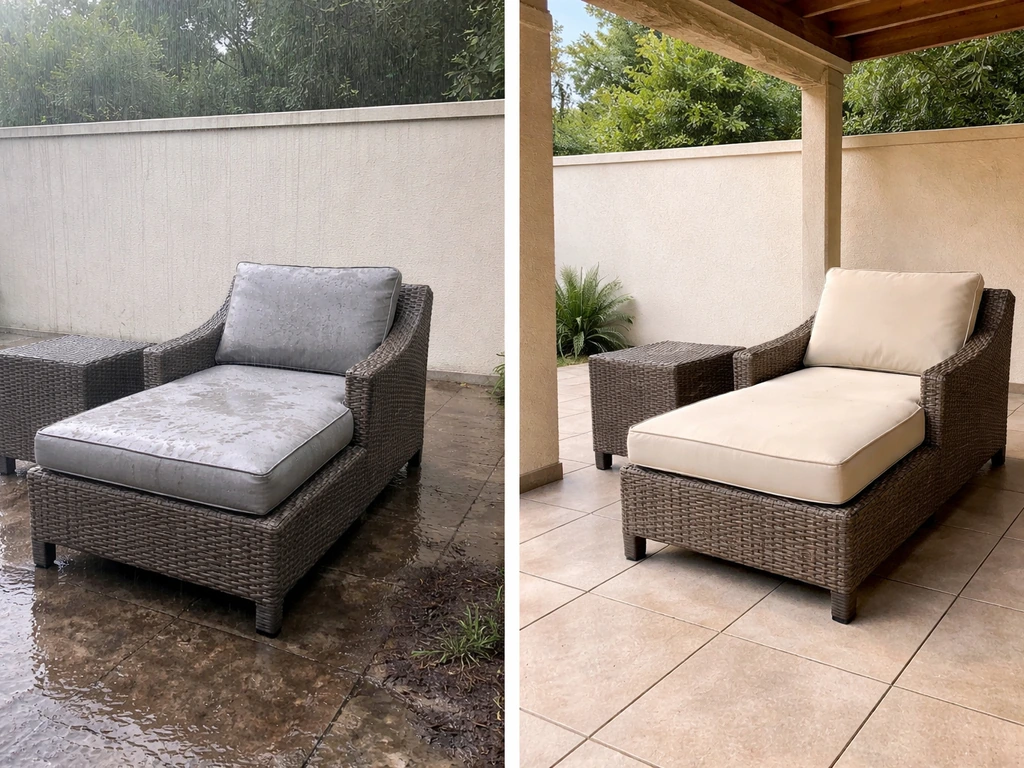
The biggest mistake buyers make is treating synthetic wicker as maintenance-free because it's "weather-resistant." Weather-resistant doesn't mean weather-proof. It means the material can handle intermittent exposure without immediately failing, not that it will look great after five years of sitting uncovered in full sun and rain. Buyers who skip covers, leave cushions outside through wet seasons, and never clean the frames are the ones writing disappointed two-year reviews.
The second most common mistake is buying for looks without accounting for climate. A beautiful deep-brown wicker sofa set on a fully exposed patio in a high-rainfall climate, without waterproof cushions or a solid cover, is going to disappoint you within two seasons regardless of how much you paid. Conversely, a budget-tier set on a covered porch in a mild climate can look great for years with minimal care.
Rattan-style resin wicker furniture is genuinely well-suited for people who want the aesthetic of woven natural materials without the fragility, who have a covered or partially shaded outdoor space, and who are willing to do basic seasonal maintenance. It's a strong fit for relaxed conversational layouts, porch furniture, and poolside lounging. It's a poor fit for anyone who wants truly set-and-forget outdoor furniture in a demanding climate, anyone in a high-humidity or salt-air coastal environment who won't invest in premium materials, and anyone who isn't willing to bring cushions in during the off-season.
If you love the natural woven look but want something genuinely bulletproof in harsh conditions, teak patio furniture is worth comparing at the premium tier. It handles moisture and UV in ways that synthetic wicker simply can't match, though it comes with its own maintenance requirements and a significantly higher price. For the majority of buyers with a covered or semi-protected patio and a reasonable maintenance routine, though, a well-chosen resin wicker set hits a sweet spot of style, comfort, and value that's hard to beat.
FAQ
Is resin wicker actually safe for coastal or salt-air patios?
Yes, but only if you confirm the frame is aluminum (not steel) and the cushions are truly outdoor-rated. In salt-air conditions, even well-coated steel can start rusting at joints sooner, and “water-resistant” cushions will still get trapped dampness under covers.
How can I use rattaner patio furniture reviews to predict long-term durability?
Don’t rely on the first “five-star” reviews. Look for reviews dated after at least one full summer, and specifically check for mentions of weave looseness, UV fading, and whether the seat cushions still fit properly after rain exposure.
What measurements should I check if I’m buying rattan-style furniture for lounging?
Measure before you buy, because advertised dimensions can be misleading. For lounging, prioritize seat depth around 22 to 24 inches and confirm cushion thickness is substantial enough to prevent “bottoming out” on the frame.
Do I need to bring cushions inside if the set claims all-weather wicker?
Even if the set is “all-weather,” you should store or at least fully cover cushions when the furniture won’t be used for weeks. Trapped moisture under covers is a common cause of mold, and wet cushions can break down foam faster even when covers are water-resistant.
What’s the right way to prepare resin wicker furniture for winter?
Yes. A clean, dry frame matters because dirt and moisture combine into a problem when covered. Before winter storage, rinse off debris, let everything fully dry, then add covers, and store the cushions in a ventilated dry area.
How do I tell if a “rattan” set uses the kind of frame that will not rust?
Not necessarily. Some frames are labeled “rust-resistant” but are still steel, so the deciding factor is the coating quality and whether they mention aluminum explicitly. For long-term peace of mind, choose aluminum frames when possible.
What should I check about warranties and replacement parts when reading patio furniture reviews?
Look for repair and replacement options, not just warranty length. Upholstery and cushions are high-wear items, so brands that sell replacement cushions (and sometimes individual parts) can cut long-term costs even if the initial price is higher.
Is steel-framed resin wicker ever a good idea?
Coated steel can work in mild climates, but it’s riskier in coastal, humid, or very wet areas, especially if the set frequently stays covered while damp. If reviews mention rust at joints or screws, that’s a strong warning sign.
What assembly-related red flags should I look for in rattaner patio furniture reviews?
Assembly quality affects durability. In reviews, watch for comments about wobbling after assembly, uneven tightening, and gaps where the frame meets the weave, because those problems often lead to later weave slack and cushion fit issues.
How should I compare budget rattan-style sets versus premium ones in reviews?
If you’re considering budget brands, treat reviews as pattern data rather than proof of one-off success. Expect looser weave tension, more variation in frame thickness, and faster cushion fading, so prioritize sets that show time-stamped durability complaints consistently (not just initial impressions).
Next Article
Temu Patio Furniture Reviews: Worth It for Outdoor Sets?
Temu patio furniture review guide: compare outdoor sets, seating, sectionals, swings, covers, plus key complaints and va