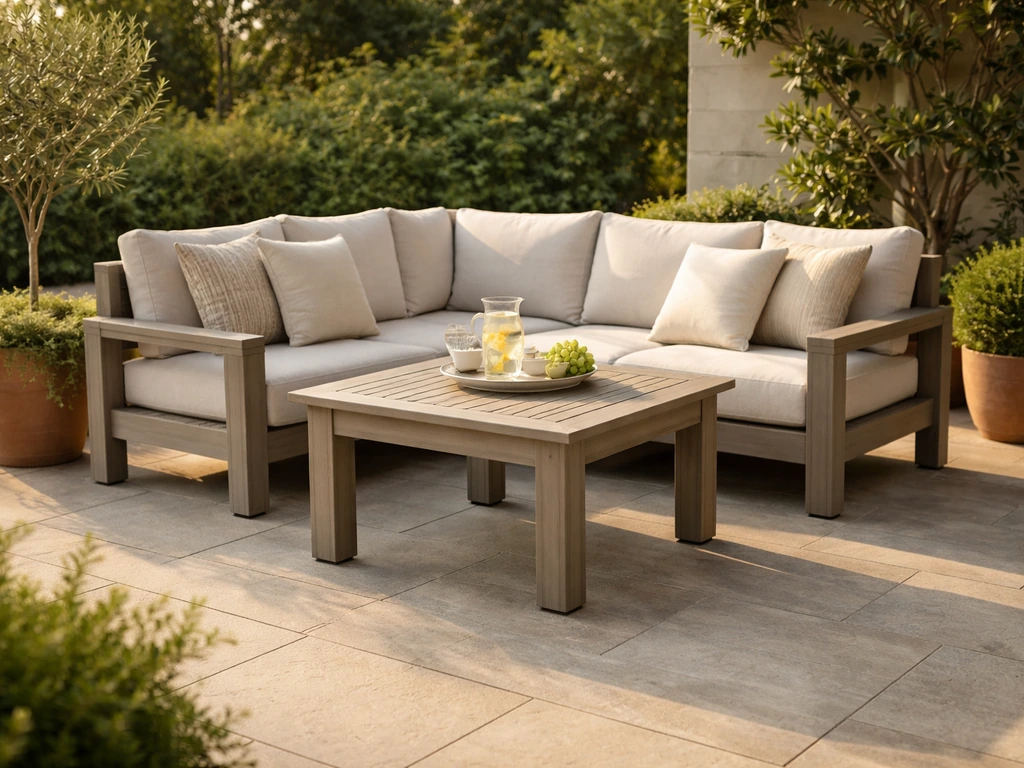
If you want patio furniture that actually lasts, you need to look past star ratings and zero in on three things: what the frame is made of and how it's joined, what the hardware and fasteners are (seriously, this matters more than most reviews mention), and what the fabric or finish is rated to handle in your specific climate. A five-star average from people who bought the set six months ago tells you almost nothing about durability. What you need are reviews from people who've owned the piece through two or three full seasons, plus a basic understanding of which materials and construction details are non-negotiable for your environment.
Durable Patio Furniture Reviews: How to Judge What Lasts

Holly Dawson
3 Jul 2026
What 'durable' really means for patio furniture (and where reviews can mislead)
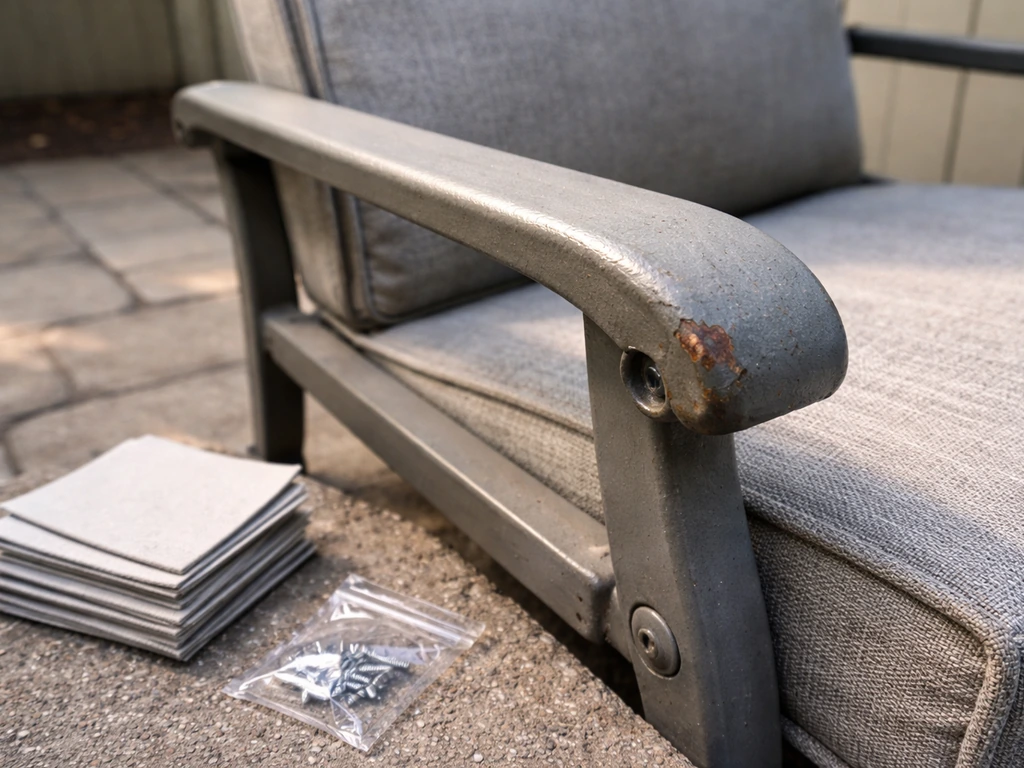
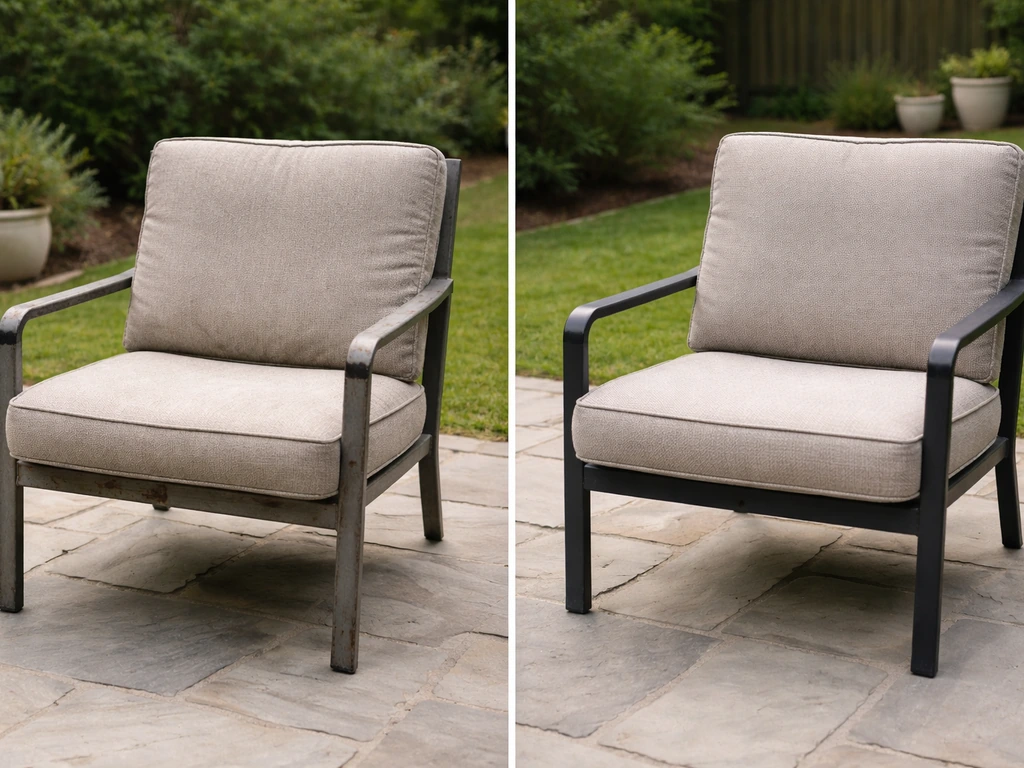
The word 'durable' gets thrown around constantly in product listings, but it means very different things depending on where you live and how you use your furniture. A set that earns glowing reviews in coastal Maine might start pitting and peeling after one summer in coastal Florida because salt air, UV intensity, and humidity hit on completely different levels. Durability isn't a single property, it's a combination of structural integrity (does it stay stable and not wobble?), finish longevity (does the coating hold without chalking, peeling, or fading?), corrosion resistance (do the frame and hardware resist rust?), and fabric resilience (do the cushions resist UV, moisture, mold, and physical wear?).
Reviews mislead in predictable ways. The most common trap is recency bias: most reviews are written within weeks of delivery, when everything looks great and no weather has touched it. A one-star review saying 'arrived with a scratch' is a shipping complaint, not a durability data point. What you actually want is the pattern in reviews written 18 to 36 months post-purchase. Those are the reviews that reveal whether the powder coat is bubbling, the welded joints are cracking, the cushions are growing mildew, or the frame is wobbling from fastener loosening. If a product has almost no long-term reviews, that's itself a yellow flag, either it's too new to have a track record or buyers aren't coming back to update.
There's also a big gap between expert reviews and user reviews. Expert reviews are good for construction quality assessments done hands-on at time of purchase, joint quality, frame weight, finish feel, hardware grade. But they rarely track long-term weathering. User reviews catch real-world failures but are noisy and uncontrolled. The ideal is to read both: use expert reviews to evaluate build quality upfront, then use filtered long-term user reviews (look for 'verified purchase,' sort by 'most critical,' and search for terms like 'after one year,' 'second season,' 'rust,' 'fading,' 'wobble') to catch recurring patterns that indicate a real systemic weakness.
Materials and construction that drive longevity
Frame materials
Powder-coated aluminum is the workhorse of durable outdoor furniture for good reason: it's lightweight, genuinely rustproof, and when the powder coat is formulated with UV-stable pigments and a proper exterior top system, the finish holds for years. The key word is 'proper', a budget aluminum set using an epoxy-only powder coat without an exterior topcoat can chalk and fade within a season because epoxy breaks down under direct UV exposure. Look for listings that specify 'TGIC polyester powder coat' or 'UV-stable powder coat' rather than just 'powder-coated.' Brands like POLYWOOD use this approach and back it with residential warranty coverage on their aluminum frames.
Wrought iron and steel frames are heavier and more wind-stable but require more maintenance. If the protective coating chips or scratches, rust forms quickly, especially in humid or coastal environments. High-end tubular steel can work well, but it's much harder to keep pristine than aluminum. HDPE (high-density polyethylene) lumber, which POLYWOOD popularized, is genuinely weatherproof for the frame material itself but is almost always combined with metal hardware, and that hardware is where failures typically originate. Teak and other quality hardwoods are beautiful but need annual oiling or sealing to prevent checking and graying; skip the maintenance and expect a significantly shortened lifespan.
Hardware, fasteners, and joinery
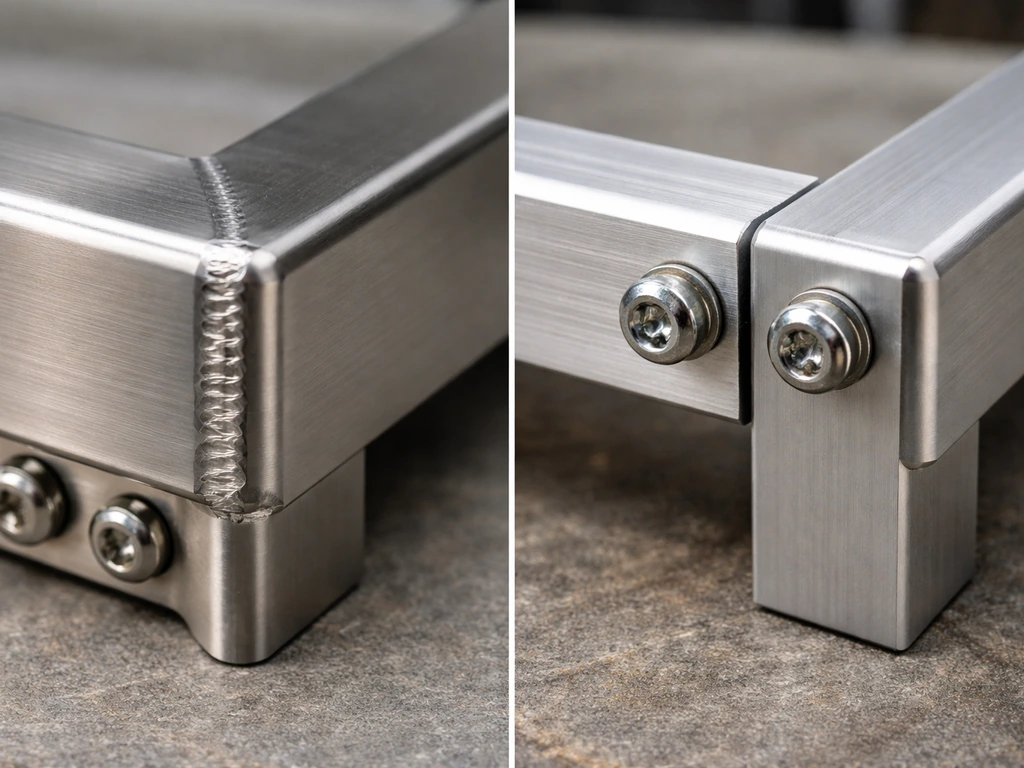
This is the single most underrated factor in outdoor furniture durability, and it's rarely discussed in reviews. Stainless steel hardware sounds premium, but the grade matters enormously. For most non-coastal environments, 304 stainless is adequate. Within roughly 10 miles of salt water, or anywhere with heavy de-icing salt exposure, you want 316 stainless, which contains molybdenum that dramatically improves resistance to chloride-driven pitting and crevice corrosion. Budget brands frequently use hardware marketed as 'stainless' without specifying the grade, and cost-optimized substitutions (304 where 316 was implied, or plain steel with a superficial coating) are common. Even genuine 316 can show rust spots if salt deposits are allowed to sit on the surface without rinsing, it's more resistant, not immune.
Joint construction matters as much as hardware grade. Look for fully welded joints rather than bolted or clip-together connections on load-bearing areas like chair legs and table bases. Welded joints don't loosen over time; bolted joints do, which is why you see 'wobbles after a season' complaints on otherwise decent-looking sets. If a piece uses bolted joints (common in flat-pack furniture from budget retailers), check that the hardware is accessible for periodic tightening and that replacement bolts are available. A set you can't maintain is a set you'll be replacing.
Weather performance by component
Thinking about weather performance component by component is more useful than chasing a vague 'all-weather' claim on a product page.
| Component | Main threat | What to look for | Red flags in reviews |
|---|---|---|---|
| Frame (aluminum) | UV-driven finish chalking/peeling | UV-stable polyester powder coat, TGIC formulation | Peeling or chalking within 1-2 seasons |
| Frame (steel/iron) | Rust at scratches and joints | Thick powder coat, accessible touch-up paint | Rust spots after first winter |
| Hardware/fasteners | Chloride pitting, crevice corrosion | 316 SS in coastal/salty areas, 304 inland | Rust around bolt heads, wobble from bolt failure |
| Woven/sling fabric | UV fading, mildew, sag | PVC-coated polyester yarn, UV-stabilized pigment | Sagging, color loss, or mold after one season |
| Cushion fabric | UV fading, mildew, water retention | Solution-dyed acrylic (e.g., Sunbrella), 2,000+ UV hours (xenon arc) | Fading after one summer, slow-drying foam |
| Cushion fill/foam | Moisture retention, mildew | Open-cell or perforated quick-dry foam, drainage holes in covers | Smells musty, stays wet for days after rain |
| Umbrella canopy | UV fade, wind stress at hub/ribs | Solution-dyed canopy, aluminum or fiberglass ribs | Canopy fades in one season, ribs snap in moderate wind |
On cushion fabrics specifically: solution-dyed acrylic is the benchmark for outdoor use because the color is locked into the fiber during extrusion rather than applied on the surface, which means UV can't strip it off the way it does with piece-dyed or printed fabrics. A KOTHEA outdoor terrace fabric specification guide similarly notes that blank" rel="noopener noreferrer">solution-dyed acrylic is incorporated into the fiber during extrusion, rather than surface-applied, to improve colorfastness for fully exposed outdoor upholstery. Quality solution-dyed acrylic should meet ISO 105-B02 lightfastness standards and be tested to at least 2,000 simulated sunlight hours (xenon arc testing) for premium outdoor performance. A practical way to verify this is to look for performance documentation that cites accelerated UV testing methods like ASTM G154 and lightfastness test references such as ISO 105-B02 ISO 105-B02 lightfastness standards. Look for 'solution-dyed,' 'SD acrylic,' or 'inherent color' in the product specs. Sunbrella is the most recognized brand here and sets a useful benchmark, even Sunbrella fabric can develop surface mildew in humid conditions, though it cleans up with a diluted bleach and mild soap solution without permanent damage to the fiber.
For sling-style seats, look for 100% PVC-coated polyester yarn construction. This is more durable than basic woven polyester because the PVC coating adds resistance to UV, mildew, and staining while helping the sling hold its shape under repeated use. The failure mode to watch for in reviews is 'sling sag', the fabric stretching out over time until it no longer holds a seated position properly. This typically indicates either a lower-grade sling material or, sometimes, a replacement issue where cheap restringing was done with incorrect tension.
How to read reviews for durability signals
Developing a filter system for reading patio furniture reviews saves a lot of wasted money. If you want the foremost patio furniture reviews, prioritize long-term, climate-specific feedback over short-term impressions. Here's the framework I use:
- Sort by 'most critical' first, then search within those reviews for specific failure keywords: rust, wobble, peeling, fading, mold, mildew, sagging, cracked, and broken. Count how many distinct reviews mention the same failure. One complaint is noise; five or more about the same failure is a pattern.
- Filter or sort by date and look specifically for reviews written at least 18 months after the product launched. These are the only ones that tell you anything about medium-term durability.
- Separate 'arrived damaged' and 'assembly problem' complaints from 'failed in use' complaints. Shipping damage and assembly confusion are real issues but don't predict how the piece holds up in your yard over three years.
- When an expert review mentions third-party testing standards, treat those as partial evidence, not a guarantee. BIFMA tests cover furniture safety and structural performance, but BIFMA's standards were developed primarily for commercial/office contexts. An outdoor furniture whitepaper from BIFMA (OF-2025) aims to extend these to include accelerated weathering, but not all products claiming 'BIFMA tested' are tested to outdoor-specific weathering protocols.
- For finish and fabric claims, look for specific test references you can verify: ASTM G154 (accelerated UV testing), ASTM B117 or ASTM D4214 (corrosion/chalking resistance), AATCC 106 (saltwater resistance for fabrics), or ISO 105-B02 (lightfastness for textiles). A brand that can point to these test results is being more transparent than one that just says 'fade resistant.'
- Check whether the brand offers replacement parts (cushions, slings, hardware). This doesn't directly indicate durability, but it signals that the brand expects their furniture to have a multi-year lifespan and supports it accordingly.
The time horizon issue is critical and worth emphasizing: a set from a budget retailer like Costway or Temu may look identical in photos to a mid-tier or premium set, and early reviews may be glowing. If you are comparing brands, it also helps to read endura patio furniture reviews with a focus on long-term weathering signals, not just the initial impression. The divergence in review quality almost always shows up between months 18 and 36. If a budget piece is holding up at the two-year mark in multiple reviews, that's genuinely useful data. If the reviews simply don't exist past six months, you're flying blind on durability.
Durability trade-offs by furniture type
Dining sets
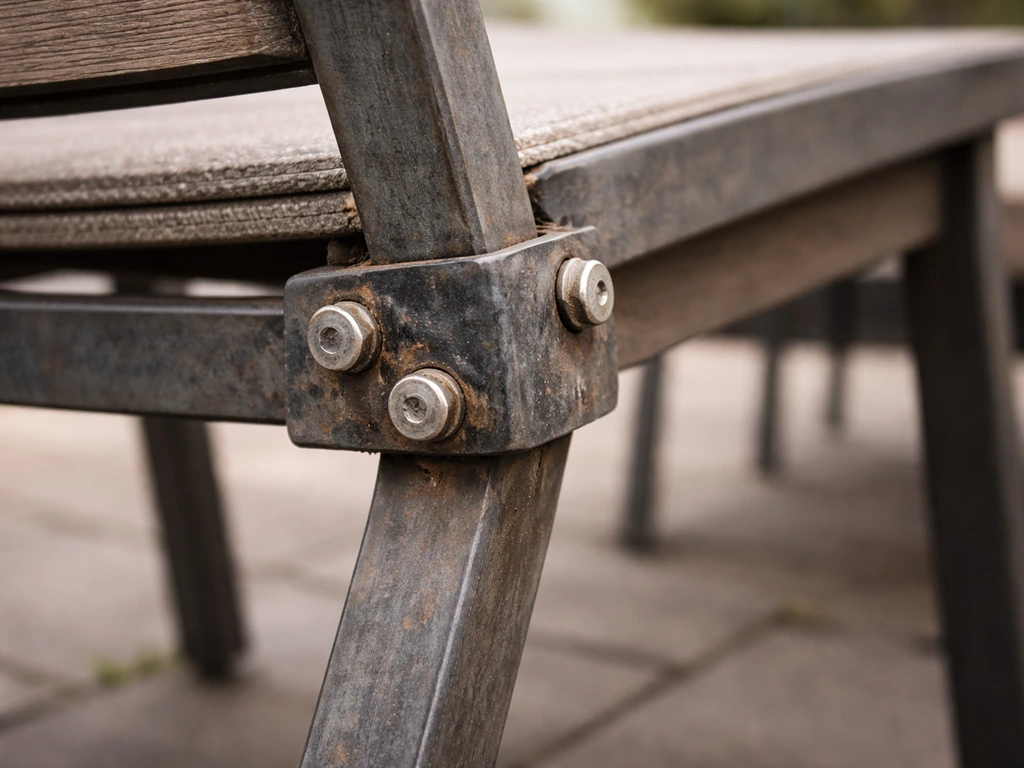
Outdoor dining sets take a lot of mechanical stress: chairs get dragged, tables get leaned on, and hardware at the joints gets worked constantly. The wobble failure is most common here. Fully welded aluminum frames with stainless fasteners and a quality powder coat are the most durable configuration. Glass tabletops look great but add a fracture risk in high-wind environments unless they're tempered (check the spec). Aluminum slat or slatted HDPE tabletops eliminate that risk entirely. In reviews, watch for complaints about tabletop surface degradation, paint lifting from a steel table, edge rusting, or tile cracking, which often appear in the second season.
Sectionals and loungers
Deep-seat sectionals and loungers live or die by their cushions. The frame (usually aluminum or PE wicker over aluminum) is often fine; the cushions are where you'll see failures. Expect budget cushions to show UV fading and mildew within one season in direct sun. Solution-dyed acrylic covers with quick-dry foam inserts are the standard you're targeting. In reviews, look at complaints about cushion covers specifically: do they zip off for washing? Are replacement covers available? The inability to wash and dry cushions properly is a direct path to mildew that gets misattributed to the furniture itself.
Lounge chairs and rockers
Rocking chairs and lounge chairs concentrate stress at pivot points and leg-to-seat connections. For rockers, the joint where the rocker blade meets the frame leg is the highest-wear point, check that it's welded or uses reinforced hardware rather than plastic inserts. HDPE and quality aluminum rockers from brands like POLYWOOD hold up extremely well here and are often the best value in this category when you factor in longevity. Avoid chairs with visible plastic connectors at structural joints; they look fine at first but degrade with UV exposure and mechanical cycling.
Swings and hanging chairs
Swings have unique durability considerations because they bear dynamic loads (swinging momentum) rather than static weight. The hanging hardware, chains, S-hooks, and ceiling or frame mounting brackets, is often the failure point, not the swing itself. Stainless steel chain and hardware rated well above the swing's maximum occupancy weight is the minimum standard. The canopy or cushion fabric on porch swings faces extended UV exposure since it's often in use during peak sun hours; this is exactly where solution-dyed acrylic or PVC-coated sling fabric earns its keep. In reviews, watch for complaints about chain rust, hook deformation, or frame welding failures at the chain attachment points.
Umbrellas
Patio umbrellas are one of the most wind-stressed items in outdoor furniture, and their durability is almost always underrated as a purchase criterion. The canopy fabric should be solution-dyed for UV resistance and treated for water repellency. Fiberglass ribs flex without snapping in wind gusts far better than aluminum ribs, worth the extra cost if you live somewhere with afternoon storms. The hub and tilt mechanism are mechanical failure points; look for metal (not plastic) hub construction and reviews specifically mentioning whether the tilt mechanism holds its position after a season of use. Weight of the base is safety-critical: light bases tip in wind and can destroy the canopy or injure someone.
Maintenance and storage to extend lifespan
A great deal of early 'durability failure' in reviews is actually a maintenance and storage failure. The furniture itself may be perfectly adequate, but trapped moisture is the silent accelerator of almost every failure mode: rust, mildew, finish bubbling, foam degradation. Here's what actually makes a difference:
- Rinse aluminum and steel frames with a garden hose every few weeks during the season, especially after storms. Residual cleaners and salt deposits left on surfaces accelerate finish breakdown. Let everything air-dry fully before covering.
- Never cover or store furniture that is still damp. Trapping moisture under a cover creates a warm, humid environment that's ideal for mildew growth on cushions and condensation on metal surfaces. This is one of the most common reasons for 'mold smell after winter storage' complaints in reviews.
- Store cushions separately indoors (or in a dry, ventilated area) during the off-season. Leaving them in outdoor storage boxes all winter, even in covers, exposes them to temperature swings and residual humidity.
- For solution-dyed acrylic cushion covers with mildew, clean with a solution of 1 cup bleach and 1/4 cup mild dish soap per gallon of water, per Sunbrella's published guidance. Rinse thoroughly and air-dry completely before storing.
- Check and tighten all bolted connections at the start of each season. What feels like a structural failure in reviews ('wobbly after a year') is very often just vibration-loosened fasteners that a screwdriver would have fixed.
- Apply a light coat of furniture wax or an appropriate finish protector to powder-coated aluminum frames every one to two years to maintain the coat's surface integrity.
- If you live in a harsh winter climate, bring lightweight pieces like rockers, side tables, and chairs indoors or into a garage for the coldest months. Even weatherproof materials last longer when they're not cycling through repeated freeze-thaw stress.
- Use furniture covers that are breathable, not solid plastic. Breathable covers allow moisture vapor to escape while keeping rain and debris off. Solid waterproof covers trap condensation inside.
Buying checklist and next steps
When you're actively comparing brands and sets, whether you're looking at budget options, mid-tier brands, or premium lines from West Elm, Pottery Barn, or Frontgate, run through this checklist before committing. If you’re also hunting for grand resort patio furniture reviews, use the same durability checklist so you can compare sets based on long-term performance rather than first-impression ratings. The gap between a $400 set that lasts 18 months and an $800 set that lasts 8 years is enormous in cost-per-season terms, and the checklist items below are what separate them.
- Frame material: Is it powder-coated aluminum, HDPE, teak, or steel? For most buyers, powder-coated aluminum is the best all-around choice. Confirm the powder coat is UV-stable (TGIC polyester, not epoxy-only).
- Hardware grade: Does the listing specify 304 or 316 stainless steel? If you're within 10 miles of salt water or in an area with heavy winter salting, push for 316. If the listing just says 'stainless,' ask or assume 304.
- Joint construction: Are major structural joints welded or bolted? Welded is better for longevity; bolted is acceptable if fasteners are accessible and replaceable.
- Cushion fabric: Does it say solution-dyed acrylic? Look for 'SD acrylic,' 'solution-dyed,' or a brand name like Sunbrella. Avoid listings that only say 'polyester' or 'fade-resistant' without specifics.
- UV testing: Does the brand reference any accelerated UV test data? Look for 2,000+ simulated sunlight hours (xenon arc), ASTM G154, or ISO 105-B02 lightfastness compliance.
- Long-term reviews: Filter for reviews older than 18 months. Search for 'rust,' 'peeling,' 'wobble,' 'fading,' and 'mildew' in user reviews. Count how many distinct reviewers mention each issue.
- Replacement parts: Can you order replacement cushions, slings, or hardware directly from the brand? If not, factor in full-set replacement cost when evaluating price.
- Warranty terms: Does the warranty cover finish degradation and structural integrity, or only manufacturing defects? Longer warranties on frame and finish (5+ years) indicate higher manufacturer confidence in materials.
What to do when the furniture arrives
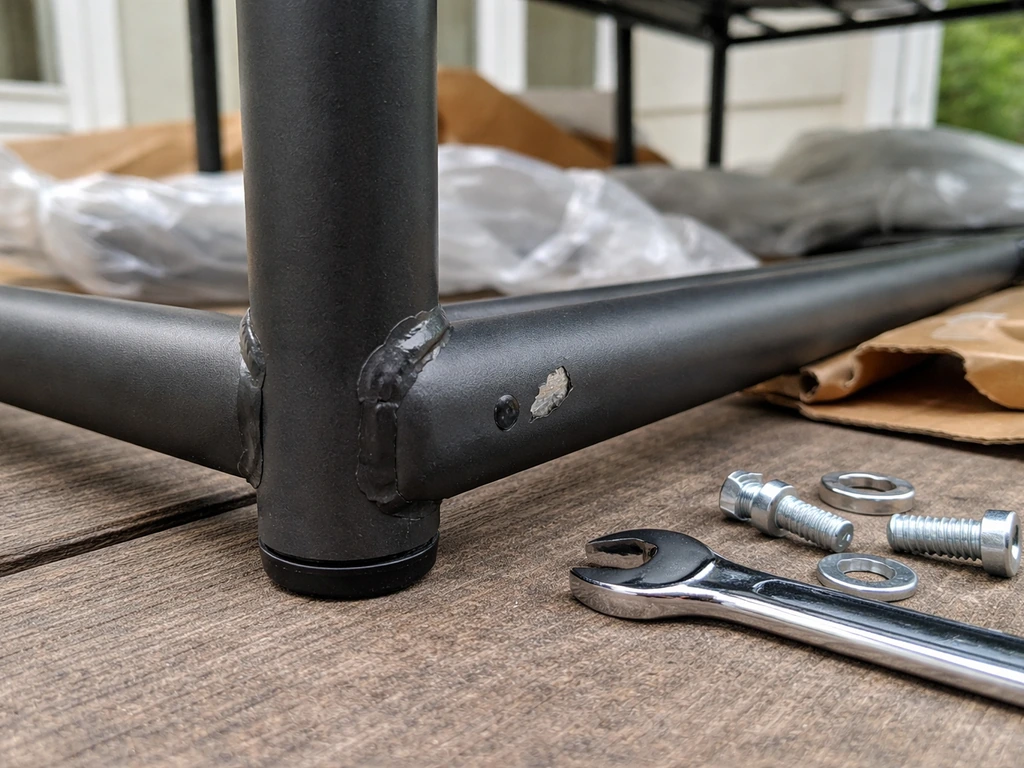
When your order arrives, do a quick physical inspection before assembly: check welds for gaps or cracks, look at the powder coat for any thin spots or chips (these are rust starting points), and verify that all hardware is the same type and finish (mismatched hardware is a sign of quality control shortcuts). After assembly, sit in chairs and apply lateral force to the frame, it should feel completely rigid, not flex or creak. Slight movement at bolted joints is normal and can be tightened; movement at welded joints is a defect. Document anything you notice with photos immediately so you have a record if you need to make a warranty claim.
If you're still working through brand comparisons, specific brand reviews, including options in the mid-range and niche outdoor categories like Leaders, Endura, Grand Resort, and Foremost, can help you narrow down which sets offer the construction details above at each price point. If you're narrowing options in this range, checking Leaders patio furniture reviews can help you spot recurring long-term issues like wobbling, rust, or cushion mildew. The framework here applies across all of them: materials, hardware grade, joint quality, cushion fabric spec, and long-term review patterns tell the full durability story, regardless of what the marketing copy says.
FAQ
What review timeframe should I trust for durable patio furniture reviews?
Use a durability scorecard with time windows: prioritize reviews written after 18 to 36 months, and treat “works fine after a month” as early-screening only. If there are no updates past 6 months, assume high uncertainty and either skip the product or only buy if you have strong replacement or warranty terms for cushions, hardware, and frames.
How should I use star ratings without getting misled in durable patio furniture reviews?
Star ratings are still useful for spotting extreme failures, but treat them as a filter, not proof. The most actionable signal is whether multiple reviewers describe the same failure mode (rust spots, powder coat bubbling, cushion mildew, wobble) at a similar month mark. If the complaints are all about shipping or packaging damage, durability risk is likely low.
What exact fabric specs should I look for when evaluating durable patio furniture reviews?
Look for “solution-dyed” or “inherent color” in the specs for cushions and umbrella fabric. For sling seats, confirm “100% PVC-coated polyester yarn” rather than generic “polyester.” If the listing only says “water-resistant” or “UV protected” without naming the dye or coating, you may be buying marketing language, not tested outdoor performance.
In durable patio furniture reviews, how can I tell if aluminum powder coating is truly UV-stable?
For aluminum, powder coat durability depends on the type of powder system, not just the word powder-coated. If you live in high-UV or hot climates, prioritize listings that specify UV-stable powder (for example TGIC polyester powder coat) and, when available, an exterior top system. Avoid “epoxy-only” descriptions, since they are more likely to chalk and fade.
Should I care about 304 vs 316 stainless hardware when choosing durable patio furniture?
Hardware grade is a common weak point. If you are within about 10 miles of salt water or exposed to de-icing salts, choose fasteners clearly specified as 316 stainless, not “stainless” without a grade. Also check that reviews mention rust around screws, hinges, or chair legs, because corrosion often shows up at those joints first.
How can I tell whether joint construction will affect durability more than the frame material itself?
Welded joints usually last longer because they do not loosen the way bolted connections can. If the furniture uses bolts in load-bearing areas, confirm that replacement hardware is available and that reviewers mention being able to retighten after seasonal expansion and contraction. If the product is flat-pack and bolts are hard to access, durability maintenance may be harder than expected.
What cushion durability warning signs should I look for beyond UV fading in durable patio furniture reviews?
Do not judge durability by “color looks good.” Instead, check whether reviewers mention mildew returning after cleaning, foam staying springy, or cushion zippers and seams failing. Also verify whether replacement cushion covers are sold, since cleaning and drying is the difference between routine maintenance and recurring mold issues.
Why do some durable patio furniture reviews complain about sagging, and how do I diagnose the cause?
If a review says “sagging” or “stretches out,” confirm whether it is a sling or cushion issue and check for repeated mentions. Sling sag often indicates low-grade yarn, weak coatings, or improper tensioning on replacement. For swings, also watch the hanging hardware and attachment welding, because that is where dynamic load failures usually show up first.
How do storage and maintenance habits change the durability outcome reported in reviews?
Some “durability failures” are actually storage and maintenance problems. Moisture trapped under covers, especially in shaded areas, accelerates rust, mildew, and foam degradation. Use breathable covers when possible, keep furniture off standing water, and rinse off salt residue after storms or coastal fog to prevent corrosion even with 316 hardware.
What should I check for outdoor dining set durability when reviewers mention tabletop problems?
Instead of assuming “all-weather,” confirm the actual tabletop material and safety spec. For glass, verify the listing states tempered glass, and for wind-prone areas prioritize aluminum slat or HDPE tabletops that avoid fracture risk. In reviews, track second-season complaints like edge rust, paint lifting, or cracking.
What quick inspection tests can I do when my patio furniture arrives to catch durability defects early?
Before assembly, inspect for powder coat thin spots and missing hardware finishes, especially around weld seams and corners. After assembly, apply lateral force to test rigidity, movement at bolted joints is often fixable, but movement at welded joints is not. Take photos before disposal of packaging if you might need a warranty claim.
How do I know if a durable patio furniture purchase will be repairable when parts wear out?
Yes, and it can help you estimate repairability. If you see repeated “no replacement parts” comments, you might be forced to replace the entire piece after hardware or cushion failures. Favor brands where reviewers mention replacement bolts, sling parts, or cushion covers being available.
What durability checks matter most for patio umbrellas, based on common review failures?
Umbrellas fail most often at the base and tilt mechanism. Verify the base weight is appropriate for wind conditions and check that the tilt hub is metal-based rather than plastic. In reviews, look specifically for complaints about tilt creeping, hub corrosion, and deformation of ribs after one or two seasons of storms.
What should I look for in durable patio furniture reviews specifically for rocking chairs and pivoting loungers?
For rockers and high-stress pivot points, focus on the rocker blade to leg connection and whether reviewers mention reinforced hardware or welded reinforcement. Avoid visible plastic connectors at structural joints, even if the furniture looks fine initially, because UV cycling and repeated motion can degrade plastic quickly.
Next Article
Endura Patio Furniture Reviews: Best Sets, Pros Cons
Endura patio furniture reviews for dining and conversation sets: durability, comfort, materials, common complaints, valu