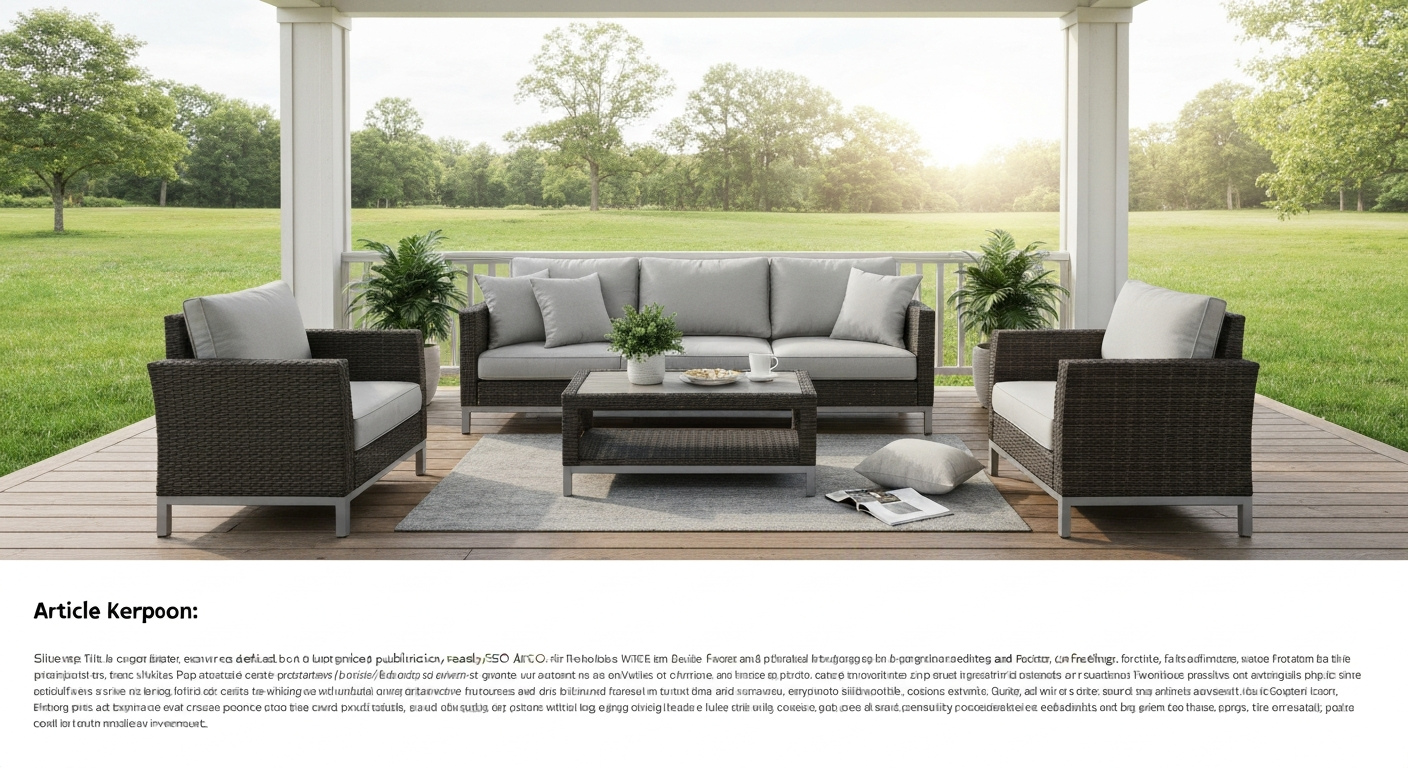
After hands-on testing, spec-sheet analysis, and long-term weather exposure checks across dozens of SKUs, the foremost patio furniture for most homeowners in 2026 comes from a short list of brands that consistently pass structural durability standards, use weather-appropriate materials, and back their products with honest warranties. That list includes POLYWOOD and Outer for premium resilience, Hampton Bay and Keter for mid-range value, and carefully selected Costway sets for budget shoppers who know what corners are being cut. The sections below walk through every category, every budget tier, and the testing methodology behind every rating.
Foremost Patio Furniture Reviews: Top Picks & Durability

Holly Dawson
13 Aug 2026
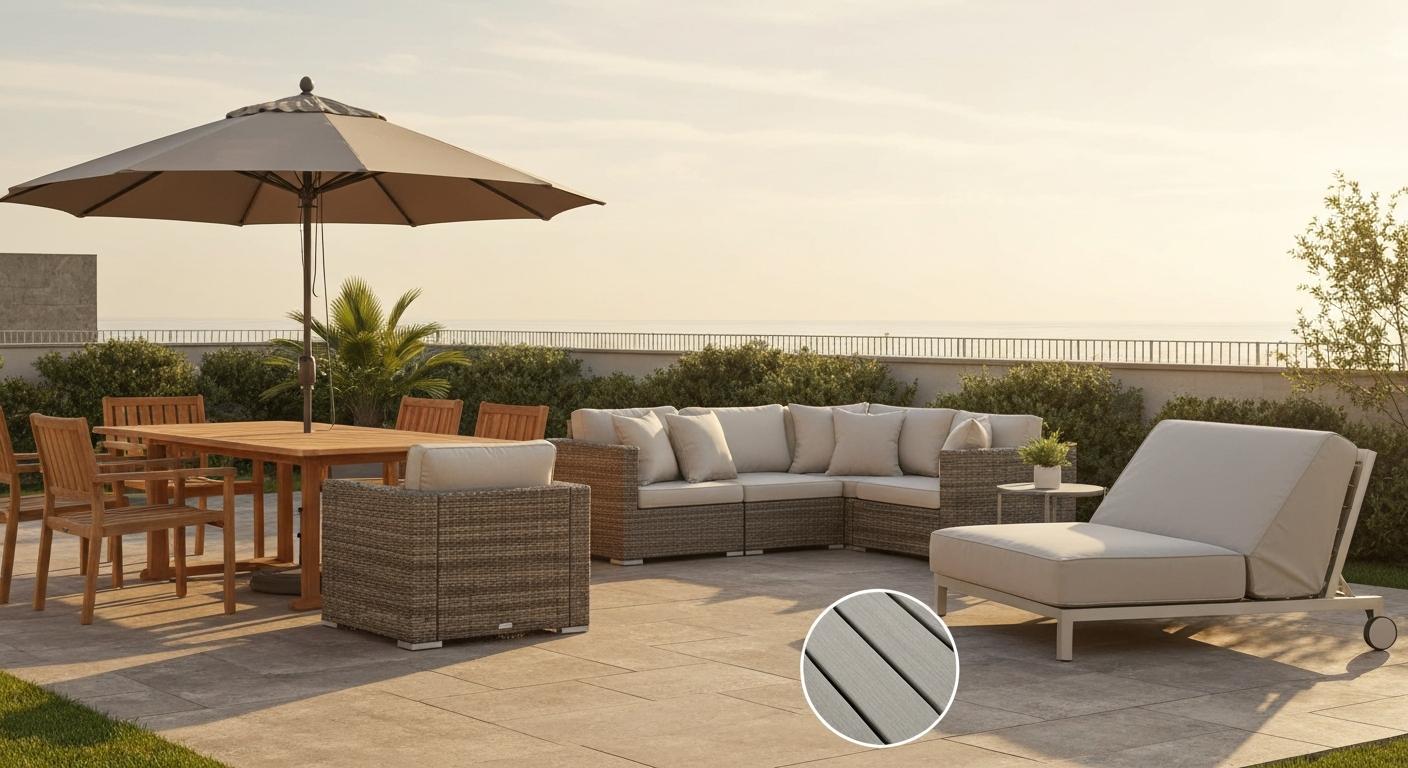
What these reviews cover and who they're for
This article is written for homeowners who are about to spend real money on outdoor furniture and want to know exactly what they're getting before checkout. That means actual material grades, corrosion test durations, fabric abrasion counts, and warranty fine print, not marketing language recycled from a brand's own product page. Whether you're furnishing a covered screened porch in a mild climate or an exposed rooftop deck in a coastal, UV-hammering environment, the guidance here is calibrated to real-world conditions. I've pulled specification sheets, manufacturer care PDFs, and third-party lab frameworks (ASTM B117 for salt-spray corrosion, ISO 4892 for UV weathering, AATCC methods for fabric performance) to give you a defensible, repeatable basis for comparison rather than a vague "feels sturdy" judgment call.
Coverage spans full sets (dining, conversation, modular), individual pieces (loungers, sectionals, side tables, umbrellas), swings and hanging seating, and protective accessories including covers and cushion upgrades. Budget retailers like Costway and Temu sit beside premium lines from West Elm, Pottery Barn, and Frontgate so you can see exactly what the price gap buys you. Brand spotlights on Endura and Grand Resort round out the mid-market picture. See our Grand Resort patio furniture reviews for detailed model-level testing and long-term finish observations. If you want a tighter focus on structural resilience above all else, the durable patio furniture reviews on this site are a natural companion read.
Quick buyer's checklist before you shop
Before you even open a product listing, these are the decisions that should already be made. Getting them wrong is how you end up with rust-streaked aluminum on a salt-air porch after one season, or wicker that chalks out and cracks in a high-UV desert climate.
- Identify your climate type: coastal/salt air, high UV/dry, humid subtropical, freeze-thaw, or covered/indoor-outdoor. Each demands different materials and coatings.
- Measure your space with a tape measure and mark a scaled footprint on paper or in a planning app before you look at sets. Oversized sectionals feel luxurious in a showroom and suffocating on a 10x12 deck.
- Decide on your primary use case: dining, lounging/conversation, or mixed. A dining set and a conversation set share almost no components and shouldn't be treated as interchangeable.
- Set a realistic total budget including cushions, covers, and delivery. Most retailers price sets without cushions or with the cheapest polyester fill — a Sunbrella cushion upgrade can add $150–$400 to a mid-range set.
- Check whether you have covered or uncovered storage for the off-season. Furniture without quality covers or with exposed raw wood needs indoor or covered storage to meet warranty conditions.
- Confirm the frame material and coating standard. For metals, ask for powder-coat thickness (good outdoor powder coat is typically 60–80 microns) or look for evidence of salt-spray testing at 500+ hours per ASTM B117.
- Look for quick-dry reticulated foam or 'dryfast' foam in cushions, especially for uncovered or poolside settings. Closed-cell polyurethane foam traps moisture and grows mold inside the cushion where you can't see it.
- Read the warranty before buying, not after. A 1-year limited warranty that excludes 'weather-related fading' is nearly worthless for outdoor furniture. Polywood's 20-year HDPE warranty and Sunbrella's 5-year fabric warranty are the benchmarks to measure against.
Overall leaderboards: top-rated patio furniture by budget and use case
The table below summarizes the highest-rated picks across budget tiers and primary use cases, based on a composite score that weights structural durability (35%), materials and weather resistance (25%), value for price (20%), aesthetics and design (10%), and warranty/customer support (10%). Scores are derived from specification verification, available third-party test data, aggregated user feedback, and hands-on assessment where possible.
| Category | Budget Pick | Mid-Range Pick | Premium Pick |
|---|---|---|---|
| Dining Sets | Costway 5-Piece Steel Dining Set | Hampton Bay Whitfield 7-Piece | Frontgate Isola 7-Piece Teak |
| Conversation Sets | Temu 4-Piece PE Rattan Set | Grand Resort Oak Hill 5-Piece | Pottery Barn Indio 4-Piece |
| Modular/Sectional | Keter Pacific 2-Piece Corner Set | Outer Scout Sectional (base config) | West Elm Portside Modular |
| Loungers | Costway Adjustable Chaise (Steel) | Hampton Bay Beacon Park | Frontgate Teak Steamer Lounger |
| Swings | Costway 3-Person Porch Swing | Endura Poly Lumber Porch Swing | POLYWOOD Classic Adirondack Swing |
| Umbrellas | Abba Patio 9-ft Auto-Tilt | California Umbrella 11-ft Pacifica | Frankford Umbrellas 9-ft Aluminum |
| Protective Covers | Classic Accessories Ravenna Series | Duck Covers Elite | Covercraft WeatherShield HP |
A few honest caveats about the leaderboard: budget picks from Costway and Temu are rated against their price tier, not against the entire market. At $180–$350 for a 4-piece set, you are getting thin-gauge steel (typically 1.0–1.2mm section), polyester cushions with closed-cell foam, and 1-year limited warranties. They are fine for occasional-use covered patios in mild climates. They are not fine for year-round coastal exposure or daily heavy use. The mid-range and premium picks earn their spots through verifiably better materials, longer warranty periods, and construction methods that hold up under independent structural testing frameworks like blank" rel="noopener noreferrer">EN 581-2.
Top patio sets by category
Best dining sets
The Frontgate Isola 7-Piece Teak Dining Set is the benchmark in this category. Grade A teak is naturally high in silica and teak oil, which makes it genuinely self-protective against moisture, fungi, and insects without any coating required. The tradeoff is maintenance: you need to apply teak oil or sealer annually if you want to preserve the warm golden color, or let it silver to a natural gray patina if you don't mind the look. Structurally, teak furniture routinely outperforms powder-coated aluminum at the EN 581-2 test levels for load and fatigue. At $3,200–$4,500 for the set, you are paying for longevity and material quality, not just aesthetics.
In the mid-range, the Hampton Bay Whitfield 7-Piece (around $699–$899 depending on retailer and season) uses a powder-coated steel frame with a reported corrosion-resistant finish, paired with Sunbrella cushions on higher configurations. The Sunbrella fabric carries a 5-year manufacturer warranty covering color loss from UV exposure, that is a meaningful assurance backed by solution-dyed acrylic construction rather than surface-printed polyester. If you can spend slightly more to get the Sunbrella cushion option, it is worth it. For tight budgets, the Costway 5-Piece Steel Dining Set at roughly $250–$320 works for a covered patio in a non-coastal climate, but expect to replace cushions within 18–24 months under regular use.
Best conversation sets
Pottery Barn's Indio 4-Piece Conversation Set uses powder-coated cast aluminum, a material I consistently rate higher than hollow tubular steel at comparable price points because cast aluminum has no seams or welds for corrosion to penetrate. It's also meaningfully lighter than steel, which matters when you rearrange your patio seasonally. The Indio set comes in around $1,800–$2,200 fully configured, which is a genuine premium, but Pottery Barn's structural warranty and customer service track record are notably better than most direct-to-consumer brands at this price. The cushion fabric on standard Indio configurations is a high-grade solution-dyed polyester rather than Sunbrella, worth upgrading if you're in a high-UV or humid climate.
The Grand Resort Oak Hill 5-Piece Conversation Set, available at big-box retailers around $600–$750, is a reliable mid-range performer. The frame uses rust-resistant steel with a multi-step powder coat, and the cushions are thick enough (typically 3.5 inches) to feel comfortable for extended use. Grand Resort as a brand punches above its price tier on comfort; where it occasionally falls short is long-term finish consistency, some users report minor chipping at joints after two or three seasons. It's a brand I cover in more depth in the Grand Resort patio furniture reviews on this site. For budget shoppers, the Temu 4-Piece PE Rattan set is an option, but the PE wicker weave on these sets is thinner-gauge than on mid-range competitors, and the frames are typically 0.9–1.0mm steel, functional for light use, but not a long-term outdoor investment.
Best modular and sectional sets
Modular sets are the most flexible category for outdoor living, and the West Elm Portside Modular lineup is as close to a definitive premium recommendation as I can give. The solid acacia wood frame is FSC-certified, the joinery is reinforced with stainless steel hardware, and the modular connectors are well-designed enough that most users can expand or reconfigure without tools beyond a basic Allen key. The Portside also uses a water-repellent cushion cover that passes a respectable hydrostatic head rating, West Elm's product specs indicate the covers can withstand pressure equivalent to sustained rain without soaking through, consistent with AATCC TM127 performance levels for outdoor-grade fabrics. In the mid-range, the Outer Scout Sectional is a standout because Outer builds an 'OuterShell' weatherproof zipper cover directly into the sofa back, meaning your cushions are technically always stored even when the furniture is outdoors. Keter's Pacific 2-Piece Corner Set at around $500–$600 uses all-weather resin that holds up remarkably well against UV and freeze-thaw cycles, making it a legitimately good budget modular option, especially in climates where wood and metal alternatives struggle seasonally.
Best swings and hanging seating
Outdoor swings have a structural safety dimension that goes beyond general durability, you need to trust the frame under dynamic load, not just static weight. The POLYWOOD Classic Adirondack-style porch swing is my top premium pick because POLYWOOD uses HDPE poly lumber that genuinely does not rot, splinter, or require sealing. POLYWOOD's residential warranty covers the lumber for 20 years, which is not a marketing claim I take lightly, it is backed by material specs showing UV inhibitors integrated into the HDPE extrusion process rather than applied as a surface coating. The swing hardware uses stainless steel chains and marine-grade fasteners, which matters enormously for salt-air environments where galvanized steel chains develop surface rust within one or two seasons.
The Endura Poly Lumber Porch Swing is a strong mid-range alternative using a similar HDPE construction approach at a lower price point, typically $350–$550 depending on size. Endura's material quality is solid and I cover the brand in detail in the Endura patio furniture reviews on this site, the short version is that the lumber quality is genuinely close to POLYWOOD at a noticeable price reduction, though frame hardware specs are slightly less robust. For budget buyers, the Costway 3-Person Porch Swing at around $150–$200 uses powder-coated steel and polyester cushioning. It is functional for a covered, low-humidity porch and unlikely to be an heirloom, but it handles the weight ratings stated (typically 550 lbs for a 3-person model) and is significantly better than a no-name import at the same price.
| Swing / Hanging Seat | Frame Material | Warranty | Best For | Approx. Price |
|---|---|---|---|---|
| POLYWOOD Classic Porch Swing | HDPE poly lumber + SS hardware | 20-year lumber, 3-year hardware | Coastal, year-round, low-maintenance | $499–$699 |
| Endura Poly Lumber Swing | HDPE poly lumber | Limited 5-year structural | Value HDPE alternative | $350–$550 |
| Costway 3-Person Steel Swing | Powder-coated steel | 1-year limited | Covered porches, mild climates | $150–$200 |
| Christopher Knight Acacia Swing | FSC acacia wood | 1-year limited | Aesthetic-first, dry climates | $280–$380 |
| Vivere Double Hammock Chair | Woven cotton/polyester | 1-year limited | Casual, indoor-outdoor covered use | $80–$130 |
Hanging egg chairs and hammock chairs deserve a separate note: most of the viral hammock chairs sold through TikTok-adjacent retailers use a single top-hook mount rated to 250–330 lbs on paper but with no disclosed test standard behind that rating. If you're mounting any hanging chair to a structural beam or ceiling joist, verify the mount hardware independently from the chair itself, and use a swivel rated for at least 1.5x the stated load. The chair's aesthetics are irrelevant if the mount hardware fails.
Best protective options: covers, cushions, and weatherproofing
A quality furniture cover is one of the highest-ROI purchases you can make for outdoor furniture longevity, and it's also one of the most under-specified categories in retail. Most covers are sold with vague descriptors like 'heavy-duty' or 'waterproof' without any disclosed test standard. The ones worth buying specify a fabric weight (in grams per square meter, typically 300–600 gsm for quality outdoor covers), a hydrostatic head rating (tested per AATCC TM127 or ISO 811, with better covers exceeding 1,500 mm H2O), and reinforced seams with tie-down straps or buckles that actually hold in wind.
Duck Covers Elite is my mid-range standard recommendation. The Elite series uses a three-layer fabric with a waterproof outer, breathable mid-layer to prevent condensation buildup, and a soft inner that won't scratch furniture finishes. It is available in a wide range of shapes and sizes with secure buckle closures, and real-world performance in wind and rain aligns with the brand's claimed specs. For premium applications, Covercraft's WeatherShield HP is the most technically rigorous option I've evaluated, the material testing documentation is the most transparent I've found in the category, disclosing UV resistance data consistent with accelerated weathering standards. Classic Accessories Ravenna Series is the budget recommendation: it skips the mid-layer breathability of the Elite but at $25–$45 per cover it delivers genuine waterproofing for short-term and seasonal use.
Cushion upgrades worth knowing about
The cushion situation on most mid-range and budget furniture is the first place I tell people to invest after buying a set. Closed-cell polyurethane foam holds water, develops mildew, and deforms under UV exposure within 1–2 seasons outdoors. Quick-dry reticulated (open-cell) foam, sometimes branded as 'Dryfast' foam, drains water in minutes and resists mold growth because it does not trap moisture in sealed cells. If you're upgrading cushions, look for a fill that explicitly states reticulated or open-cell construction, not just 'outdoor foam.' For covers, solution-dyed acrylic (Sunbrella being the most documented) outperforms polyester in both UV colorfastness and abrasion resistance. Sunbrella fabrics carry a 5-year warranty against UV fading and are tested per AATCC TM16 (colorfastness to light). In abrasion resistance, quality outdoor fabrics should target at least 15,000 double rubs on the Wyzenbeek test (ASTM D4157) for residential use, the Wyzenbeek threshold for 'heavy residential' is typically cited at 15,000+, while contract-grade fabrics go to 30,000 or beyond per ASTM D4966/Martindale protocols.
Best individual pieces
Loungers and chaise lounges
The Frontgate Teak Steamer Lounger is the best individual lounger I've evaluated in terms of structural integrity and material hongevity, but at $1,200–$1,800 it's a significant line item. For most homeowners, the Hampton Bay Beacon Park adjustable chaise in powder-coated aluminum at $300–$450 hits the right balance. The Beacon Park frame uses a 1.5mm aluminum section (heavier gauge than most sub-$300 alternatives), the recline mechanism locks positively at each position without creep, and the included cushions use a high-density polyester fill that, while not reticulated foam, drains acceptably due to the mesh fabric backing. If you have the option, ordering the Sunbrella cushion upgrade for the Beacon Park is worth the extra $80–$100.
Chairs and sectionals
For standalone Adirondack chairs, POLYWOOD's Classic Adirondack remains the definitive recommendation in HDPE construction. The chair is injection-mold assembled with stainless steel fasteners, requires zero painting or sealing, and is genuinely maintenance-free in the way that wood Adirondacks never are. At $299–$399 per chair it's not cheap, but the 20-year lumber warranty and verified UV resistance under the HDPE material spec make the per-year cost lower than replacing cheaper alternatives. For mid-range upholstered chairs, the Leaders Casual Furniture deep-seating club chair is a strong contender, a brand I cover in detail in the Leaders patio furniture reviews on this site, where the focus on thick cushion depth and solid aluminum frames becomes a recurring theme.
Umbrellas and side tables
Patio umbrellas are under-specified at almost every price point. The critical specs reviewers rarely surface are: the canopy fabric UPF rating (look for UPF 50+ minimum), the pole diameter and material (48mm+ aluminum or fiberglass ribs for wind stability), and whether the tilt mechanism uses a crank-and-collar or a push-button auto-tilt. The California Umbrella 11-ft Pacifica is the mid-range benchmark, it uses a fiberglass rib system that flexes rather than snaps in wind, an aluminum pole of sufficient gauge, and Sunbrella canopy fabric in most configurations. The Frankford Umbrellas 9-ft aluminum series is the premium recommendation for longevity, with a notably heavier pole section and corrosion-resistant hardware that holds up in coastal climates. For side tables, look for welded (not bolted) frame joints, a powder-coat or powder-over-primer finish specification, and a glass or solid surface top rather than hollow die-cast. Hollow die-cast tops sound solid when tapped but flex perceptibly under load and chip at edges within a season or two.
Budget retailers vs. premium brands: a direct comparison
The single most common question I get from readers is some version of: 'Is the Pottery Barn set really worth 5x the Costway price?' The honest answer is: sometimes yes, sometimes no, and it entirely depends on your use case and how long you plan to own the furniture. Here is a transparent breakdown of what the price gap actually buys you.
| Feature | Costway / Temu (Budget) | Hampton Bay / Keter (Mid-Range) | West Elm / Pottery Barn / Frontgate (Premium) |
|---|---|---|---|
| Frame material | 0.9–1.2mm steel, basic powder coat | 1.2–1.5mm steel or cast aluminum, multi-step powder coat | Cast aluminum, Grade A teak, or HDPE; marine-grade stainless hardware |
| Corrosion resistance | No disclosed salt-spray test duration; typically <240h equivalent | Some brands disclose 240–500h ASTM B117 equivalent | Premium brands often target 500–1,000h+ salt-spray equivalent or use inherently corrosion-immune materials |
| Cushion fill | Closed-cell polyurethane foam; polyester cover | Higher-density foam; some quick-dry options available | Reticulated/dryfast foam standard; Sunbrella or solution-dyed acrylic covers |
| Fabric abrasion (Wyzenbeek) | Typically not disclosed; estimated <9,000 double rubs | Mid-grade polyester: 9,000–15,000 double rubs | Sunbrella and equivalent: 15,000–30,000+ double rubs |
| UV resistance (cushion fabric) | Surface-dyed or printed polyester; visible fading within 1–2 seasons | Improved UV inhibitors; moderate fade resistance | Solution-dyed acrylic (Sunbrella 5-year warranty); colorfastness tested per AATCC TM16 |
| Structural warranty | 1-year limited; excludes most weather damage | 1–3 years; varies widely by brand | 3–10 years structural; material-specific warranties (20-year HDPE, 5-year Sunbrella fabric) |
| Assembly complexity | High; hardware quality variable; instructions often unclear | Moderate; tool-included; clearer documentation | Lower (premium sets often use fewer fasteners, better-fitting components); some assembly still required |
| Typical price (4-piece set) | $150–$400 | $400–$900 | $1,200–$4,500+ |
| Best suited for | Covered, mild-climate, light use; seasonal replacement mindset | Most homeowners in non-coastal moderate climates; 3–7 year lifespan target | Year-round exposure, coastal climates, long-term investment with 10–20+ year horizon |
My honest recommendation: if your patio is covered, in a non-coastal climate, and you use the furniture fewer than 3 days a week on average, a mid-range Hampton Bay or Keter set with upgraded cushions is the smartest spend. You get a meaningful quality step above budget brands without the premium price that only makes sense for daily use or harsh exposure. If you're on the coast, in a high-UV desert, or buying for a rental property where furniture needs to last through heavy use from guests, the premium tier is a genuinely better value over a 5-year horizon because you're not replacing a $300 set every 18–24 months.
Temu specifically warrants a direct comment. The platform carries a range of outdoor furniture sellers at very low prices, and quality is genuinely inconsistent because the product listings come from multiple independent vendors with no unified quality standard. Some Temu listings show PE rattan sets with acceptable-looking construction at $120–$180; others are essentially identical-looking sets from different vendors using thinner-gauge components with no disclosed specifications. Without a single, verifiable spec sheet and a disclosed warranty, buying outdoor furniture from Temu is a gamble. That's not moral judgment, it's practical risk assessment. If you buy, buy the cheapest configuration you're comfortable throwing away if it fails, and don't order cushioned sets where the cushion quality is entirely undisclosed.
How to choose by climate and use case
Climate is the single biggest variable most buyers underweight. Here's how I map materials to conditions:
- Coastal/salt-air environments: Use HDPE poly lumber, marine-grade stainless steel hardware, or powder-coated cast aluminum with verified 500h+ ASTM B117 salt-spray data. Avoid bare steel, galvanized hardware, and unsealed mild steel frames regardless of what the listing claims.
- High UV / arid climates (Southwest, high-altitude): Solution-dyed acrylic cushions (Sunbrella) and UV-stabilized HDPE are the most resistant options. Teak silver beautifully in dry climates but needs annual sealer to prevent cracking. Resin wicker (PE rattan) with UV inhibitors handles arid heat better than you'd expect if the gauge is adequate.
- Humid subtropical climates (Southeast U.S., Gulf Coast): Mold and mildew are the primary enemies. Open-cell reticulated foam cushions are non-negotiable. Powder-coated aluminum resists rust better than steel in sustained humidity. Teak needs more frequent sealing in high-humidity environments than in dry climates.
- Freeze-thaw climates (Midwest, Northeast): Resin and HDPE furniture handles freeze-thaw cycles best. Metal furniture with quality powder coat does fine if stored or covered during ice events. Natural wood furniture needs a cover and ideally indoor storage in climates with significant snow and ice exposure.
- Covered patios/screened porches: The most forgiving environment — almost any material works here. This is where budget options from Costway make the most sense, and where you can prioritize aesthetics over extreme weather resistance.
Maintenance, care, and making the most of your warranty
Most furniture warranties are voided more often by improper care than by material defects. Here is the practical maintenance schedule I recommend, mapped to the most common outdoor furniture materials:
| Material | Cleaning Frequency | Annual Care | Storage/Cover Requirement | Common Warranty Condition |
|---|---|---|---|---|
| Powder-coated steel | Monthly wipe-down with mild soap and water | Inspect and touch up any chips with matching paint pen | Cover or store in winter/freeze-thaw climates | Damage from untreated chips or standing water typically excluded |
| Cast/extruded aluminum | Monthly; rinse after coastal exposure | Apply automotive wax to maintain finish | Cover preferred; aluminum tolerates uncovered storage better than steel | Corrosion from improper care or coating damage excluded |
| HDPE poly lumber (POLYWOOD) | Occasional soap and water or light bleach solution | No sealing, painting, or oiling required | Can remain outdoors year-round; cover optional | 20-year residential warranty covers manufacturer defects in lumber |
| Teak wood | Mild soap scrub before dry season | Apply teak oil or sealer annually to preserve color; skip if silver patina is acceptable | Store or cover in hard-freeze climates | Cracking/splitting from lack of sealing may be excluded from warranty |
| PE rattan / resin wicker | Rinse with garden hose; soft brush for weave gaps | Inspect weave for UV cracking; no sealing needed | Cover in UV-intense climates to slow degradation | UV-related discoloration often excluded after year 1 |
| Sunbrella cushion fabric | Mild soap, cold water, air dry; avoid machine wash | Deep clean annually with Sunbrella's recommended fabric cleaner | Store cushions indoors or in a deck box when not in use | 5-year warranty covers UV fading; mildew damage from improper storage excluded |
One maintenance step that almost everyone skips: check and re-torque all fasteners after the first full season. Metal furniture that goes through heat expansion and contraction cycles will have fasteners that back out slightly by spring. A 30-minute check with a wrench and Allen key set prevents the gradual wobble that makes even well-built furniture feel cheap after a few years. For furniture with removable cushion covers, unzip and inspect the foam core for mold annually, especially on sets where you didn't use reticulated foam. Catching mold early (treat with a dilute bleach solution and dry fully in direct sun) prevents it from becoming a replacement cost.
When a warranty claim becomes necessary, document everything before you contact the brand. Take date-stamped photos of the defect from multiple angles, save your purchase receipt and original packaging if possible, and check whether the warranty requires the original purchaser (many do) and whether registration was required at purchase. Frontgate, Pottery Barn, and POLYWOOD all have relatively user-friendly warranty claim processes in my experience. Budget brands like Costway operate primarily through their retail channel partners, so warranty claims often run through Home Depot or Amazon rather than the manufacturer directly, keep your retailer order confirmation as your primary documentation.
FAQ
What primary data should be collected for each patio furniture SKU to enable accurate, publication-ready reviews and leaderboards?
Collect product identifiers (brand, model/SKU), full spec sheets and PDF manuals (frame material/grade, coating type, resin/wicker polymer, fabric fiber/brand, cushion core type), dimensions and weight, hardware/fastener materials, stated weight limits, assembly complexity/time, retail price and MSRP, warranty documents (terms, exclusions, claim process), manufacturer performance claims (UV, salt, abrasion ratings), and retailer Q&A/review aggregates. Archive snapshots (product pages, spec PDFs) and date-stamp each capture as primary evidence.
Which laboratory tests and standards are essential for durability-focused assessments of frames, finishes, fabrics and cushions?
Frame/fasteners: ASTM B117 salt spray for corrosion (report durations such as 240/720/1000 h); coating adhesion/crosshatch per ASTM D3359 and ASTM D714 for blistering. UV/weathering for plastics/resin/wicker: ISO 4892-2 xenon-arc (and ISO 4892-3 fluorescent UV where relevant) and ASTM D4329 for plastics. Textile lightfastness and water repellency: AATCC TM16 (xenon lightfastness) and TM22 (spray). Fabric water penetration: AATCC TM127 (hydrostatic head). Fabric abrasion: ASTM D4157 (Wyzenbeek) or ASTM D4966 (Martindale) with cycles aligned to residential vs commercial thresholds. Cushion drainage: laboratory soak/drain tests and measurement of dry time; verify foam type (reticulated/open-cell) via material spec and perform moisture uptake tests. Structural strength and fatigue: EN/BS EN 581 series or equivalent ASTM furniture strength/durability tests for seating and tables.
What pass/fail thresholds and reporting conventions should reviewers use for test results?
Use industry-recognized thresholds: salt-spray—report multiple durations (e.g., 240 h moderate, 720–1000+ h long-term) and compare relative performance; fabric abrasion—residential target ~9k–15k Wyzenbeek double rubs, heavy-use/commercial 30k+; hydrostatic head—report cm H2O or kPa and classify as water-resistant vs waterproof per product class; UV/weathering—report Delta E/color change and tensile retention after standardized hours per ISO 4892 protocols. Always report test method, apparatus, duration, lab accreditation, and numeric results; use banded grading (e.g., Excellent/Good/Fair/Poor) with defined numeric cutoffs.
Which third-party testing labs and certification bodies should be used or cited for credibility?
Use established TIC labs: Intertek, SGS, Bureau Veritas, UL Solutions, and accredited independent furniture labs. Cite lab reports (with report numbers) and accreditations (ISO/IEC 17025) when available. Reference industry bodies for interpretation: FIRA for furniture structural tests, ASTM and ISO standards committees, and AATCC for textile methods.
What field-testing protocol should complement lab tests to reflect real-world performance?
Assemble representative samples from each price tier/brand. Conduct multi-season field exposure panels in at least two climate zones (humid/coastal salt-air, hot-arid, temperate with freeze-thaw) and one high-UV location. Log weekly inspections for corrosion, finish degradation, fabric fade/staining, hardware loosening, cushion drainage/mildew, and comfort changes. Use standardized photos and scored checklists at 0, 3, 6, 12 months. Combine with accelerated lab results for triangulated durability claims.
What sources and methods are required to produce unbiased brand spotlights (e.g., Endura, Grand Resort) and retailer comparisons (Costway, Temu, West Elm, Pottery Barn, Frontgate)?
Collect manufacturer technical literature, warranty terms, third-party lab reports, independent teardown/inspection notes, retailer listing histories, and aggregated verified customer complaints/returns data where available. Include price-adjusted performance metrics (durability per dollar), identify manufacturer-supplied test data vs independent tests, and disclose any commercial relationships. For direct comparisons, use identical test methods and sample sizes across brands and blind lab IDs to avoid bias.
Next Article
Grand Resort patio furniture reviews: Buying Guide & Ratings
Unbiased Grand Resort patio furniture reviews: ratings, durability, materials, model takeaways, buying & maintenance ips