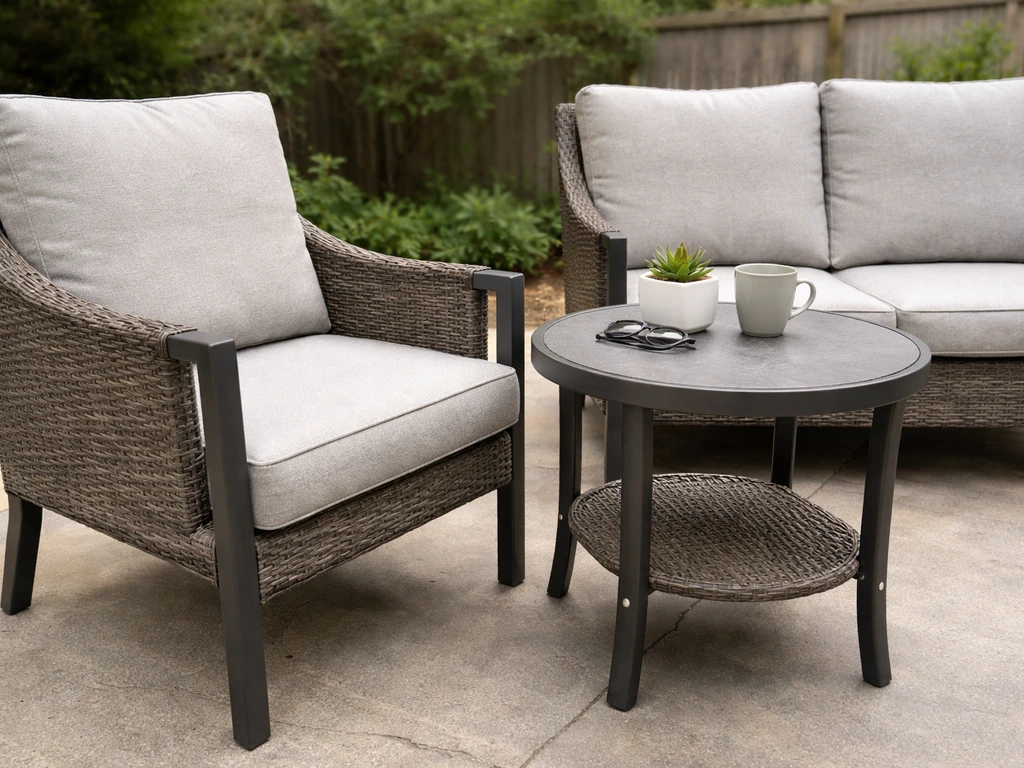
Patio plus outdoor furniture reviews are most useful when you treat them as a filter, not a score. A 4.3-star average tells you almost nothing on its own. What actually helps is reading for patterns: how does the frame hold up after one winter? Do the cushions stay dry after rain? Does it wobble on uneven concrete? When you know exactly what to look for in both expert write-ups and user comments, you can cut through the noise and pick a set that fits your space, your climate, and your budget in under an hour. If you are looking for patio 1 outdoor furniture reviews, focus on the patterns those sources describe so you can narrow down choices fast expert write-ups and user comments.
Patio Plus Outdoor Furniture Reviews: What to Buy

Holly Dawson
18 May 2026
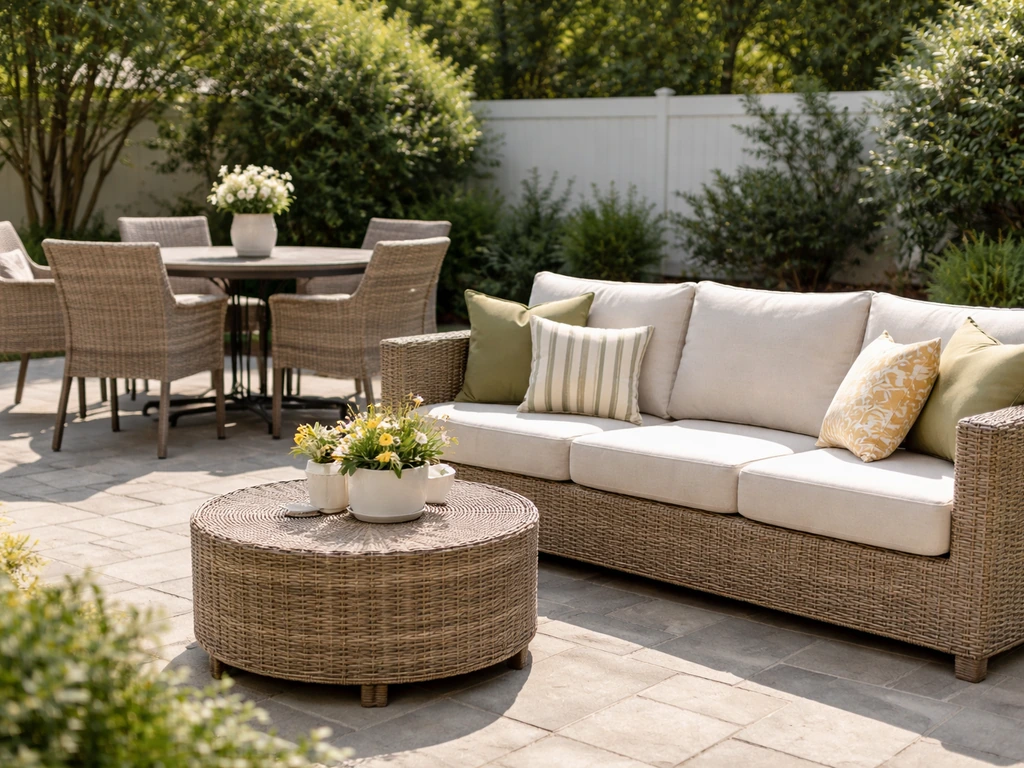
What patio plus outdoor furniture reviews should actually help you decide
Most shoppers search for reviews hoping for a simple verdict: buy this, skip that. But a good review, whether from an expert tester or a homeowner who has lived with the furniture through two summers, should answer a more specific set of questions. Will this piece survive my climate? Is the seat comfortable for someone my size? Does the frame feel like it costs what they're charging? Those are the decisions reviews should drive.
Think of reviews as covering four areas: construction and material quality, comfort and ergonomics, durability over time, and overall value at the price asked. A review that only tells you it looks pretty in photos is low signal. One that mentions the powder coat started chipping at the weld points after six months, or that the cushion covers shrink in the wash, is exactly the kind of detail you need. The goal of aggregating reviews from multiple sources is to separate the flukes from the patterns, and that is where this kind of review-led research pays off.
If you are also comparing full outdoor patio sets versus individual pieces, or evaluating brands like Outer, Patio Renaissance, or Patio 1, the same review framework applies. The materials, warranty terms, and climate suitability questions are consistent across all of those categories, so any research you do here transfers directly.
How to evaluate construction, materials, and durability
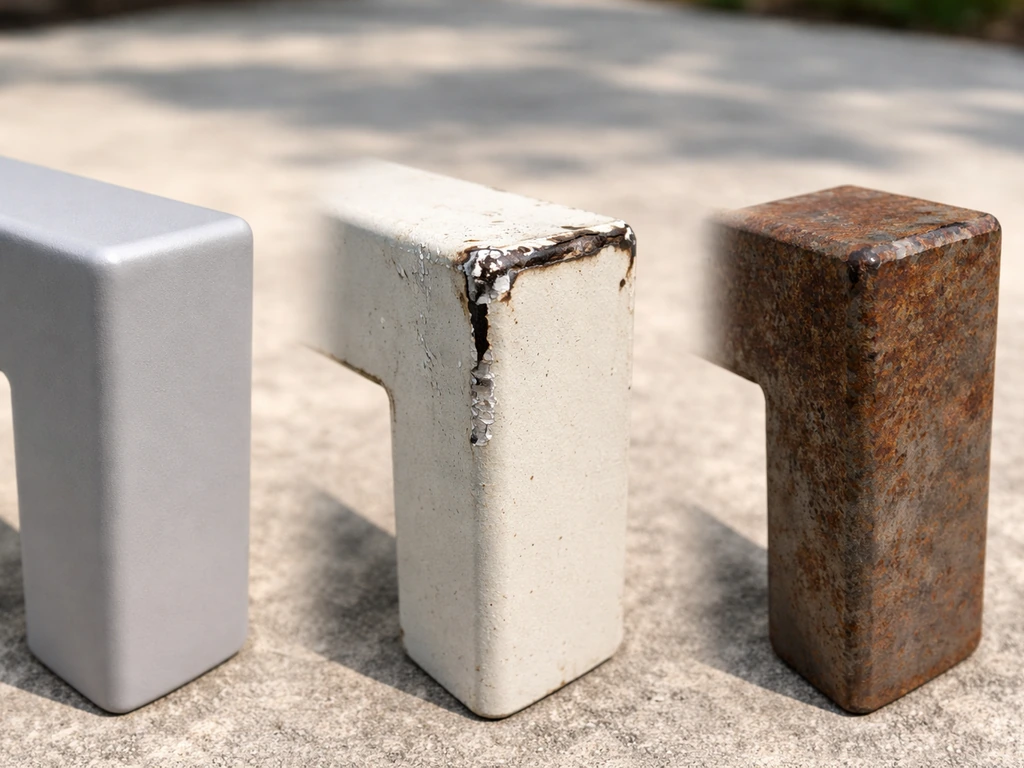
The frame material is the single most important factor in how long outdoor furniture lasts. Everything else, cushions, fabric, finish, can be replaced or repaired. A bent or rusted frame usually means the piece is done. Here is how the main options stack up for real-world durability.
| Material | Weather Resistance | Maintenance Level | Weight | Best Climate Fit |
|---|---|---|---|---|
| Powder-coated aluminum | Excellent (rustproof) | Very low | Light | All climates, especially humid/coastal |
| Steel (powder-coated) | Good, but can rust at chips/welds | Moderate | Heavy | Dry or covered patio use |
| Wrought iron | Poor without covers (rusts easily) | High | Very heavy | Covered porches only |
| Teak wood | Excellent (naturally oil-rich) | Low to moderate | Heavy | All climates; grays without treatment |
| Synthetic wicker/resin | Good (UV-stabilized) | Low | Light to medium | Sun-heavy climates; avoid high-heat zones |
| Sling fabric (polyester/vinyl) | Good (fades slower than cushions) | Very low | Light | High-use, pool-side, or budget setups |
When you are reading reviews or inspecting listings, Consumer Reports recommends checking specifically for smooth welds, rustproof hardware (stainless or galvanized), and a powder-coated finish rather than painted metal. Those three details predict longevity better than brand name alone. Wrought iron, despite its classic look, is genuinely susceptible to rust unless the furniture is kept on a covered patio or consistently protected with covers. That is not marketing caution, it is a real maintenance burden.
Teak is the gold standard for wood outdoor furniture. It is naturally oil-rich and weather-resistant in a way that other woods simply are not. The tradeoff is that if you leave it untreated, it will turn a silver-gray over time. Some people love that look; others want to maintain the warm honey color with periodic teak oil application. Either way, it will not rot or crack the way pine or eucalyptus can.
For cushion fabrics, Sunbrella is the benchmark. Its fabrics carry a five-year limited warranty and are engineered specifically for outdoor upholstery, with genuine fade resistance and mold/mildew resistance built into the fiber rather than added as a coating. If a listing says "outdoor fabric" without specifying Sunbrella or a named solution-dyed acrylic, that is worth probing in the reviews. Generic outdoor fabrics can fade significantly in the first summer in a sunny, southern-facing yard.
Comfort and real-life usability: size, assembly, and stability
A piece that looks great in a staged photo can feel completely wrong in real life. Comfort on a patio chair is driven by seat depth, seat height, back angle, and armrest height, none of which show up clearly in most product photos. Before you buy, check the spec sheet and compare to furniture you already know is comfortable.
For outdoor dining specifically, standard chair seat height runs 17 to 19 inches, pairing with a standard dining table that is 28 to 30 inches tall. That 12-inch clearance between the seat top and the underside of the table is what makes dining comfortable. If you are mixing chairs from one brand with a table from another, pull the measurements and verify the math. Mismatches with counter-height or bar-height tables are one of the most common complaints in user reviews, and they are entirely avoidable.
For seating arrangements around a sectional or conversation set, plan for roughly 30 to 36 inches of walking clearance behind or around chairs. That sounds like a lot until you try to squeeze past a pulled-out chair in a tight space. Measuring your patio before you shop is not optional; it is the step that separates a great purchase from an expensive return.
Assembly is another area where reviews earn their keep. Look for comments that describe how many pieces are involved, whether the hardware bag is complete, and whether one person can realistically assemble it alone. Budget brands from Costway or similar retailers often have more complex assembly with more pieces to align; that is not always a dealbreaker, but it is worth knowing before delivery day. Stability complaints (wobbling, uneven legs, joints that flex under weight) are the kind of specific feedback that should disqualify a piece regardless of how good the photos look.
How to read expert reviews vs. user feedback without getting misled

Expert reviews and user reviews measure different things, and both have blind spots. An expert tester will evaluate construction quality, materials, and ergonomics more rigorously than most consumers, but they are rarely testing a piece through an actual summer in your specific climate. User reviews reflect real-world longevity, but they are noisier, more susceptible to emotional bias, and easier to game.
What to watch for on Amazon and retail platforms
Amazon Verified Purchase reviews come from people who actually bought the product through Amazon, which raises baseline reliability. Amazon Vine reviews come from invite-only reviewers who received the product free in exchange for honest feedback. Research suggests Vine reviews can skew slightly positive due to a gratitude or reciprocity effect, and they often reflect the experience of early production runs rather than the version you will receive months later. Treat Vine star averages with some skepticism, and weight the written text of both Vine and verified reviews more than the star number itself.
On Trustpilot and similar independent platforms, anyone can leave a review, which broadens the pool but also widens the range of review quality. The most useful signal is always pattern recognition: if a dozen different reviewers mention the same issue (a specific screw stripping during assembly, a cushion zipper failing, a weld cracking at a joint), that is a real product problem, not a one-off. A single one-star rant with no specifics is worth almost nothing.
How to use star ratings as a starting point, not an endpoint
Filter reviews by the lowest ratings first. The three-star and below reviews on outdoor furniture almost always contain the most useful information about real durability issues: rust appearing in year two, cushion fill going flat, or hardware that cannot be sourced for replacement. Then read the highest-rated reviews for detail about what is genuinely good. If the positives are all about appearance and the negatives are all about structure, that is a pattern worth taking seriously.
Budget vs. premium: what you actually pay for across price tiers
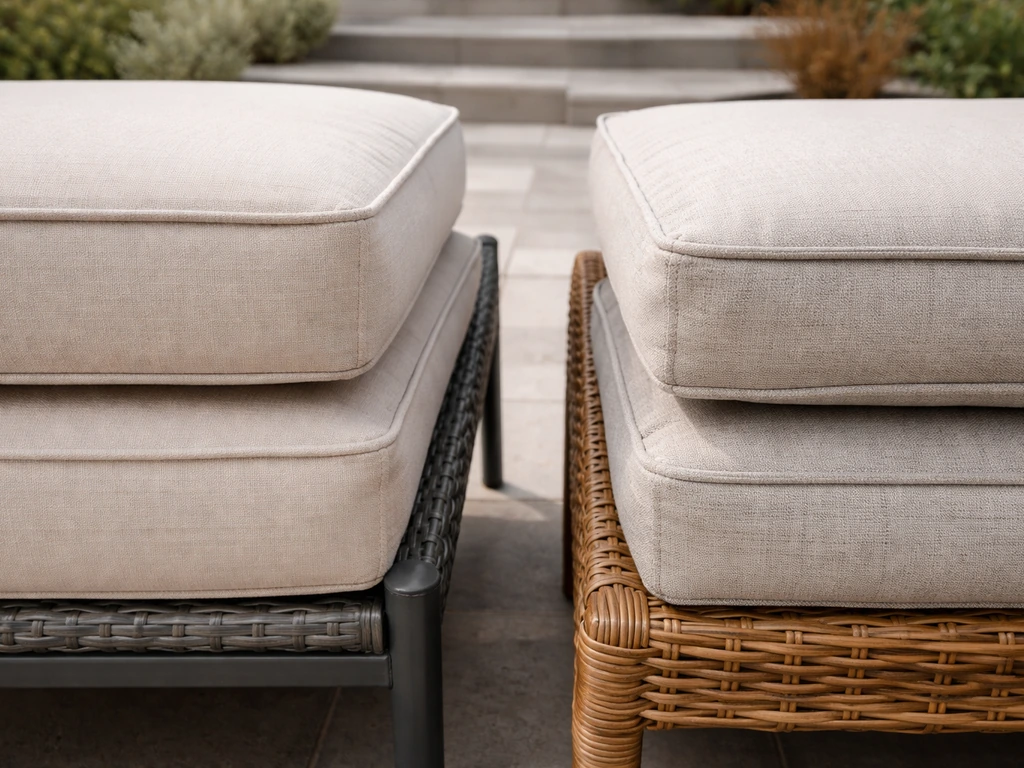
The price range for outdoor furniture is enormous, from a $150 bistro set on Temu to a $4,000 sectional from Frontgate. The gap is real, but it is not always proportional. Here is an honest breakdown of what you get as you move up the price ladder.
| Tier | Example Brands | Typical Price Range (set) | What You're Paying For | Main Tradeoff |
|---|---|---|---|---|
| Budget | Costway, Temu, Amazon basics | $100–$500 | Acceptable looks, functional for light use | Thinner frames, generic fabric, limited warranty (often 1 year on steel) |
| Mid-range | Hampton Bay (Home Depot), Better Homes & Gardens | $500–$1,500 | Better welds, more fabric options, improved cushion thickness | Quality varies by collection; research each line individually |
| Upper-mid | West Elm, Pottery Barn | $1,500–$3,500 | Design consistency, better material sourcing, some teak/aluminum frames | Premium brand markup; cushion quality still varies |
| Premium | Frontgate, Restoration Hardware | $3,500+ | 10-year structural frame warranty, solution-dyed acrylic fabrics, thicker gauge aluminum | High upfront cost; returns policy matters more at this price |
Frontgate is notable at the premium end for offering an industry-leading 10-year structural frame warranty and fabrics described as 100% solution-dyed acrylic that resist fading, stains, mold, and mildew. That warranty has real value if you plan to keep furniture for a decade. By contrast, Overstock-era budget brands typically cover steel frames for just one year against breakage during normal use, with fading and discoloration from sun explicitly excluded.
The honest middle ground for most homeowners is the $800 to $1,800 range with powder-coated aluminum frames, Sunbrella or solution-dyed acrylic cushions, and a manufacturer warranty of at least three to five years. That combination gives you durability without paying the premium brand markup, provided you are reading reviews carefully and not just trusting the brand name.
Red flags, warranty terms, and buying mistakes to avoid
Some issues come up so consistently across patio furniture reviews that they qualify as category-wide red flags. A patio renaissance outdoor furniture reviews guide can help you spot those red flags early and compare realistic durability, comfort, and value across brands. If you want the quickest way to compare options, focus specifically on outdoor patio set reviews that highlight construction, comfort, and long-term durability. Knowing them before you shop saves money and frustration.
- Painted (not powder-coated) metal frames: paint chips at stress points and welds, creating rust entry points within the first season
- Non-stainless hardware on steel frames: even galvanized screws can corrode in coastal or high-humidity climates; stainless is the minimum for anything near salt air
- Vague fabric descriptions like 'outdoor polyester' or 'weather-resistant fabric': these are not the same as solution-dyed acrylic; expect faster fading
- Cushions with non-removable, non-washable covers: these become a hygiene and mold problem after the first wet season
- Assembly reviews mentioning stripped screws, misaligned holes, or missing hardware: these suggest inconsistent manufacturing quality control
- No return policy or a very short return window: large furniture is hard to inspect on delivery; 30 days is a reasonable minimum to detect structural issues
- Warranty language that excludes cushion fading, compression, or discoloration as 'normal wear': that language essentially means cushions are not covered for anything practical
On warranty terms specifically, the gaps are significant. La-Z-Boy covers structural frame failure for five years but explicitly excludes normal fading, weathering, and staining. Frontgate offers blank" rel="noopener noreferrer">10 years on frames with a 30-day return window. Budget retailers on Overstock cover steel frames for one year with fading excluded. Before you buy, spend two minutes reading the warranty document, not just the marketing headline. The exclusions list is where the truth lives.
The most common buying mistake at every price point is ordering without measuring. A seven-piece dining set that photographs beautifully may require a minimum patio footprint of 12 by 14 feet to allow comfortable chair movement and walking clearance. Many shoppers discover this only after delivery, which triggers a costly return process that many brands limit or charge fees for on large items.
Care, maintenance, and covers: how to actually make it last
Even the best outdoor furniture shortens its lifespan dramatically without basic maintenance. The good news is that the right materials minimize how much you need to do.
Cleaning by material type
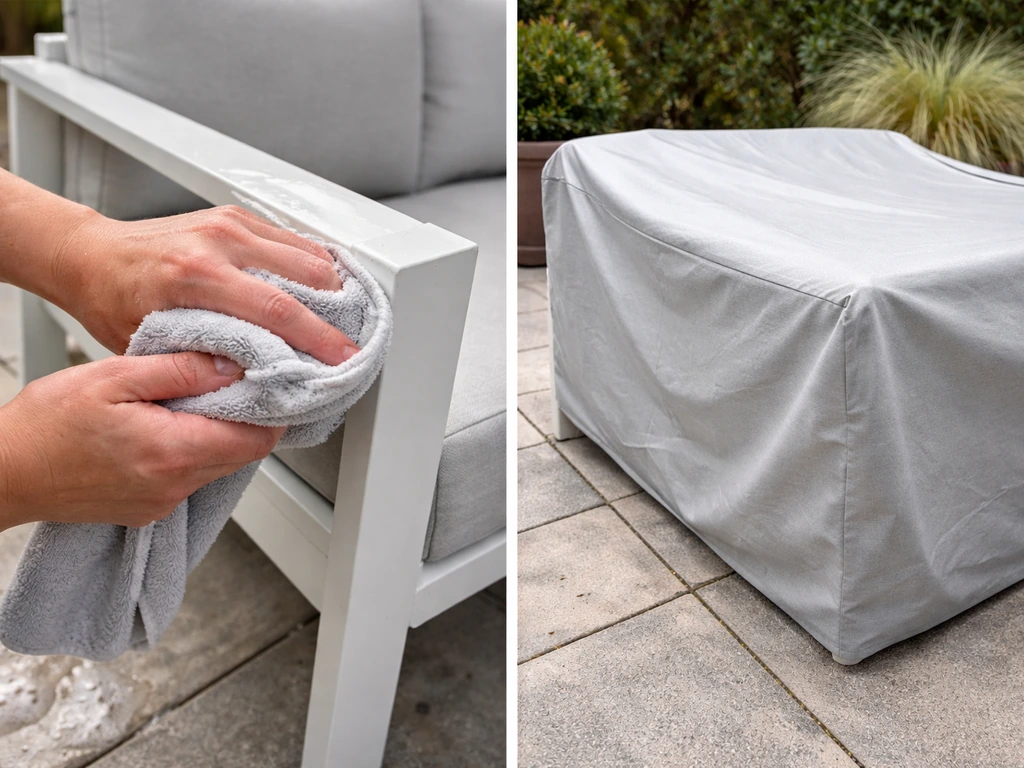
Powder-coated aluminum and steel should be cleaned with mild soap and water only. Avoid abrasive scrubbers or scouring pads; they damage and dull the powder-coat finish, which is the protective layer preventing oxidation. For small nicks or chips in the finish, touch-up paint in the matching color applied quickly prevents rust from taking hold underneath. Teak and eucalyptus wood should be cleaned with a soft brush and mild detergent, rinsed thoroughly, and allowed to dry completely before covering. Oil treatment once or twice a year maintains the warm color; skipping it is fine if you prefer the silver-gray weathered look. Sunbrella and solution-dyed acrylic fabrics can typically be cleaned with a diluted bleach solution (check the manufacturer's spec), which is a significant advantage over generic polyester outdoor fabric.
Off-season storage and covers
Furniture covers are not optional if you want to protect your investment. Every major buying guide, from Home Depot to Lowe's, recommends covers regardless of material, because they protect against UV damage, moisture, pests, and debris. Lowe’s also recommends using furniture covers regardless of material to protect from the elements Every major buying guide, from Home Depot to Lowe's, recommends covers regardless of material. A quality cover that fits properly is a $30 to $80 investment that can add years to a $1,000 set. For harsh winters or extended periods without use, move furniture to a cool, dry, well-ventilated space like a garage or shed. Cushions especially benefit from indoor storage during winter; moisture trapped in foam fill causes mildew and compression that warranties typically exclude. This maintenance piece connects directly to accessories like covers, which deserve as much consideration as the furniture itself. If you are comparing covers, cushion organizers, and cleaning tools, outdoor patio supplies reviews can help you spot which accessories actually hold up through real weather.
Your pre-purchase checklist
- Measure your patio and confirm the set fits with 30 to 36 inches of walking clearance around seating
- Verify frame material (powder-coated aluminum is the easiest long-term choice for most climates)
- Check that hardware is stainless steel, especially if you are near the coast or in a humid climate
- Confirm cushion fabric is Sunbrella or solution-dyed acrylic, not generic 'outdoor polyester'
- Read the 3-star and below reviews specifically for frame, joint, and hardware issues
- Pull the warranty document and read the exclusions, not just the headline coverage period
- Verify the return window is at least 30 days and understand who pays return shipping for large items
- Budget for a fitted furniture cover and a cushion storage bag before the first winter
FAQ
What should I measure to avoid the common walking-and-chair-spacing complaints after delivery?
Measure for clearance twice, once for the chair position and once for fully pulled-back use (people sit, then slide back). If you cannot pull a chair out and still keep walking space, you will see it in low-rated reviews as “hard to move,” not as a comfort issue.
How do I prepare if I might need to use the warranty later based on what I read in patio plus outdoor furniture reviews?
Warranty coverage usually triggers only after you submit proof (photos plus purchase order), so keep order confirmations and take close-ups of the exact failure point (hinge, weld, zipper track). Reviews often mention delays when buyers could not show documentation or clear defect photos.
What wording in reviews should make me skeptical about rust-free claims?
Treat “rust-free” claims as marketing unless reviews mention rustproof hardware by material (stainless, galvanized) or cite specific rust locations. A good pattern to search for is rust at weld seams, screw holes, and frame joints, since that is where many low-cost sets fail first.
When reviews mention durability issues, how can I tell whether parts and repairs will be easy or painful?
If a set is powder-coated but the brand only shows “painted” touch-ups in listings, prioritize replacement parts availability in reviews. People who can order a matching screw, sling, or cushion cover tend to report fewer long-term frustrations.
What cushion-related details should I look for beyond “comfort” in outdoor furniture reviews?
Check whether reviewers describe cushion covers as removable and how the zipper behaves after sun exposure. If multiple reviews mention zipper failure, stuck zippers, or covers that shrink in the wash, you should plan to store cushions indoors or budget for replacement covers.
Why do some reviews focus on wobble or floor damage even when the frame looks solid in photos?
Look for mentions of “under frame” wear and floor impact, like scuffing from metal feet or small wheels that pop off. These are common in user reviews for patio sets that are moved often, and they can turn into instability or scratching complaints over time.
What specific table-and-chair mismatch should I verify when mixing brands?
For mixed seating and tables, confirm both height and leg clearance (not just seat height). User complaints often come from chairs hitting the table skirt or from armrests being too wide for the gap.
How should I interpret reviews if they were written in different seasons or climates than mine?
Use the “lowest ratings first” approach, but also filter by season. If you live somewhere with hot summers, prioritize reviews from that timeframe, since fade and fabric stretching can appear after the first strong sun period.
What does a useful assembly review typically include, and what should I ignore?
If assembly complaints show up, look for how reviews describe the hardware bag, missing pieces, and how quickly customer support ships replacements. A set can be “easy to assemble” in one review but painful in another due to missing fasteners.
How do I choose the right outdoor furniture covers based on review patterns?
When comparing covers, confirm ventilation and fit range (elastic hems, straps, or tie-down points). Reviews often praise covers that don’t balloon in wind, because trapped condensation accelerates mildew even with good fabrics.
Next Article
Outdoor Patio Set Reviews: How to Compare Any Brand
Practical guide to interpret outdoor patio set reviews and choose the right set by materials, durability, comfort, and f