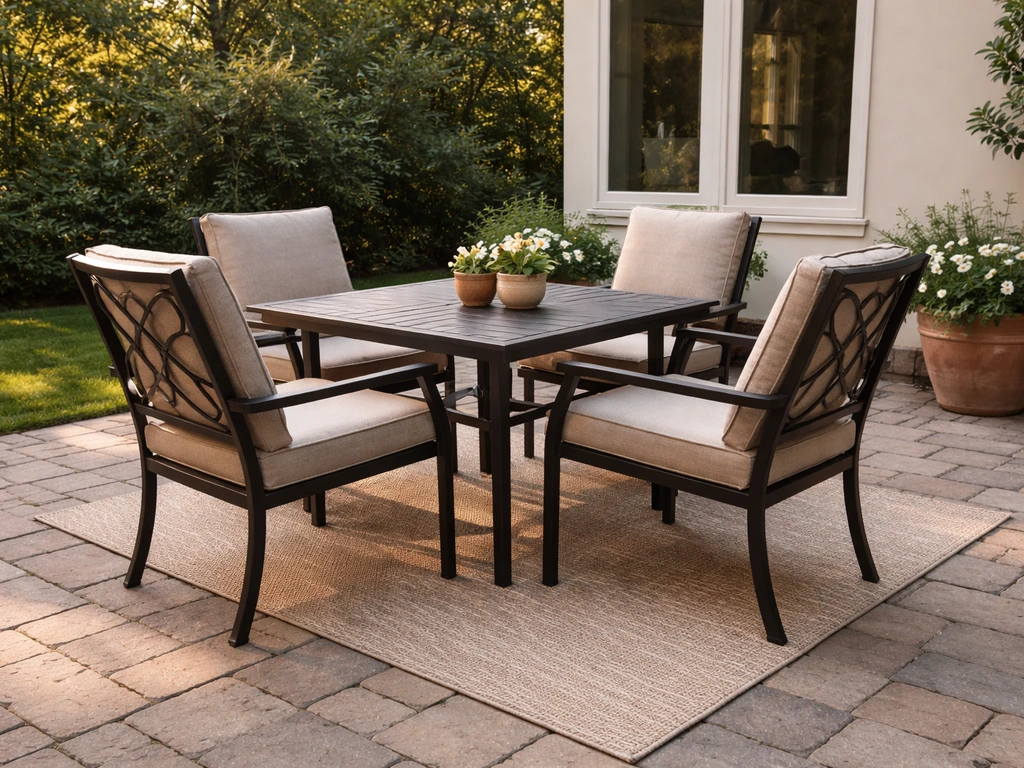
Outdoor patio set reviews are genuinely useful, but only if you know what to ignore. Outdoor patio set reviews are genuinely useful, but only if you know what to ignore, so you can focus on outdoor patio furniture reviews that reflect real, durable performance over time. Most star ratings on retailer sites conflate assembly experience, shipping speed, and first-impression aesthetics into a single number that tells you almost nothing about whether a set will still look good in three seasons. Here's how to cut through that noise and use reviews to find a patio set that actually works for your space, your climate, and your budget today.
Outdoor Patio Set Reviews: How to Compare Any Brand

Holly Dawson
1 May 2026
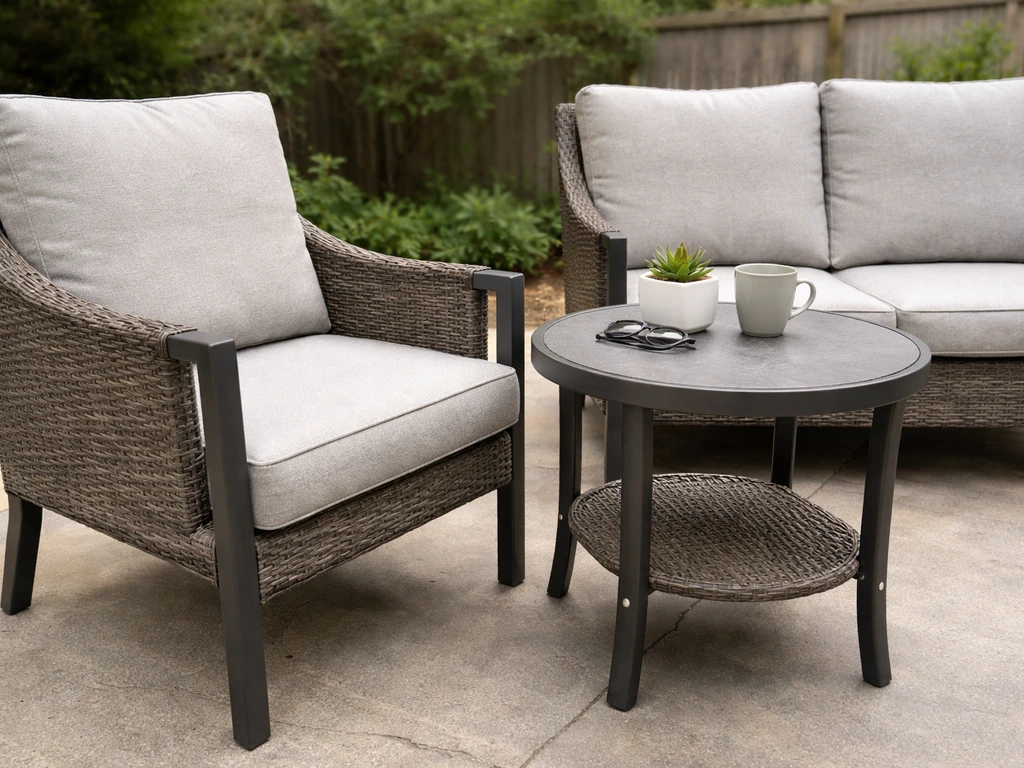
How to use patio set reviews to make a real decision
The most reliable reviews are the ones written six to eighteen months after purchase, not the day the box arrived. Look for dated reviews, filter for lowest ratings first to find recurring failure points, and pay attention to reviewers who share specific details like 'the finish started flaking after one winter' or 'the weld on the left armrest cracked by August.' Vague five-star reviews that say 'love it, looks great!' tell you nothing about durability.
When you're comparing sets across multiple platforms, search for the exact model name plus words like 'after one year,' 'durability,' or 'rust' rather than just browsing star averages. Reddit threads, home improvement forums, and YouTube unboxings often surface real-world detail that retailer review sections suppress. If a set has thousands of reviews but almost none discuss it after summer one, that's a signal worth noting.
One practical framework: build a short-list of three sets at your target price point, then look for each one's most critical one- and two-star reviews. If the same complaint repeats across unrelated buyers, it's a structural flaw, not a fluke. If the critical reviews are all about missing hardware or damaged packaging, the product itself may be fine and the issue is the shipping chain.
What to look for in construction and materials (and why reviews mention them)
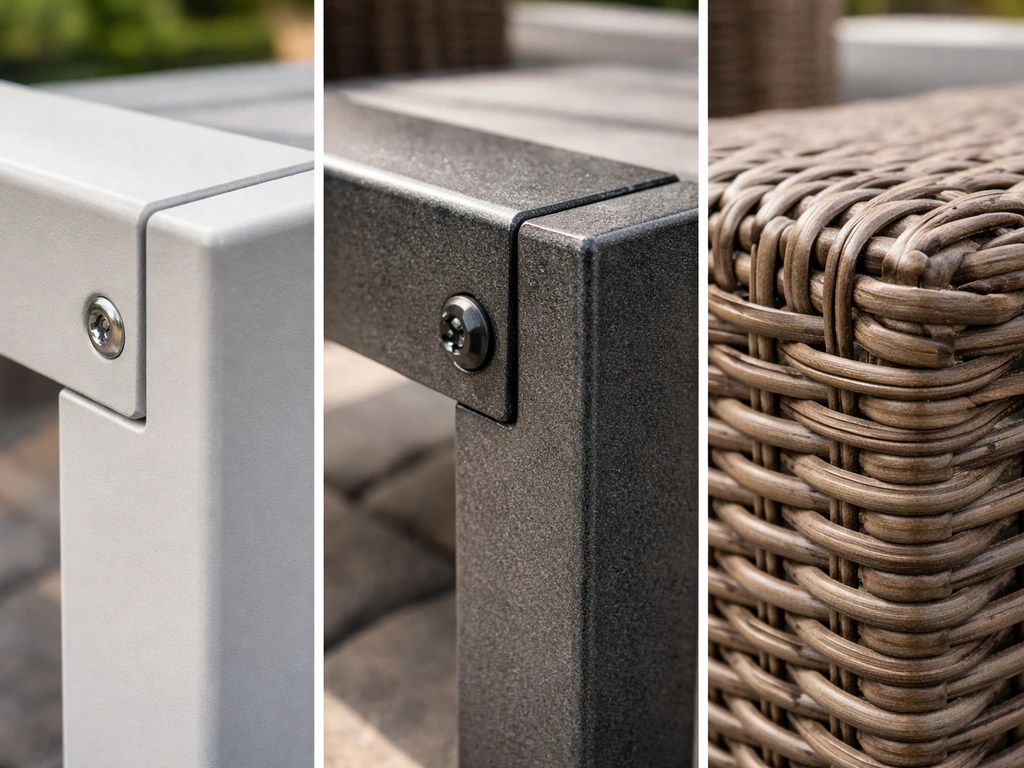
Material choice is the single biggest predictor of how a patio set performs over time, and it's the thing reviewers most often mention without explaining. Here's what the major materials actually mean for you in practice.
| Material | Weight | Rust Risk | Best Climate | Maintenance Level |
|---|---|---|---|---|
| Powder-coated aluminum | Light | Very low | Coastal, rainy, humid | Low |
| Steel (tubular) | Moderate | Moderate-high if paint chips | Dry climates, covered patios | Moderate |
| Wrought iron | Heavy | High if not kept covered | Dry, low-humidity climates | High |
| All-weather wicker (resin) | Light-moderate | None (frame may rust) | Most climates | Low |
| Teak / hardwood | Heavy | None (wood grain) | All climates with oiling | Moderate-high |
| Recycled plastic (HDPE) | Moderate | None | Coastal, humid, extreme heat/cold | Very low |
Aluminum is the current sweet spot for most buyers. It's lightweight enough to rearrange easily, doesn't rust even in coastal or rainy conditions, and holds a powder-coat finish well over multiple seasons. Steel costs less upfront but is far more vulnerable once the finish is chipped or scratched, which happens regularly during assembly and general use. Consumer Reports specifically recommends checking metal furniture for bare, unpainted areas or any rust spots before you buy, because those spots become rust craters by year two.
Wrought iron has a classic, hefty look that many people love, but it requires real commitment. Consumer Reports is direct on this: wrought iron is susceptible to rust and should be kept on a covered porch or protected with furniture covers. If your patio is exposed and you live somewhere with rain or humidity, wrought iron will disappoint you regardless of what the product listing claims.
All-weather wicker (always a resin weave over a steel or aluminum frame) is where reviews get tricky. The wicker itself holds up well, but the internal frame is the failure point. Check reviews specifically for mentions of the frame rusting through and pushing out through the weave, which is a common failure in budget wicker sets that use plain steel rather than galvanized or aluminum cores. Look for sets that specify aluminum frames inside the wicker weave if you're in a wet climate.
Frame joinery matters more than most buyers realize. Welded joints are stronger than bolted connections, but both can fail at different points. Reviews that mention wobbling chairs or tables within the first season usually point to under-engineered joinery or hardware that loosens with seasonal expansion and contraction. Tighten all bolts after the first month of use regardless of what you buy.
Comfort, cushions, and fabrics: what ratings usually get right (and wrong)
Cushion ratings in reviews are almost always about first-impression softness, not long-term performance. A cushion that feels plush on day one can compress to nothing by the end of a single summer if it's using low-density foam. Reviews written after a full season are far more reliable here. Look for complaints about cushions that 'went flat,' 'lost their shape,' or 'feel like cardboard now' as signs of low-grade fill.
Fabric matters as much as fill. Consumer Reports recommends looking for descriptors like 'commercial grade,' 'performance fabric,' or 'indoor/outdoor' fabric rather than generic claims of 'weather-resistant. ' Specific brand names like [Sunbrella](https://www. sunbrella.
com/media/pdf/sunbrella-shade-product-book. pdf), Outdura, or Agora are meaningful signals of quality because these fabrics are solution-dyed (the color runs all the way through the fiber, not just on the surface), which makes them significantly more fade-resistant than standard polyester. Sunbrella also states that its performance fabrics are made from 100% solution-dyed acrylic and are inherently fade resistant, UV protective, and durable through cleaning, wear, and exposure [Sunbrella, Outdura, or Agora are meaningful signals of quality](https://www. sunbrella.
com/sunbrella-fabric-difference). A set marketed as 'fade-resistant' with unspecified fabric is almost certainly using a surface-dyed polyester that will visibly fade within one to two seasons in direct sun.
Where reviews consistently get cushions wrong is in assuming that water-resistant means waterproof. Most outdoor cushions are water-resistant, meaning they shed light rain but will absorb water in prolonged exposure. If cushions stay wet inside the cover, mildew grows in the foam core. Reviews that mention mold smell are almost always about cushions left outside through rain rather than a material defect. The practical fix is simple: store cushions upright or indoors during extended rain or when you're away, even if the set is marketed as fully weatherproof.
Cushion thickness is another area of consistent review confusion. A listing photo might show thick, generous cushions, but the shipped product has 2-inch cushions that compress under sitting weight. Check the product spec sheet for cushion thickness (3.5 to 4 inches is a reasonable minimum for a dining chair, 4 to 5 inches for a lounge chair) and read reviews specifically for comments comparing photos to delivered items.
Durability and weather performance by climate: fade, rust, mildew, and hardware
Climate is the variable that reviews on a national retailer site almost never account for, because a reviewer in Phoenix and a reviewer in coastal Maine are rating the same product against completely different conditions. You need to mentally filter reviews by climate relevance.
- Hot, dry climates (Southwest, desert): Fade and UV degradation are the primary risks. Prioritize solution-dyed fabrics and UV-stabilized frames. Plastic components and rubber feet can crack in extreme heat, so check for reviews mentioning brittleness after one or two summers.
- Humid, rainy climates (Southeast, Pacific Northwest): Rust, mold, and mildew are your enemies. Aluminum frames, resin wicker, and HDPE furniture are the best choices. Avoid untreated steel or wrought iron unless the patio is fully covered.
- Coastal climates (salt air): Salt accelerates corrosion dramatically. Only marine-grade aluminum or stainless steel hardware holds up reliably. Look specifically for reviews from coastal buyers, or filter by comments mentioning 'salt air' or 'beach house.'
- Cold-weather climates (Midwest, Northeast): Freeze-thaw cycles stress joinery and can crack lower-grade plastics. Teak and aluminum handle cold well. All-weather wicker does reasonably well if stored or covered through winter. Avoid sets with painted steel frames left out through freeze-thaw.
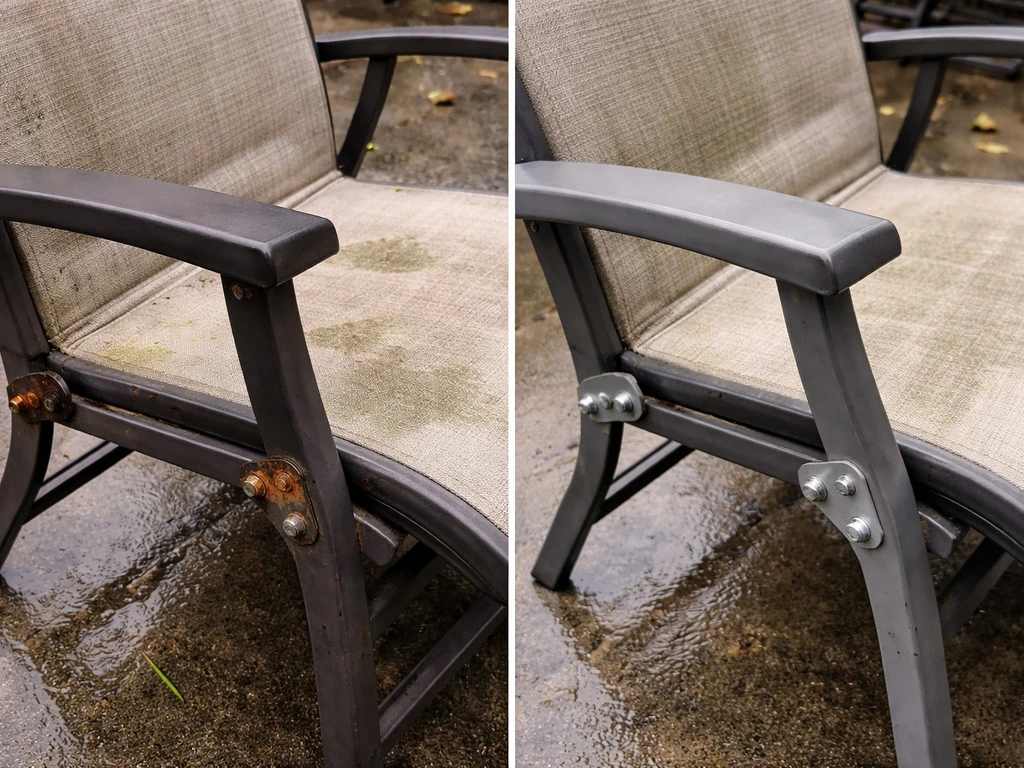
Hardware is an underrated failure point. The bolts, washers, and screws in budget sets are often uncoated carbon steel that rusts within one season in wet or coastal environments. This rust then stains the surrounding frame or cushions. When a review says 'the furniture itself is fine but there are rust streaks everywhere,' hardware is usually the cause. Better sets use stainless steel or galvanized hardware throughout. If the product listing doesn't specify, that's usually a sign they're not using quality hardware.
Warranty language is worth reading carefully here. Some warranties explicitly exclude fading, discoloration, and certain rust-related limitations, meaning claims that sound protective in marketing copy don't hold up when you file a claim. A one-year cushion warranty against seams separating sounds reasonable, but if fading is excluded, you have limited recourse on the most common outdoor cushion issue. Read the actual warranty document, not the marketing summary.
Value vs premium: what changes when you go from budget brands to West Elm/Pottery Barn/Frontgate
Budget sets from brands like Costway, Devoko, and the wave of value options from import retailers give you furniture at a fraction of the price, and some of them are genuinely decent for covered patios with light use. What you're accepting is thinner-gauge metal, lower-density foam, surface-dyed fabric, and hardware that will need attention after the first season. Assembly instructions are frequently unclear, parts sometimes arrive damaged or missing, and replacement parts are rarely available. They make sense if you're furnishing a rental property, a temporary space, or a covered porch in a mild climate where UV and rain aren't constant factors.
Mid-range sets in the $500 to $1,500 range from brands like Hampton Bay, Hanover, or Better Homes and Gardens (at Walmart) represent a meaningful jump in construction quality, with heavier-gauge frames, better joinery, and more consistent cushion quality. This is where most buyers find the best value, particularly if they're willing to add quality covers and basic seasonal maintenance.
Premium brands like West Elm, Pottery Barn, and Frontgate charge significantly more, and some of that premium is legitimate. You get heavier, more thoroughly finished frames, better fabric specifications (often Sunbrella or equivalent), tighter quality control on joinery and finish, and actual customer service if something goes wrong. What you're also paying for is brand cachet and aesthetics, so be honest with yourself about how much of the premium is construction versus style. Reviews for these brands tend to be more reliable on durability because buyers who spend $3,000 on a dining set are motivated to report back honestly.
The honest middle ground: a well-chosen set in the $800 to $1,500 range with an aluminum or powder-coated steel frame, quality-rated fabric (look for the Sunbrella label or equivalent), and a solid return policy will outperform most budget sets and hold its own against premium brands for outdoor performance. The premium brands win on longevity, finish quality, and parts availability, but the gap isn't always worth the price difference for a covered, well-maintained patio in a moderate climate.
| Tier | Price Range | Frame Quality | Fabric | Parts/Support | Best For |
|---|---|---|---|---|---|
| Budget (Costway, Devoko, Temu) | $150–$500 | Thin-gauge steel/aluminum | Surface-dyed polyester | Very limited | Covered patios, mild climates, temporary use |
| Mid-range (Hampton Bay, Hanover) | $500–$1,500 | Heavier gauge, better welds | Mixed; sometimes Sunbrella | Moderate | Most buyers, most climates with covers |
| Premium (West Elm, Pottery Barn, Frontgate) | $1,500–$5,000+ | Heavy-gauge, quality joinery | Sunbrella or equivalent | Good | Exposed patios, long-term investment, high-traffic use |
Sizing, layout, and configuration: dining sets vs conversation sets vs lounge setups
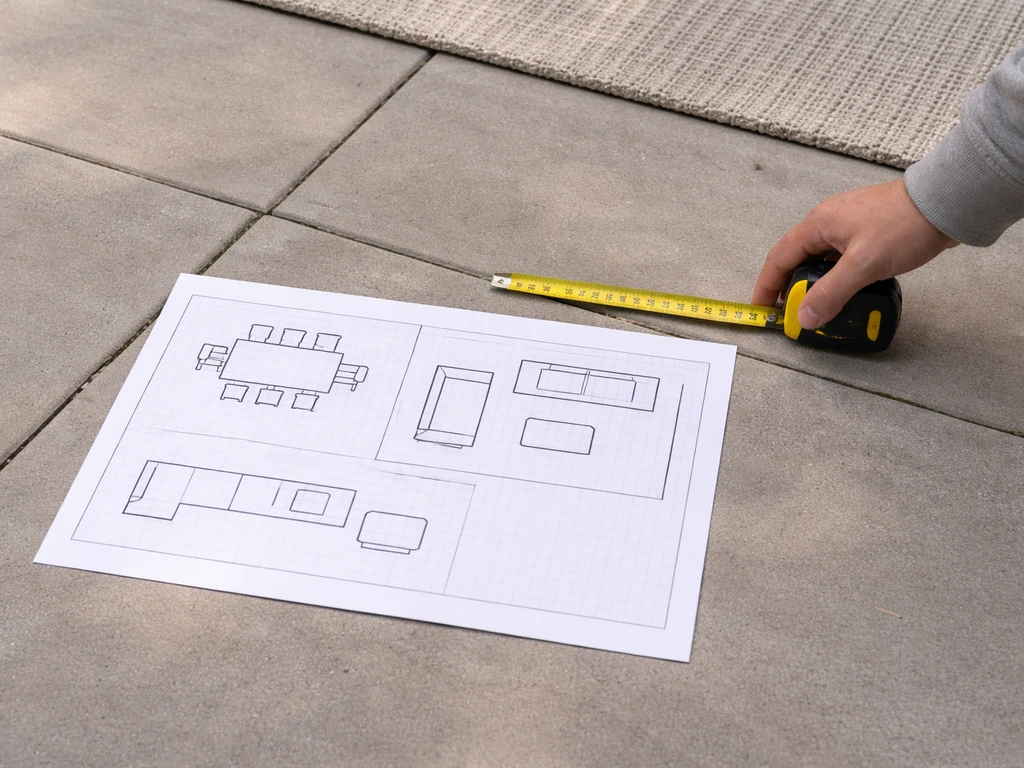
One of the most common review complaints across all price tiers is 'it looked smaller in person' or 'it barely fits.' This is almost always a planning failure, not a product failure. Before you read a single review, measure your usable patio space and plan for clearance, not just footprint. A dining table needs at least 36 inches of clearance on all sides for chairs to pull out comfortably. A conversation set needs walkable pathways around it. Most buyers underestimate the space required.
- Dining sets (table + chairs): Best for outdoor meals, entertaining, and patios with a clear functional purpose. A 4-person dining set needs roughly a 10x10-foot area minimum, 6-person sets need 12x12 feet or more. Look for sets with extendable tables if you entertain variably.
- Conversation sets (sofa + chairs + coffee table): Built for lounging and socializing rather than formal dining. These typically use deeper, softer seating and work best on larger patios or decks. Sectional conversation sets are flexible but need significant square footage to avoid feeling cramped.
- Lounge setups (chaises, daybeds, sun loungers): Purpose-built for sun exposure and horizontal relaxation. Often bought individually or in pairs rather than as a complete set. Pair with a side table and umbrella for functional outdoor lounging.
- Bistro sets (2 chairs + small table): A practical solution for balconies, small patios, or a dedicated corner of a larger space. Reviews for bistro sets tend to be more reliable because there's less complexity in the product.
Configuration also affects what you actually receive. Many patio sets are sold in multiple configurations under the same product listing or close variations, and a 5-piece set from one listing may use different chairs or tables than a 7-piece from the same brand. Read the item list explicitly rather than relying on photos, because the hero image sometimes shows a display configuration with additional pieces sold separately. This is one of the most frequent mismatches between photos and shipped items that reviewers complain about.
Buying checklist and next steps: assembly, returns, covers, and maintenance expectations
Before you click buy, run through this checklist. It takes fifteen minutes and will save you significant frustration on the back end.
- Measure twice: confirm your patio dimensions, then calculate footprint plus clearance for the set you're considering. Tape it out on the ground if needed.
- Check the item list against the hero photo: confirm every piece shown is included in your configuration and price.
- Read the one- and two-star reviews specifically for recurring complaints about structure, hardware, or finish, not just assembly or shipping.
- Verify fabric type: look for 'Sunbrella,' 'solution-dyed,' 'performance fabric,' or 'commercial grade.' If fabric specs aren't listed, email the seller and ask.
- Check frame material and hardware: aluminum or stainless steel hardware is the standard you want for anything outside a covered, dry location.
- Read the actual return policy: some large furniture items have restocking fees of 15 to 25 percent, or require you to repack and ship at your expense. Know this before you buy.
- Confirm cover availability: look up whether covers are sold for your specific set dimensions, or measure and find a universal cover that fits. A good cover extends any set's life significantly.
- Check warranty terms for what's excluded: fading, discoloration, and rust from surface scratches are commonly excluded even in otherwise strong warranties.
- Search for replacement parts: if the brand doesn't sell replacement cushions, feet, or bolts, you're on your own when things wear out.
- Budget for assembly time: most mid-range and premium patio sets require 2 to 4 hours of assembly for a dining or conversation set. Budget sets often have unclear instructions and can take longer despite being simpler products.
On maintenance: most reviews overestimate how low-maintenance outdoor furniture actually is. Even aluminum frames benefit from a rinse and wipe-down at the start and end of each season. Tighten all hardware after the first month. Clean cushions with mild soap and water every few months. Store or cover cushions during extended rain or winter. Oil teak annually if you want it to stay golden rather than silver-gray. None of this is difficult, but skipping it is what leads to the one-star reviews that say 'this furniture is garbage' eighteen months in.
If you want to go deeper on specific brands or furniture categories beyond sets, the same approach applies when reading outdoor patio furniture reviews more broadly, including standalone pieces, sectionals, and accessories. If you want more confidence before buying, it helps to compare outer patio furniture reviews focused on durability, comfort, and weather readiness outdoor patio furniture reviews.
If you want more tailored guidance, you can use patio plus outdoor furniture reviews to compare standalone pieces, sectionals, and accessories, not just full sets. Here are the key outdoor patio furniture reviews insights to apply beyond just patio sets, so you can judge materials, climate fit, and durability with more confidence.
And if you're looking at niche or regional brands, detailed patio plus outdoor furniture reviews and patio renaissance outdoor furniture reviews cover specialty manufacturers that sometimes offer better material quality at similar price points to the national retailers. The research process is the same: material specs, climate fit, long-term reviews, and honest warranty terms.
If you want to make the fastest, most confident choice, use these outdoor patio supplies reviews as a starting point, then double-check materials, climate fit, and warranty terms.
FAQ
Are all “outdoor-rated” patio set reviews trustworthy, or should I treat some claims differently?
Yes, but treat “outdoor” as a baseline, not a promise. Check whether the cushions and frames are described separately, and look for specific construction details like rust-resistant hardware, sealed metal seams, or performance fabric that is both solution-dyed and rated for heavy sun exposure. If the listing only says “weather-resistant” without naming the fabric or hardware, expect more fading or hardware rust than the reviews imply.
How do I filter outdoor patio set reviews for my climate if I cannot find many long-term posts from my exact region?
Use the date of the review plus the reviewer’s location and season length. A “perfect after one winter” note from a dry, mild region may not predict performance in snowy freeze-thaw conditions. Prioritize reviews that mention rain duration, coastal salt air, or snow/ice, and mentally downweight generic praise that does not describe local weather.
When reviews are negative, how can I tell if it is a product flaw versus a shipping or assembly problem?
Start by reading the lowest-rated reviews first, then look for whether the complaint is about missing parts, damaged shipping, or difficulty identifying the correct pieces. If multiple buyers mention the same missing hardware or that replacement parts were unavailable, you are likely seeing a packaging or parts-supply issue, not a product durability issue. Also check whether the brand sells replacement parts for that exact model.
What should I double-check to avoid the common problem of “it looked smaller in person” mentioned in outdoor patio set reviews?
Compare three things: the listed dimensions, the actual chair/table dimensions in the specs, and reviewer photos taken from the same angle you will use. Many sets also come with different chair styles in similar “5-piece” versus “7-piece” bundles, so confirm the item list includes the chair type you expect, not just the overall count. If the width is tight, chair arms can block pull-out space.
If a patio set is labeled waterproof or weatherproof, what practical risks remain according to common review patterns?
Do not assume a set is “weatherproof” just because it is marketed that way. Water-resistant cushions can still absorb moisture over time, especially when rain is frequent or the covers trap humidity. If you want true low-hassle care, plan for cushion storage during extended wet periods, and choose sets that specify performance fabric and frame corrosion-resistant hardware.
How can I use reviews to predict how much maintenance a patio set will actually require?
Look for “maintenance friction” in reviews, like repeated re-tightening after storms, recurring mildew smell, or frequent fabric cleaning because stains set in. A set that looks good for two seasons but demands constant upkeep often generates late negative reviews. If reviews mention “easy wipe” plus minimal rust or no frame wobble, that usually correlates with fewer long-term headaches.
What warranty details should I read before relying on outdoor patio set reviews for durability?
Inspect warranty coverage for exclusions that matter outdoors, typically fading, discoloration, rust that originates from normal exposure, and cover-related claims. Also confirm what the warranty covers at the part level, like cushions versus fabric seams, and whether it provides replacement parts or reimbursement for full sets. If the warranty period is short for cushions, prioritize long-term cushion-specific reviews.
How do I interpret complaints about rust streaks or flaking finish in outdoor patio set reviews, and what do they usually indicate?
Yes, and it is often a deciding factor. For aluminum or steel frames, look for mention of powder-coat chipping, rust starting at welds or drilled holes, and “rust streaks” migrating from hardware. Pay special attention if reviews mention bare metal exposure, because chipped coating and uncoated fasteners can accelerate corrosion even when the rest of the frame seems fine.
What are the most common early signs of structural weakness that I should look for in one-star and two-star reviews?
If reviews mention stable chairs but wobbling after seasonal temperature changes, joinery and bolt tightness are usually the culprit. Even with welded frames, bolts can loosen, and cheap brackets can flex under shifting loads. As a rule, plan to tighten hardware after the first few weeks and again after the first heavy weather season.
When should I accept budget compromises, and when should I treat them as red flags based on outdoor patio set reviews?
A quick decision aid: if you are buying for a covered porch and mild weather, you can sometimes accept surface-dyed fabric and lower-density foam. If the patio is uncovered, frequently humid, or exposed to long sun, prioritize solution-dyed performance fabric, corrosion-resistant hardware, and thicker cushions that hold shape after a full summer. Reviews that do not mention weather conditions are less helpful, so lean on those that do.
Next Article
Outdoor Patio Furniture Reviews: How to Choose Best Sets
Unbiased outdoor patio furniture reviews and buying guide: compare materials, durability, comfort, weatherproofing and v