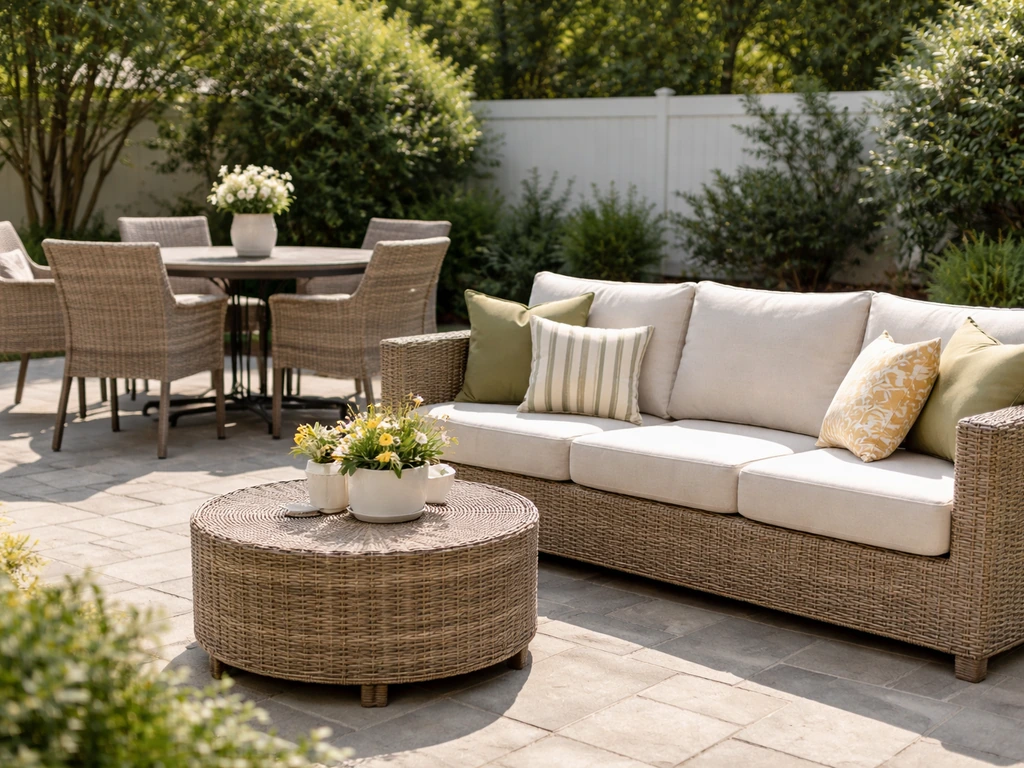
Outdoor patio furniture gets marketed hard and reviewed inconsistently, so the honest answer is: most buyer confusion comes from mixing up marketing language with actual material and construction data. This guide cuts through that by explaining exactly how we rate and compare outdoor furniture, what the materials actually do in real weather, which picks earn their price at each budget tier, and what red flags to look for before you buy.
Outer Patio Furniture Reviews: Top Picks & Buying Guide

Holly Dawson
18 Jul 2026
Who this guide is for and what it covers
Whether you're furnishing a 200-square-foot apartment balcony with a $300 bistro set from Costway or investing $4,000 in a teak dining set from Frontgate, this guide is built for you. It's also for the middle ground: the homeowners comparing West Elm's powder-coated aluminum loungers against a Wayfair version that looks nearly identical at half the price. We cover dining sets, lounge sets, swings, chaise lounges, individual chairs, replacement cushions, and furniture covers, across budget, mid-range, premium, and specialty price tiers. Where relevant, we'll point you toward deeper brand-specific reviews on this site, including our coverage of outdoor patio furniture, outdoor patio sets, Patio Plus, Patio Renaissance, and outdoor patio supplies. For detailed model-by-model testing and comparison, see our patio 1 outdoor furniture reviews. For model-by-model grading and deeper retailer comparisons, see our Patio Plus outdoor furniture reviews for lab-based test data and aggregated owner feedback. See our outdoor patio furniture reviews for brand-by-brand breakdowns and hands-on testing. For detailed evaluations of accessories and tools, see our outdoor patio supplies reviews. For detailed comparisons and our top-rated picks, see our outdoor patio set reviews.
Our editorial angle and how to use this guide
We don't accept sponsorships or paid placements. Every product discussed here has been evaluated against the same criteria: performance (how well it holds up in actual outdoor conditions), durability (frame, finish, and fabric longevity), value (what you get relative to what you pay), aesthetics (design coherence, finish quality), and construction quality (joinery, fasteners, foam density, and fabric specs). Where we haven't conducted hands-on testing ourselves, we aggregate verified owner feedback, cross-reference lab-based expert assessments from organizations like Consumer Reports and the Good Housekeeping Institute, and check retailer-published specifications against the engineering claims being made.
Use this guide as a starting framework. The top picks section gives you specific recommendations by category and price tier. The materials section explains why those picks are what they are. The brand categories section sets realistic expectations before you click 'add to cart.' And the construction quality section tells you what to actually look at in product photos and spec sheets, not just what the listing says.
How our ratings and review signals actually work
A star rating on a product page is not the same as a performance score. Here's how we build ours. Expert testing factors come from published lab protocols and industry standards. For metal frames and coatings, we reference ASTM B117 (salt spray corrosion testing), the baseline protocol for comparing protective finishes on aluminum and steel. ASTM B117, Standard Practice for Operating Salt Spray (Fog) Apparatus is the baseline laboratory protocol for accelerated corrosion (salt spray) testing used to compare protective coatings and metal finishes blank" rel="noopener noreferrer">ASTM B117 — Standard Practice for Operating Salt Spray (Fog) Apparatus. For plastics, coatings, and fabric fade resistance, we use ASTM G154 (accelerated UV/weathering exposure) as the benchmark, since it simulates sunlight and moisture cycling the way outdoor materials actually experience them. Fabric colorfastness is evaluated against AATCC Test Method 16, the standard lightfastness protocol for outdoor textiles. Cushion and foam durability references ASTM D3574, which covers compression load deflection, resiliency, and water absorption in flexible foam. Fabric abrasion resistance is benchmarked using blank" rel="noopener noreferrer">ASTM D4966 (Martindale method). Structural integrity of seating and tables is assessed against the ANSI/BIFMA X5 series, which sets cyclic load, stability, and strength minimums for contract-grade furniture and gives us a useful engineering baseline even for residential products.
Aggregated user feedback comes from verified purchase reviews across Wayfair, Home Depot, Amazon, and direct brand sites, weighted by recency, review volume, and specificity of detail (a review that mentions frame rust after 18 months carries more signal than a generic five-star). We also monitor safety incident records through CPSC recalls and SaferProducts.gov, as well as EU Safety Gate and Health Canada's recall databases for models sold in those markets. Any product with an active recall or unresolved safety notice is disqualified from our top picks entirely.
Our composite score weights performance and durability most heavily (combined 50%), followed by value (25%), construction quality (15%), and aesthetics (10%). A budget piece that genuinely performs at its price tier can outscore a premium piece that underdelivers on durability claims.
User reviews vs. expert assessments: reading them together
User reviews are most useful for flagging real-world failure modes: cushion mold after the first rainy season, screws stripping during assembly, wicker unraveling at the arm joints, paint flaking inside two years. Those patterns, when they appear across dozens of reviews, tell you something a lab test won't catch because lab tests don't account for how people actually store, use, or neglect furniture. User reviews are least reliable for evaluating long-term material quality, because most reviewers don't own a product long enough to assess five-year durability, and positive early reviews often reflect setup experience more than performance under sustained weather exposure.
Expert assessments from organizations like Consumer Reports (which combines anonymous retail sample purchasing, standardized lab protocols, and large-scale owner surveys) and the Good Housekeeping Institute (hands-on material science testing) give you the structural integrity and material performance data that most user reviews can't. Where we cite expert assessments, we note the methodology so you understand what was actually measured. When expert and user signals conflict, we investigate why rather than averaging them: a product that tests well in a lab but accumulates user complaints about corrosion often has a finish that passed a 240-hour B117 test but performs poorly in coastal humidity or under pooled water, conditions a minimum-spec test won't simulate.
Top picks by category and price tier
These picks reflect our current composite scores as of mid-2026. Prices and availability shift seasonally, so treat the tier ranges as guidelines rather than exact figures. 'Budget' is under $500 for sets, 'mid-range' is $500 to $1,500, 'premium' is $1,500 to $3,500, and 'luxury' is above $3,500.
Dining sets
- Budget: Costway 5-piece powder-coated steel dining set. Honest value at around $280-$380, acceptable frame rigidity for light use, but plan for surface rust within two to three seasons in wet climates without a cover.
- Mid-range: Threshold (Target) aluminum dining sets in the $600-$900 range. Better all-welded construction, noticeably lighter frames, and Threshold's track record for finish consistency is solid for the price.
- Premium: Arhaus Kipton or similar extruded-aluminum dining sets around $1,800-$2,800. Full weld construction, thick-wall tubing, and Sunbrella-fabric seat cushions that actually hold color and resist mold.
- Luxury: Frontgate teak or powder-coated cast-aluminum dining sets above $3,500. Teak grade A or grade B sourcing makes a meaningful difference here; Frontgate publishes material grades, which we appreciate.
Lounge sets
- Budget: Temu and Costway modular sectional sets in the $250-$450 range. Resin wicker over steel frames. Usable for covered patios, but the wicker weave quality is noticeably thin and UV-degradation starts visibly within two summers in direct sun.
- Mid-range: Better Homes & Gardens (Walmart) and Abbyson sectional sets in the $700-$1,200 range. Thicker resin weave, better cushion foam density (look for 1.8 lb/cubic foot minimum fill), and more consistent quality control.
- Premium: West Elm outdoor lounge sets around $1,500-$2,500. Aluminum frames with FSC-certified wood accents, Sunbrella or Sunbrella-equivalent fabrics, and a design aesthetic that holds up over time. Cushion zippers and removable covers are standard.
- Luxury: Pottery Barn and Restoration Hardware (RH) sets above $3,000. RH in particular uses high-density foam with outdoor-rated ticking; build quality justifies the price if you're in it for a decade-plus.
Swings
- Budget: Costway and Outsunny porch swings in the $150-$300 range. Powder-coated steel frames, functional, but check weight capacity (most are rated 440-550 lbs) and watch for thin chain hardware that corrodes quickly.
- Mid-range: Sunnydaze and PURPLE LEAF cantilever and porch swings at $400-$900. Better frame gauge, canopy hardware that actually retracts smoothly, and more durable cushions.
- Premium/Luxury: Frontgate and Pottery Barn swings with teak or powder-coated aluminum frames, Sunbrella cushions, and hardware rated for sustained load cycling. Expect $1,200 and up.
Chaise lounges
- Budget: Costway adjustable chaise lounges around $100-$200. Lightweight aluminum or steel, acceptable for occasional use near a pool, but the reclining hardware wears out within two to three seasons of regular use.
- Mid-range: Hampton Bay and Christopher Knight chaises at $250-$600. Better hinge hardware, thicker cushions, and more stable base geometry.
- Premium: Frontgate and Ballard Designs pool chaises at $800-$1,800. HDPE (polywood) or marine-grade aluminum frames, drainage slots in cushions, and Sunbrella fabrics that stand up to daily poolside use and chlorine exposure.
Individual pieces, covers, and cushions
- Individual chairs: Polywood Adirondack chairs ($150-$350) remain a benchmark for value in the individual-piece category. HDPE construction, stainless steel fasteners, no painting required, and a 20-year residential warranty.
- Covers: Classic Accessories and Duck Covers are the two names that consistently appear in expert and user reviews for quality fit, UV-stabilized fabric (600D polyester or better), and drawcord/air-vent design. Budget $30-$120 depending on piece size.
- Cushions: Look for Sunbrella-fabric cushions with 2.0+ lb/cubic foot open-cell foam fill rated for outdoor use under ASTM D3574 moisture resistance parameters. Brands like Sunbrella, Pillow Perfect, and Mainstays outdoor cushions (for budget) are consistent performers across their price tiers.
Brand categories: what to realistically expect
Budget retailers (Costway, Temu, Outsunny)
These brands produce high-volume, low-cost furniture that often looks better in listing photos than it does in person. Frames are typically thin-gauge steel (1.0-1.2mm wall thickness) with thin powder coating that won't pass more than 200-300 hours of B117 salt spray testing. Resin wicker is usually PE wicker at a thinner gauge than mid-range products. Cushion foam is commonly 1.5 lb/cubic foot or below, which compresses and retains moisture quickly. That said, for a covered porch, a rental property, or a first apartment where budget is the real constraint, these pieces are functional and relatively easy to return if something arrives damaged. Just don't expect them to survive five unprotected New England winters.
Mid-range brands (Hampton Bay, Better Homes & Gardens, Threshold, Christopher Knight)
This is the sweet spot for most homeowners. Frame gauge and finish quality take a meaningful jump. Hampton Bay (Home Depot) uses powder-coated aluminum or steel with noticeably better weld quality than budget-tier options, and their cushion fabrics are typically solution-dyed with documented lightfastness ratings. Threshold (Target) and Christopher Knight have improved assembly hardware and weld consistency substantially in the past two product generations. These brands represent the best value-per-dollar range for most buyers who want furniture that lasts five to eight seasons with basic maintenance.
Premium makers (West Elm, Pottery Barn, Arhaus, Ballard Designs)
At this tier, you're paying for better raw materials, tighter quality control, and in most cases Sunbrella or equivalent solution-dyed acrylic fabrics that will genuinely resist UV fading and mold for several years. Frame construction shifts to thicker-wall extruded aluminum, all-welded joints (no bolt-together frames), and rust-resistant hardware. You're also paying for design and brand identity, which is fine as long as you understand you're not getting ten times the durability of a mid-range product. Eight to twelve years of solid performance is a reasonable expectation for premium pieces with proper seasonal care.
Luxury and specialty lines (Frontgate, RH, Gloster, Kingsley Bate, Patio Renaissance)
At the luxury tier, material sourcing, joinery craftsmanship, and warranty terms are qualitatively different. Teak pieces from Gloster and Kingsley Bate use grade A teak with mortise-and-tenon or dowel-reinforced joinery. Aluminum casting quality and powder-coat thickness at Frontgate and RH is measurably heavier than even premium mid-range. Patio Renaissance, which we cover in more depth in our dedicated review, sits in this tier with a focus on cast-aluminum and premium woven collections. If you're furnishing a space you plan to own for fifteen or more years, the calculus of cost-per-season actually favors this tier.
Material and construction comparison
Material choice is the single biggest determinant of how long your furniture will last and how much maintenance it will demand. Here's a direct comparison across the six materials you'll encounter most often in outdoor furniture.
| Material | Durability | Weather Resistance | Maintenance Level | Weight | Best Climate Fit | Typical Price Range |
|---|---|---|---|---|---|---|
| Teak (Grade A) | Excellent — 20+ years with care | Excellent — natural oils resist rot and insects | Low-medium — annual oiling or let it gray naturally | Heavy | All climates; coastal and humid especially | Premium to luxury |
| Aluminum (extruded/cast) | Excellent — won't rust, resists dents | Excellent — minimal corrosion, handles coastal air | Very low — occasional rinse and wipe | Light to medium | All climates, ideal for coastal and windy areas | Mid-range to luxury |
| Powder-coated steel | Good — depends on coating thickness | Moderate — coating chips expose steel to rust | Medium — inspect and touch up chips annually | Heavy | Dry or covered-porch climates; poor in coastal/wet | Budget to mid-range |
| Resin wicker (PE) | Good — better than natural wicker outdoors | Good — UV-stabilized PE resists fading better than natural | Low — hose clean; avoid pressure washing | Light | Most climates; avoid prolonged direct sun at budget tier | Budget to premium |
| Polywood/HDPE | Excellent — won't rot, splinter, or need painting | Excellent — UV-stabilized, moisture-proof | Very low — soap and water only | Heavy to medium | All climates; especially pool areas and wet environments | Mid-range to premium |
| Outdoor fabrics (solution-dyed acrylic, polyester) | Varies — Sunbrella-class lasts 5-10+ years; budget polyester 2-3 | Good to excellent depending on solution-dyeing | Low — machine washable covers; spot clean cushions | N/A | All climates; higher-end fabrics essential in sun-intense regions | Budget to luxury (varies by fabric grade) |
A few notes on this table: powder-coated steel is not inherently bad, but it demands more vigilance than aluminum. A chip from moving a chair across concrete that goes untouched for one winter will become a rust bloom by summer. If you're not the type to do annual touch-up maintenance, skip steel and go aluminum or HDPE. Resin wicker over aluminum frames is meaningfully better than resin wicker over steel frames, because when the coating on the underlying frame starts to fail, aluminum won't rust through the wicker weave. Always check what the wicker is wrapped over, not just what the wicker itself is made from.
A note on outdoor fabrics and cushion performance
Solution-dyed acrylic fabric (Sunbrella is the brand name most buyers know, but there are equivalent products from Outdura and Tempotest) is the meaningful dividing line in outdoor fabric quality. In solution-dyeing, color is added to the fiber before weaving, which means UV exposure cannot bleach the surface because the color runs all the way through the fiber. Fabrics tested to AATCC TM16 with ratings of 4 or 5 on the gray scale at 1,000+ accelerated fade hours are genuinely resistant to sun bleaching. Budget polyester cushion covers rarely carry these ratings and will visibly fade within two to three seasons of direct sun exposure. For pool-side or full-sun patios, the fabric choice matters as much as the frame material.
Construction quality: what to check before you buy
You can learn a lot about build quality from product photos, spec sheets, and assembly manuals, if you know what to look for. Here's a practical checklist organized by component.
Frames and joinery
Look for all-welded construction at stress points (arm-to-seat joint, back legs, cross-bracing). Bolt-together joints at these locations are not inherently weak, but they loosen over time under cyclic loading, especially in chairs where people frequently shift weight. If a listing shows nuts and bolts at the seat-to-leg junction, that is a design concession to shipping cost, not a sign of quality. Tube wall thickness matters: extruded aluminum frames should be 2mm wall thickness or above for dining chairs and 1.5mm minimum for lightweight loungers. Budget steel frames are often 1.0-1.2mm. You often won't find wall thickness listed; if you can't confirm it, treat it as thin.
Fasteners and hardware
Stainless steel (grade 304 or 316) fasteners are the correct choice for any outdoor furniture meant to last more than three to four years. 316 stainless is the coastal-grade alloy and is what Polywood, Gloster, and premium brands specify. Zinc-plated or plain steel fasteners will rust, and once a bolt head corrodes into a thread, disassembly becomes a problem. Teak furniture that uses stainless hardware and waterproof glue at mortise joints is genuinely built to outlast the warranty. Check whether the listing or manual specifies fastener grade; if it doesn't, assume zinc-plated.
Finishes
Powder-coat thickness is measured in mils; 2-3 mils is common on budget furniture, while premium pieces run 3-5 mils. Thicker powder coat survives abrasion and UV degradation longer, and it provides better electrical insulation against galvanic corrosion where dissimilar metals meet. A gloss finish shows chips more visibly than a matte finish, but both can be touched up with matching powder-coat aerosol paint. Teak finishes are a different consideration: unfinished teak weathers to silver-gray naturally (and structurally fine), while teak oil or sealant preserves the original honey-brown color. Golden teak oil needs to be reapplied annually; teak sealants every two to three years.
Cushion fills and quality indicators
Foam density is expressed in pounds per cubic foot. Outdoor cushions need foam that resists moisture absorption and returns to shape after compression. ASTM D3574 tests for compression load deflection (what we call 'firmness' in everyday language) and resiliency (how quickly the foam bounces back). A density of 1.8-2.2 lb/cubic foot with open-cell construction and drainage holes in the cover is the minimum spec for a cushion you'd use regularly. Budget cushions at 1.2-1.5 lb/cubic foot will flatten within one season of regular use, and once compressed, they absorb and hold water rather than draining. Also check whether the cushion cover has a zipper for removal and whether the cover fabric is a tight weave (above 200 grams per square meter) that resists the Martindale abrasion cycles relevant to daily seated use.
Signs of long-term build quality in listings and photos
- Weld quality: smooth, continuous welds at joints versus small tack welds or visible gaps indicate different manufacturing investment levels.
- Leveling glides: adjustable plastic or rubber feet mean the manufacturer anticipated that frames would flex slightly; fixed feet on heavy sets indicate less attention to real-world surface variability.
- Hidden fasteners on teak or wood pieces: surface screws are fine, but countersunk and plugged fasteners on teak signal furniture-grade joinery rather than flat-pack construction.
- Cushion gusset depth: a gusset (side panel between top and bottom fabric) that is 3.5 inches or thicker indicates enough foam fill to hold its shape over time.
- Drainage holes in sling or cushion seat pans: critical for any pool-adjacent piece; absence means water pools and accelerates mold growth.
- Frame bracing geometry: X-bracing or triangulated leg geometry on dining tables and chairs significantly reduces racking under lateral load, which is what happens when wind catches an umbrella still in its table hole.
Warranty, returns, and installation: the logistics no one reads until it's too late
Warranty terms in outdoor furniture vary enormously. Polywood's 20-year residential warranty on HDPE lumber is the industry benchmark. Most premium aluminum brands (Frontgate, Arhaus) offer five-year frame warranties with two-year cushion coverage. Mid-range brands typically offer one-year limited warranties. Budget brands from Temu or Costway often carry 30-90 day warranties that require you to document defects with photos and ship returns at your cost. Before you finalize any purchase above $500, confirm: (1) whether the frame warranty is transferable if you sell the house, (2) what the cushion warranty specifically excludes (most exclude 'normal fading,' which is conveniently broad), and (3) whether white-glove delivery is included or an add-on, because a $200 delivery fee on a $600 set changes the value equation significantly.
Return logistics for large outdoor furniture sets are a real friction point. Most big-box returns for damaged or defective pieces require you to keep original packaging (which is rarely practical once you've assembled a sectional on your patio). Wayfair and Home Depot have reasonably clear return portals for damaged items, but the process involves scheduling freight pickup, which can take one to two weeks. Pottery Barn and West Elm offer in-store return options for smaller pieces but typically require you to call for large-set returns. Document everything on delivery: photograph every box before opening, and note any shipping damage on the delivery receipt before the driver leaves.
Seasonal care and maintenance: keeping furniture performing year after year
The single highest-impact maintenance habit for any patio furniture is using a properly fitted cover during the off-season. A quality cover (UV-stabilized 600D polyester or heavier with air vents to prevent condensation buildup) extends the functional life of almost any furniture regardless of material. Beyond that, maintenance demands vary by material.
| Material | End of Season | Spring Prep | Ongoing Season Care |
|---|---|---|---|
| Teak | Clean with teak cleaner; apply sealant or oil if desired; store cushions indoors | Light sand with 220-grit if needed; re-oil or re-seal if applicable | Wipe dry after rain; remove leaves that trap moisture |
| Aluminum | Rinse thoroughly; check for paint chips and touch up; cover or store | Inspect joints for moisture ingress; wipe down with mild soap | Monthly rinse in coastal areas; check fasteners annually |
| Powder-coated steel | Clean, dry, inspect every weld and surface for chips; touch up with aerosol powder coat | Re-inspect touched areas; apply rust inhibitor at bare spots | Dry promptly after rain; never leave water pooled on horizontal surfaces |
| Resin wicker/PE | Brush out debris from weave; rinse with garden hose; cover | Check wicker ends and wrap points for unraveling; re-glue if needed | Avoid pressure washing at close range; UV protectant spray once per season |
| Polywood/HDPE | Rinse or scrub with soap and water; cover optional | Soap-and-water scrub if stained; no sanding or oiling needed | Virtually maintenance-free; occasional scrub for pollen/mildew |
| Cushions/outdoor fabric | Machine wash removable covers; dry completely before storing; store flat or rolled in a dry space | Air cushions outdoors before first use; check zipper function | Spot clean promptly; never store damp |
A buying checklist before you commit
- Measure your space including circulation paths (allow at least 36 inches behind dining chairs for comfortable passage).
- Identify your climate's primary stressor: UV intensity, humidity and rain, coastal salt air, or freeze-thaw cycles. Match material to stressor.
- Confirm frame material and wall thickness, fastener material grade, and cushion foam density before purchasing.
- Check whether the fabric is solution-dyed or printed; if it's printed, expect fading within two to three seasons in direct sun.
- Read the warranty and note what it excludes, then calculate cost-per-year across the warranty period for each option you're comparing.
- Search the product SKU on CPSC SaferProducts.gov and the CPSC recall database before finalizing any purchase.
- Confirm return and delivery terms: white-glove vs. curbside, original packaging requirements for returns, and estimated lead times.
- Factor in cover cost ($30-$120 per piece) as part of total purchase budget; it's not optional if you want the furniture to last.
- If assembling yourself, download the assembly manual from the retailer page before purchase and scan for steps with more than two people required.
- Compare at least two competing products at the same price tier using consistent criteria, not just listing photos.
FAQ
What laboratory standards and accelerated tests are required to evaluate outdoor materials and finishes?
Use established protocols: ASTM G154 for accelerated UV/weathering of non‑metal materials; ASTM B117 for salt‑spray corrosion testing of metal frames and coatings; AATCC lightfastness tests (including AATCC TM16) for fabric colorfastness; ASTM D4966 (Martindale) for fabric abrasion resistance; ASTM D3574 for foam/cushion compression, resiliency and water absorption. These tests quantify expected degradation modes—UV fade, coating corrosion, abrasion and cushion breakdown—under controlled, comparable lab conditions.
What structural and load tests are needed for seating and tables?
Apply ANSI/BIFMA X5 series protocols (and related BIFMA standards) for seating and tables to assess strength, stability, load capacity and cyclic‑load endurance. Where contract standards aren’t directly applicable, adapt their load, cycle and stability targets to consumer outdoor products and record pass/fail thresholds and margin to failure.
How should lab testing be combined with real‑world/field testing?
Combine accelerated lab tests with multi‑month field trials in representative outdoor settings (sun, rain, freeze/thaw, coastal salt exposure if relevant). Field tests validate lab predictions, reveal assembly/comfort/usability issues, and surface long‑term problems (mildew, seam failure). Use standardized placement, maintenance protocols, photographic timelines, and repeat samples to record variability.
Which data sources are required to build unbiased, evidence‑based product summaries and top picks?
Collect: independent lab test data (in‑house or third‑party labs using the standards above); controlled field trial results; large owner‑survey datasets (structured questionnaires on durability, comfort, maintenance, satisfaction); retailer and brand product pages/manufacturer specs and manuals; recall/incident databases (CPSC, SaferProducts, EU Safety Gate, Health Canada); third‑party reviews (Consumer Reports, Good Housekeeping, Wirecutter) for methodological benchmarks; and marketplace pricing/availability snapshots from big‑box and marketplace retailers to define price tiers.
How do you aggregate and weigh expert tests versus user feedback in ratings?
Create a transparent weighting scheme reflecting the editorial priorities (example: 60% objective performance/durability from lab+field tests, 25% owner‑survey reliability and satisfaction, 10% value/price considerations, 5% aesthetics/finish for context). Publish the weights and allow tiered adjustments by category (e.g., comfort matters more for lounge/chaise ratings). Use statistical techniques (confidence intervals, sample‑size disclosure) and apply outlier filtering for user data.
What sample size and sourcing protocol ensures representative test coverage?
Test multiple samples per model (minimum three units per model for lab cycles/accelerated tests; more for high variance categories). Source anonymized retail samples when possible (buy through normal retail channels across multiple sellers) to avoid manufacturer‑provided bias. For owner surveys, target several hundred respondents per major model or a large aggregated pool per brand/category, and report respondent demographics and use cases.
Next Article
Patio Plus Outdoor Furniture Reviews: What to Buy
Unbiased patio plus outdoor furniture reviews guide to buy sets and pieces by material, durability, comfort, value, and