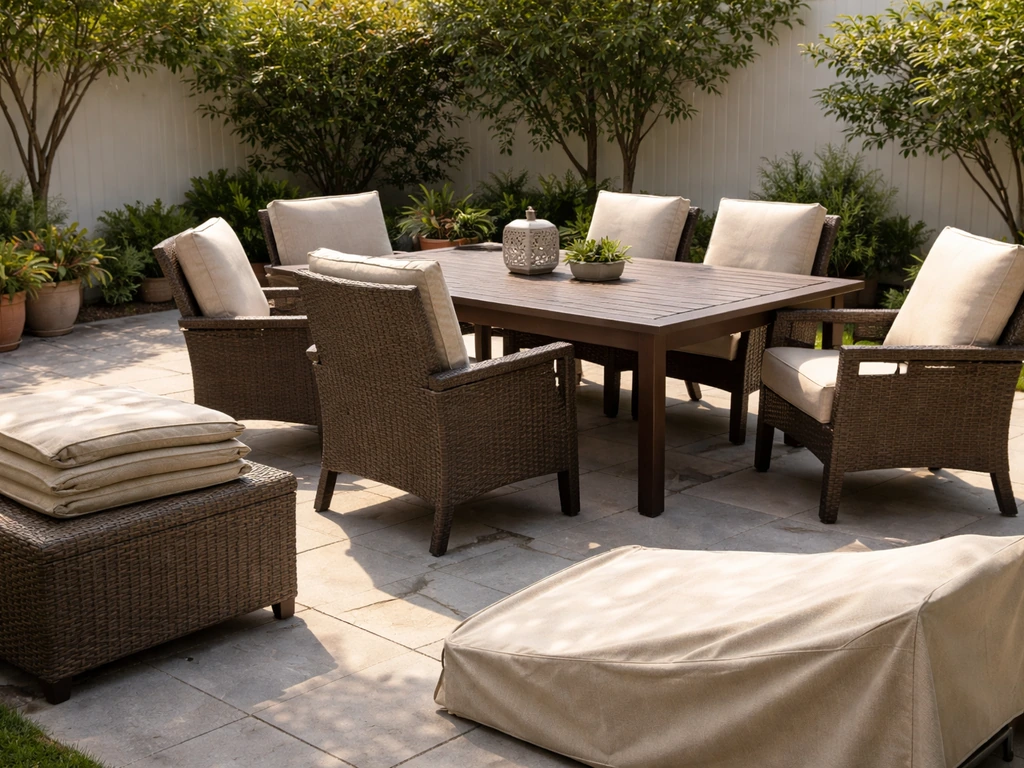
If you need patio furniture that can handle hundreds of guests a week, survive staff dragging chairs across concrete, and still look decent after a full season outdoors, you are shopping for something fundamentally different from a backyard set. Restaurant-grade patio furniture needs to pass a much harder test than a residential piece used a few weekends a year. The good news: you can use review evidence to sort the durable from the disappointing, as long as you know what signals to trust and what to skip right past.
Restaurant Patio Furniture Com Reviews: Buy Smarter Guide

Holly Dawson
21 Jun 2026
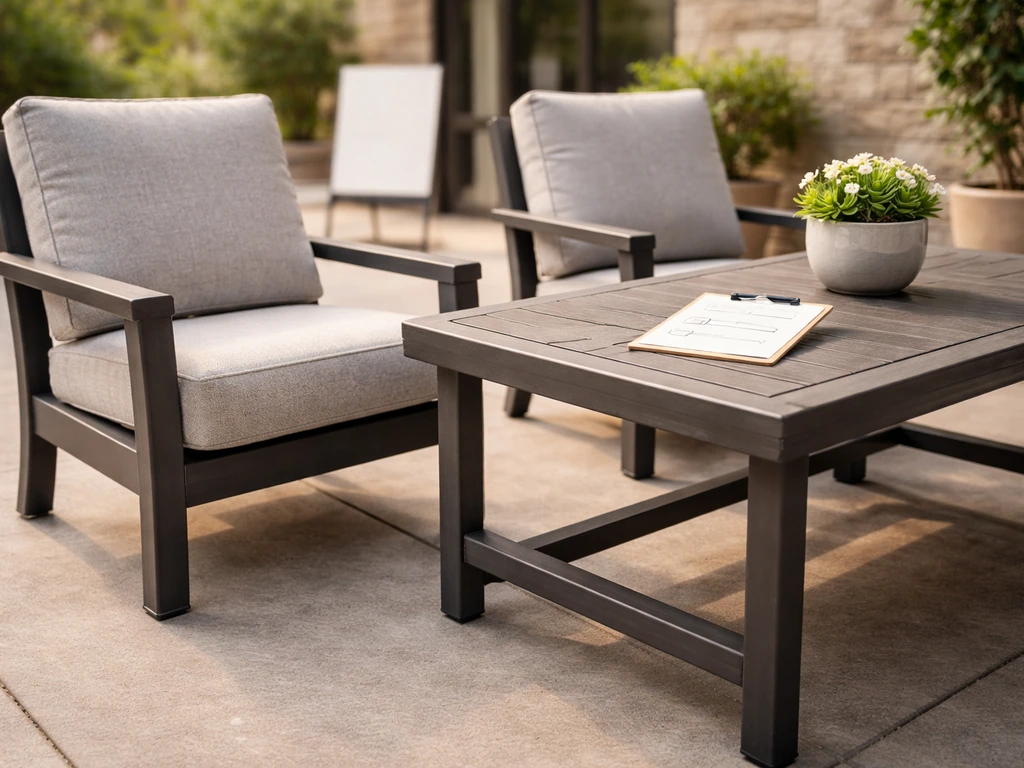
How to read restaurant patio furniture reviews without getting burned
Most review platforms mix genuine buyer feedback with noise, and for high-use commercial furniture the stakes are higher than getting a mediocre garden chair. Here is how to filter for reviews that actually matter.
Signals that make a review worth reading
- Verified purchase markers: Platforms that label reviews 'Verified Purchaser' tie the comment to a real transaction. This does not guarantee honesty, but it eliminates the easiest type of fake review. Prioritize these over anonymous submissions.
- Time-owned context: Reviews that note how long someone has owned the piece (even something simple like 'owned for 6 months') let you separate first-week assembly complaints from genuine durability reports. A review written after one full outdoor season is worth ten written after two weeks.
- Specific failure points: Trustworthy reviews name actual problems: 'the weld cracked at the arm joint after 3 months,' 'the powder coat chipped at the foot pad,' 'cushions absorbed water after the first rain.' Vague complaints or vague praise tell you almost nothing.
- Photos: Any reviewer who attaches real photos of wear, rust, fading, or damage is giving you more information than a paragraph of text. Look for these especially on Trustpilot and retailer pages.
- Timestamp patterns: A cluster of glowing 5-star reviews appearing in the same two-week window right after a product launch is a red flag. Genuine feedback from real buyers spreads out over months.
What to ignore or discount
- AI-generated review summaries: Some major retailers (including Lowe's) note when their review summary is AI-generated. That synthesized paragraph may smooth over the exact failure patterns you need to catch, so scroll past it and read individual reviews.
- Incentivized reviews: Disclosure language like 'received product in exchange for review' or similar signals should lower your trust level significantly. The reviewer had no financial skin in the game.
- Generic one-liners: 'Great product, love it!' with no specifics, no time context, and no photo tells you nothing about how a chair holds up under a 250-pound daily rotation of lunch guests.
- Reviews from residential buyers: A homeowner who uses a set six weekends a year and rates it 5 stars is not your reference point. Look for reviewers who mention commercial use, restaurants, cafes, or event spaces whenever possible.
Research into fake review detection confirms that ungrounded reviews with no specifics, no timeline, and no corroborating detail are the easiest to fabricate and the least useful for detecting durability failures. When you are spending real money on furniture that needs to hold up under heavy daily use, being skeptical is not paranoia, it is smart shopping.
Best materials for restaurant-grade durability
Material choice is the single biggest predictor of how long commercial outdoor furniture survives. Here is how the main options stack up for a high-use setting.
| Material | Durability | Weight / Stackability | Weather Resistance | Maintenance | Best For |
|---|---|---|---|---|---|
| Commercial aluminum | Excellent (10–20+ years with powder coat) | Light, very stackable | Rust-proof, UV-stable with quality finish | Low: occasional wipe-down | High-volume restaurants, rooftop bars, coastal settings |
| Steel (powder-coated) | Good (5–10 years) | Heavy, some stackable | Rusts if finish chips; needs annual inspection | Moderate: touch-up paint, inspect welds | Covered patios, inland climates |
| All-weather wicker (resin) | Good (5–8 years commercial) | Moderate, limited stacking | UV and moisture resistant if quality resin used | Low-moderate: rinse regularly | Casual dining, lower-traffic areas |
| Teak (Grade A) | Excellent (20–30+ years) | Heavy, rarely stackable | Naturally water and rot resistant | Moderate: annual oiling or let silver naturally | Upscale dining, permanent installations |
| Recycled HDPE / poly lumber | Excellent (15–20+ years) | Moderate to heavy | Fully weatherproof, fade-resistant | Very low: soap and water only | All climates, sustainability-focused operations |
For most restaurant patios, commercial-grade powder-coated aluminum is the default recommendation. It does not rust, it is light enough for staff to rearrange quickly, and quality welded frames can last decades. The catch is finish quality: look for a minimum 2-millimeter wall thickness on tubular aluminum frames and confirm the powder coat is electrostatically applied and oven-cured. Cheap aluminum pieces cut corners here and the finish chips within a season.
If you are comparing options, an aldi patio set review can help you spot how well the set holds up under real-world, heavy-use conditions. Teak is genuinely beautiful and nearly indestructible, but the upfront cost and weight make it better suited for upscale permanent dining spaces than for a high-turnover setup where chairs get moved constantly.
Fasteners and frame joints: the details that kill cheap furniture
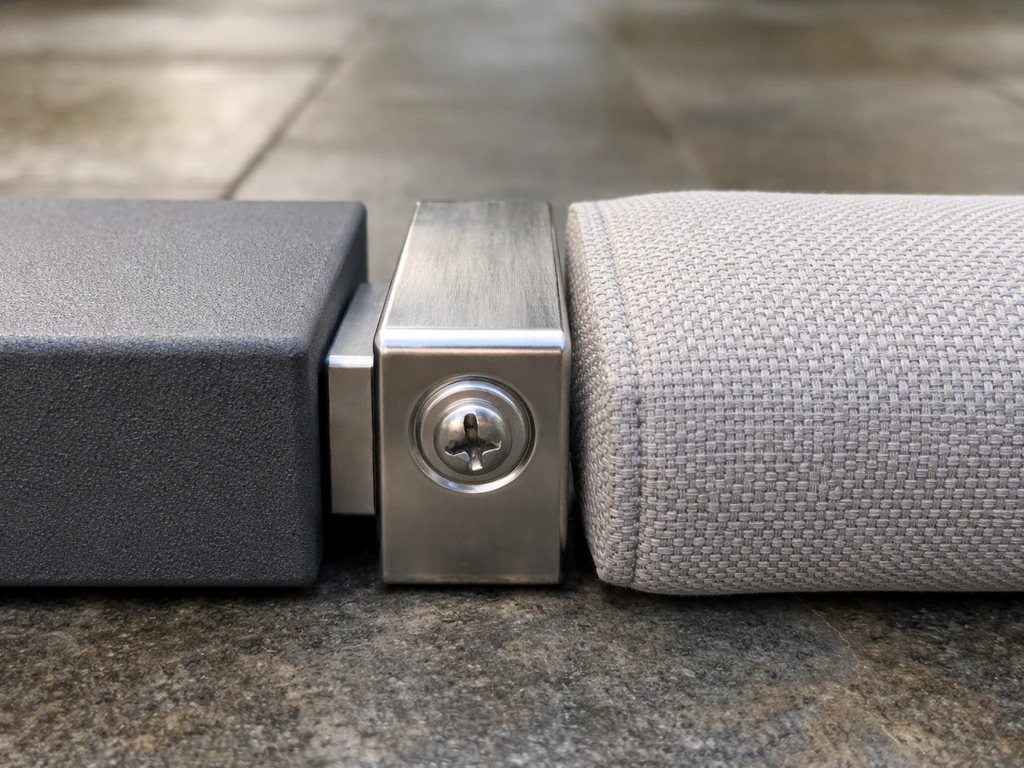
Even good material fails if the joinery is weak. Look for stainless steel hardware throughout, especially at foot pads, arm joints, and back support connectors. Welded frames beat bolt-together frames for commercial use because bolt connections loosen over time under repeated loading. If a product listing does not mention weld quality or hardware material, that omission is itself a signal. Reviews that mention wobbly joints after a few months are almost always describing bolt-together construction that was not designed for daily commercial use.
Choosing for heavy-use setups: what actually matters
Weight capacity and structural specs
Residential chairs are typically rated to 250–275 pounds. For a restaurant setting, aim for chairs and bar stools rated to at least 300 pounds, and ideally 350 pounds or more. This is not just about accommodating heavier guests; it is about the cumulative stress of hundreds of load cycles per day. Check that tables specify a static load capacity, not just a vague 'heavy duty' claim. For dining tables, a minimum 200-pound top load capacity is a reasonable baseline for four-top service.
Stacking and storage efficiency
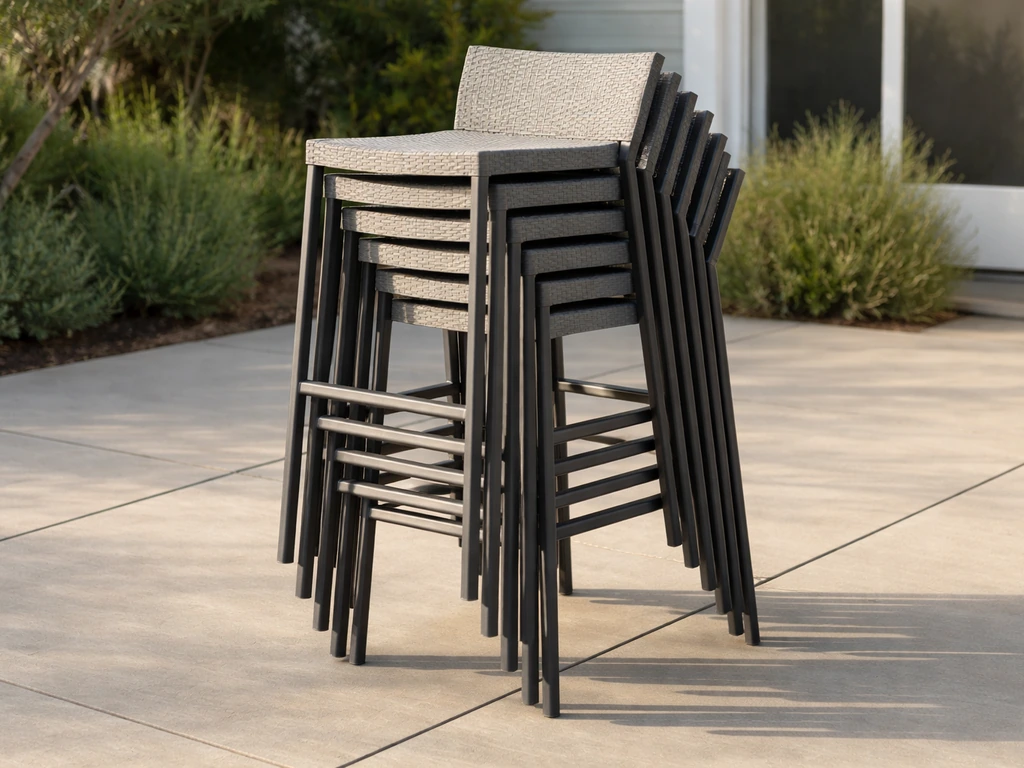
If your staff needs to clear the patio nightly or store furniture during bad weather, stackability is not optional. Commercial aluminum side chairs typically stack 8–12 high, which makes end-of-night cleanup practical. Armchairs stack less efficiently (usually 4–6), and lounge chairs or wicker pieces often do not stack at all. Be specific about your storage space when choosing: a 200-square-foot storage area can hold dramatically different quantities depending on whether your chairs stack 4 or 12 high.
Seating height and table compatibility
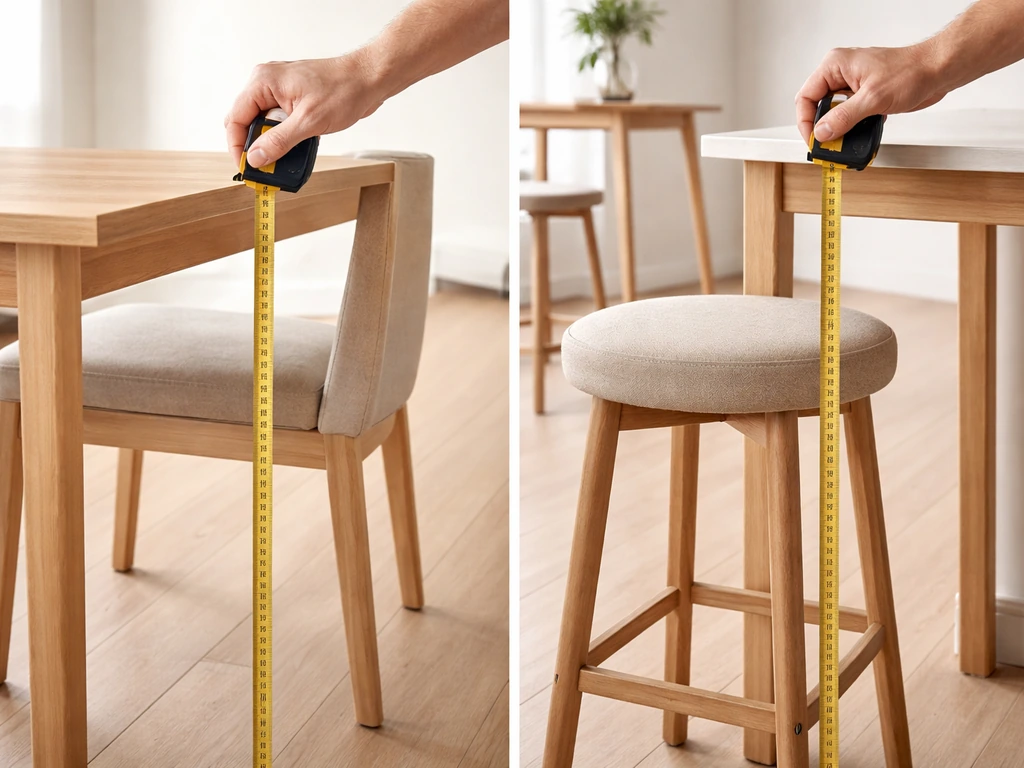
Standard dining chairs sit at a seat height of 17–18 inches and pair with tables 28–30 inches high. Bar-height stools sit at 28–30 inches and pair with bar tables at 40–42 inches. Counter-height pieces split the difference at roughly 24–26 inches for stools and 34–36 inches for tables. Mixing heights is a common and frustrating mistake when ordering pieces from different collections or brands, so confirm seat height and table height are explicitly listed and compatible before ordering any mix-and-match setup.
Comfort and safety factors you cannot overlook
Cushions for commercial use
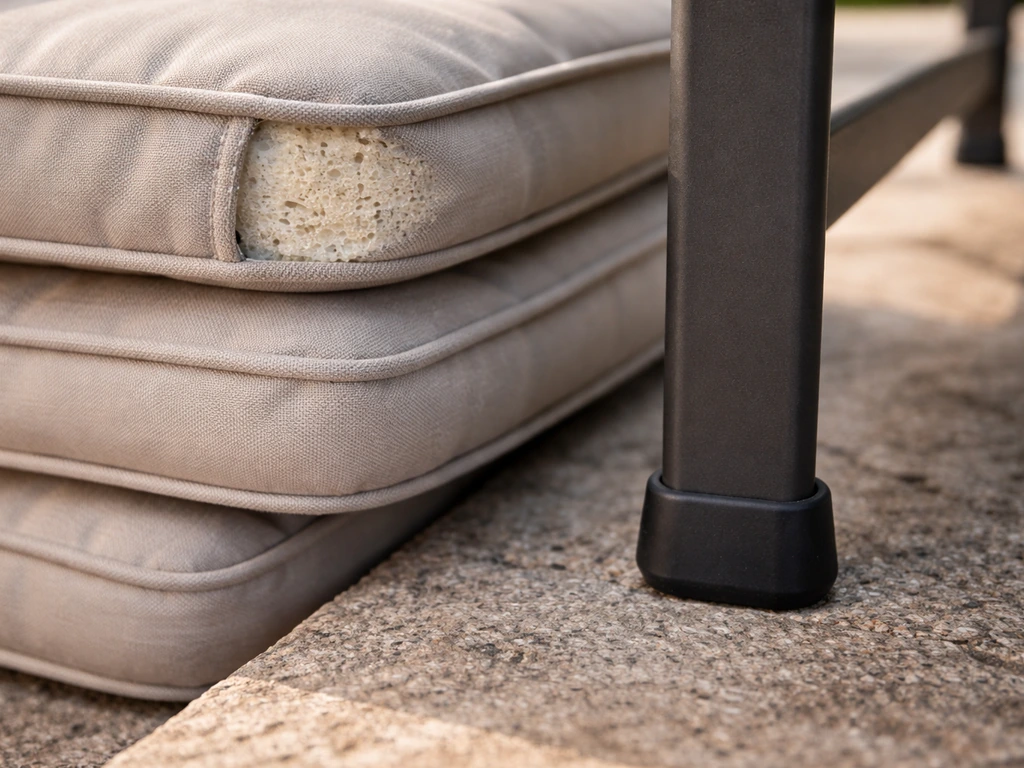
Standard residential cushions are not built for commercial patio life. For a restaurant setting, look for cushions filled with open-cell or quick-dry foam wrapped in a Dacron or polyester shell, covered in solution-dyed acrylic fabric (Sunbrella is the most recognized brand, but there are solid alternatives at lower price points). Solution-dyed fabric resists UV fading and mildew far better than printed or coated fabrics. The cover should be removable and machine-washable, because you will need to clean it regularly. Avoid any cushion that does not specify water resistance in its product description, because waterlogged cushions are both a safety hazard and a recurring replacement cost.
Slip resistance and foot protection
Chair and table legs need rubber or plastic foot caps that grip the surface, protect the patio floor from scratching, and prevent the piece from sliding under a shifting guest. Exposed metal feet on concrete or tile are a noise and scratch problem within weeks. Check reviews specifically for mentions of foot caps falling off or wearing down, because this is one of the most common complaints on commercial-weight chairs from budget brands, including some sold by Costway and similar value-tier retailers.
Umbrella compatibility
If you plan to use patio umbrellas, confirm the table has a center hole and that the hole diameter matches your umbrella pole. Standard umbrella poles are 1.5 inches in diameter, but some tables use a 1.75-inch or 2-inch hole. A mismatch means your umbrella wobbles, which is both annoying and a safety issue on windy days. Also check that your umbrella base weight is appropriate for the umbrella size: a 9-foot canopy typically needs at least a 50-pound base, and a 10–11 foot market umbrella needs 75 pounds or more.
Weatherproofing and UV resistance
UV exposure degrades both frames and cushion fabrics faster than most buyers expect. Powder-coated aluminum resists this well if the coat is properly applied. Resin wicker can become brittle and crack in high UV climates (the American Southwest, Florida, coastal areas) within 3–5 years if it uses lower-grade polyethylene. Look for HDPE or high-density resin wicker rather than PVC-based weaves, and check whether the manufacturer specifies UV stabilizers in the material. Reviews from buyers in sunny or coastal climates are the most useful for catching premature UV damage and rust. If you are doing your own ave patio furniture reviews research, focus on buyers in sunny or coastal climates since their feedback catches UV and rust problems early.
Sizing, layouts, and capacity for a restaurant patio
Getting the layout right matters as much as getting the right furniture. A crowded patio creates safety issues and a bad guest experience; too sparse and you leave revenue on the table.
- Allow a minimum of 18 inches of traffic aisle between chair backs when chairs are occupied and pushed back from the table. 24 inches is more comfortable and ADA-compliant routes require 36 inches minimum.
- A standard 36-inch round table seats 2–3 guests comfortably. A 48-inch round seats 4. A 30x48-inch rectangular table seats 4, and a 30x60-inch seats 4–6.
- For rough seating capacity planning, budget approximately 12–15 square feet of patio space per guest for a casual dining setup, or 15–20 square feet for a more comfortable, upscale feel.
- Leave at least 24 inches between the edge of a table and any fixed wall, railing, or planter to allow a chair to be pushed back fully.
- Account for umbrella footprint: a 9-foot umbrella casts a shade radius of about 4.5 feet, which means two adjacent umbrella tables need center-to-center spacing of at least 9–10 feet to avoid pole conflicts.
If you are planning a patio from scratch, sketch the space to scale before ordering. Many restaurant supply companies offer free layout planning tools, and it is worth the hour it takes because a furniture order that does not fit is an expensive mistake to fix when your return window has closed.
Care, maintenance, and weather: keeping it all looking good
Daily and weekly cleaning
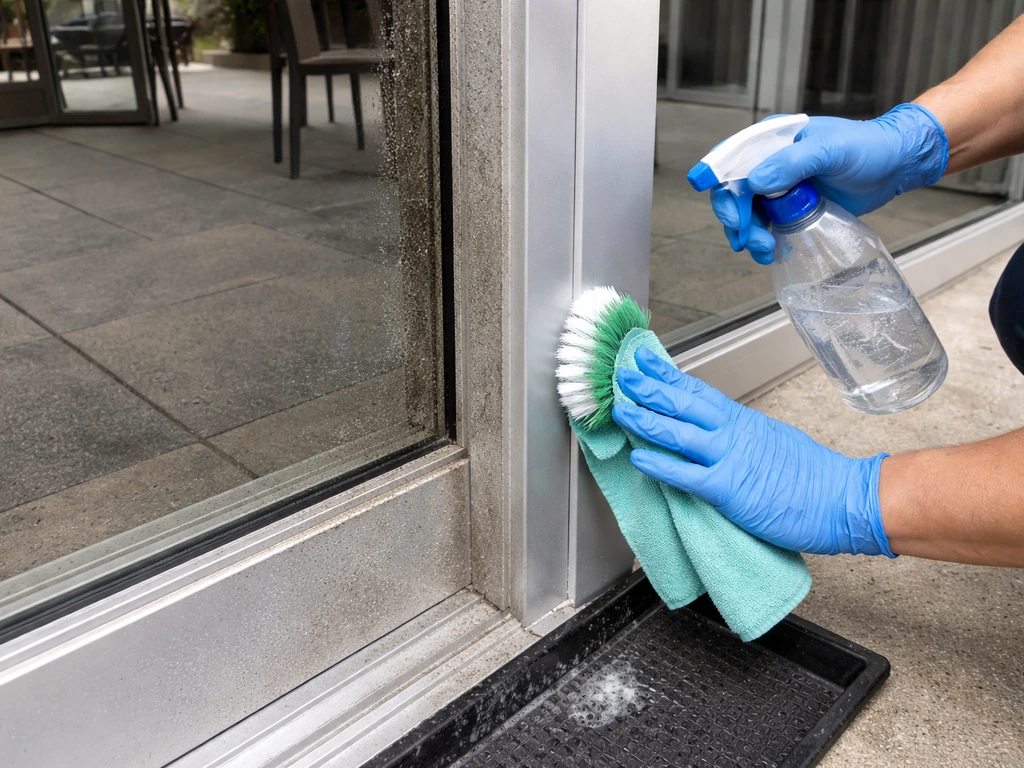
For aluminum and steel frames, a weekly wipe-down with a mild soap and water solution is enough to prevent salt, grease, and pollen buildup from degrading the finish. Avoid abrasive cleaners and steel wool on powder-coated surfaces. For resin wicker, a soft brush and rinse removes debris from the weave. Teak should be cleaned with a teak-specific cleaner if you want to maintain the golden color, or left to weather naturally to a silver-gray that many operators actually prefer and that requires almost no maintenance.
Covers and storm prep
Quality furniture covers are not optional in a commercial setting; they extend finish life measurably. Look for covers with reinforced hem grommets and tie-down straps, not just drawstrings, because drawstrings fail in wind. For stackable chairs, a single large cover for a full stack is more practical than individual chair covers. During storms or high-wind events, bring furniture inside or lay it flat and secure it. Umbrella poles in particular become projectiles in strong wind if left open or even partially deployed. Bring them in or fully close and strap them.
Winter storage and replacement cycles
In cold climates, any moisture that gets trapped in hollow frames, seat crevices, or cushion seams can freeze and crack materials. Store cushions indoors through winter without exception. For frames, covered storage is ideal, but a properly secured weatherproof cover works for aluminum and quality resin pieces. Expect to replace cushions every 3–5 years in heavy commercial use even with good care. Frame replacement cycles depend heavily on material: budget steel may need replacing in 4–6 years, while commercial aluminum and teak should last a decade or more with basic maintenance. Budget for cushion replacement as a recurring operating cost, not a one-time purchase.
Budget vs premium brands: what you actually get at each price point
There is a wide range of patio furniture available at every price point, and the honest answer is that the middle and upper tiers earn their premium for commercial use in ways that matter. Here is a practical breakdown.
| Price Tier | Example Brands | What You Get | What You Give Up | Best Commercial Use Case |
|---|---|---|---|---|
| Budget ($50–$200/chair) | Costway, Temu, Amazon basics | Low upfront cost, acceptable appearance out of box, some stackable options | Thinner frames, bolt-together joints, basic finishes that chip, weight limits often 250 lbs or under, limited warranty | Seasonal pop-ups, low-traffic outdoor spaces, replaceable sets where looks matter more than longevity |
| Mid-range ($200–$600/chair) | Yardbird, Article, OVE, TopBuy, Simply Patio | Better weld quality, improved powder coat, more material options, often 300 lb capacity, limited commercial warranties | Not purpose-built for daily commercial traffic, cushion quality varies | Smaller restaurant patios, cafes, wine bars with moderate traffic |
| Premium ($600–$1,500/chair) | West Elm, Pottery Barn, Frontgate | Superior aesthetics, better materials, stronger warranties, Sunbrella cushion options, more design cohesion | High cost per piece, not always stackable, delivery timelines can be long | Upscale dining, boutique hotels, permanent installations where appearance is a brand differentiator |
| Commercial contract ($300–$1,000+/chair) | Grosfillex, BFM Seating, Telescope Casual, Alumatech | Purpose-built for high-use environments, industrial welding standards, 500 lb or higher weight ratings, commercial-grade warranties | Less design variety, utilitarian aesthetic on lower-end contract pieces | High-volume full-service restaurants, hotel pools, stadium or event settings |
The honest truth about budget-tier options from brands like Costway or Temu is that they can work for low-traffic or seasonal use, but they are genuinely not designed for nightly-stacking, daily-use commercial punishment. If you want a quick cross-check, simply patio furniture reviews can help you compare common wear patterns and durability complaints alongside the material and construction factors discussed here. The frame welds and finish coatings are simply not built to the same standard. If you are running a busy full-service restaurant patio that operates six or seven days a week, the cost savings evaporate quickly when you are replacing chairs every two or three seasons instead of every eight to ten.
Premium residential brands like West Elm and Pottery Barn sit in an interesting middle position: they offer much better aesthetics and materials than budget brands, but they are designed for residential use patterns, not commercial daily rotation. They can work beautifully for a small upscale patio with lower table counts, but expect more wear than their price tag might suggest if you are running fifty covers a night. Frontgate skews more durable and commercial-adjacent in its materials, making it a reasonable choice for operators who want the premium look with slightly more durability headroom.
If you want genuine commercial durability, purpose-built contract furniture from brands like BFM Seating, Telescope Casual, or Alumatech is worth the price difference. These are the pieces that restaurant supply companies have sold for decades, and the blank" rel="noopener noreferrer">reviews on commercial platforms like Trustpilot often show verified buyers from actual hospitality operations describing multi-year performance. If you are trying to find the best patio furniture review evidence, focus on verified buyer reports that describe real, multi-year performance under heavy use reviews on commercial platforms like Trustpilot. That is the type of review evidence you want to see before committing to a large patio order.
Your next steps before placing any order
Start by defining your actual use case honestly: how many covers, how many days per week, what climate, what staff handling situation, and what storage you have available. That answers the material and construction question before you even look at a product listing. Then, when you go to read reviews, prioritize verified purchasers with time-owned context who mention specific failure points or specific durability wins. If you are searching for topbuy patio furniture reviews, focus on mentions of real failure points like wobbly joints, chipped finishes, and cushions that lose shape after UV exposure. Discount AI summaries, generic five-star clusters, and any review where you cannot tell whether the buyer actually ran the furniture through a real season outdoors.
Compare at least two or three brands across the same price tier before deciding, and check whether competing review sources tell a consistent story. If a budget brand gets consistently strong marks from verified buyers across multiple platforms, that is a meaningful signal. If a premium brand has a pattern of complaints about cushion water absorption or finish chipping even in residential use, those failures will only accelerate in a commercial setting.
Use this site's brand-specific reviews to dig deeper on individual collections from Yardbird, Article, OVE, TopBuy, Simply Patio, and others, because the performance differences across mid-range brands are real and worth knowing before you order. For operators specifically shopping for Yardbird, these patio furniture reviews can help you separate durable commercial wins from common failure points Yardbird patio furniture reviews.
Finally, budget for the full picture: not just the furniture purchase, but cushion replacement cycles, covers, umbrella bases, and at least one deep-clean and inspection per season. An Aldi patio furniture 2019 review can help you estimate how often cushions and other parts may need replacement in real day-to-day use cushion replacement cycles. The restaurants with the best-looking patios after five years are almost always the ones that budgeted for maintenance from day one, not the ones that bought the cheapest option and hoped for the best.
FAQ
Are patio furniture covers really necessary for restaurant patio furniture, or is that optional?
They are effectively required for commercial longevity. Even with good aluminum and solution-dyed cushions, rain, bird droppings, and pollen grit slowly abrade finishes and degrade fabrics. Choose covers with tie-down straps, a reinforced hem, and a design that fits stackable chairs as a full stack, not single pieces, because wind can lift loose covers and create rubbing damage.
How can I tell if a review is useful for restaurant patio furniture com reviews when products take months to fail?
Prioritize reviews that include a timeline like “after one summer” or “after a full season,” and that describe repeat failure patterns (for example, wobbling joints returning, cushions losing shape, or powder coat chipping at weld points). Reviews without months of ownership, without mention of stacking, cleaning, or weather exposure, are usually too vague to predict commercial durability.
What’s the biggest mistake restaurants make when reading chair and table reviews?
Focusing only on comfort and aesthetics. For high-use patios, the most predictive complaints are structural: loose hardware, foot caps wearing out, rust spots around joints, and table wobble under load. If a review praises appearance but never mentions maintenance, stacking, or stability after repeated use, treat it as a weaker signal.
Do I need to match chair seat height to a specific table height for a comfortable service setup?
Yes, and it matters even if the furniture “looks” right in photos. Verify both seat height (typically 17–18 inches for standard dining) and table height (about 28–30 inches) are listed and compatible, then check clearance under the tabletop for the chair frame. A mismatch can force guests to awkwardly shift, and staff may pull chairs more aggressively, increasing wear at joints.
What should I look for in reviews regarding stacking, beyond how many chairs fit?
Look for comments about how well the stacked chairs stay aligned and secure. Useful reviews often mention whether stacking leaves dents on armrests, whether chair legs scrape when nested, and whether staff can lift and move stacks quickly without tipping. If reviews complain about scratches or frequent tipping when stacked, plan for fewer chairs per stack or choose a different nesting design.
How should I verify cushion quality for commercial use from product details and reviews?
Confirm the fill type and fabric claims are explicit, not vague. Look for quick-dry or open-cell foam, solution-dyed acrylic (or an equivalent that states UV and mildew resistance), and removable covers that are machine washable. In reviews, the strongest negative signal is water retention after rain plus slow drying, because that drives both mildew risk and early replacement.
Do resin wicker and HDPE wicker perform the same in sunny or coastal climates?
Not necessarily. HDPE-based resin wicker with stated UV stabilizers is the safer direction for high sun exposure, but still check reviews from matching climates because some “wicker look” products use lower-grade weaves that crack sooner. Also confirm the frame material underneath, since the base frame often fails before the weave if it is budget steel or poorly protected.
Are bolt-together frames always worse than welded frames?
They are more likely to develop looseness under daily load cycles, but the real differentiator is hardware quality and how frequently the furniture gets moved, stacked, and re-leveled. If you must choose bolt-together, look for reviews that mention tightness over time, stainless hardware, and minimal wobble after months. If reviews show recurring looseness, assume it will accelerate with restaurant handling.
What’s a realistic inspection routine for commercial patio furniture to prevent failures early?
At minimum, inspect after weather events and at the start and end of peak season. Check foot caps for missing or worn grip, test chair wobble by pushing at corners, and scan for chipped powder coat near welds or edges. For umbrellas, confirm the base weight and pole fit, then verify the center-hole size works cleanly to prevent wobble-related strain.
If I’m buying dining sets, how do I avoid mixing incompatible furniture heights from different brands?
Only mix when both seat height and table height are explicitly specified, and ideally when dimensions are from the same height category. Reviews sometimes highlight “near fit” issues like guests’ knees hitting table edges or feet not resting comfortably. Before ordering mix-and-match, measure your planned chair and table heights from the listings and confirm there is clearance for chair legs and any umbrella bases.
How should I budget for replacements, and which parts usually need the most frequent replacement?
Cushions and covers are the most common recurring costs, even when frames last. Plan on cushion replacement every few years in heavy commercial use, plus periodic cover replacement if straps or grommets fail. Also budget for small replacement items like foot caps and umbrella-related parts, since those tend to wear first and can become a safety issue if ignored.
Is it worth buying budget-tier restaurant patio furniture for a restaurant that runs every week?
Often it is not, unless you are accepting higher replacement frequency. If a brand’s materials and construction are optimized for light residential use, the cost savings shrink once chairs need replacement after two to three seasons instead of closer to a decade for properly maintained commercial aluminum or teak. If you do go budget, compensate by increasing your inspection frequency, using proper covers, and choosing stackable designs that reduce scraping and joint stress.
Next Article
Article Patio Furniture Review: How to Choose Today
Unbiased patio furniture review guide to compare materials, durability, value, and covers for budget to premium picks.