The most comfortable patio chairs right now span a wide range of prices, but a few models consistently earn top marks for real-world sitting comfort: the Frontgate Small Palermo Lounge Chair leads in the premium lounging category with its 10-year structural warranty and multilayer high-resilience foam cushions, the Pottery Barn Huntington All-Weather Wicker Dining Chair stands out at the mid-premium level for dining use, the IKEA ÄPPLARÖ Armchair punches above its price for casual daily seating, and Costway's PE rattan lounge chairs deliver the most comfort per dollar in the budget segment. This guide breaks down exactly why those picks earn their spots, what the specs actually mean for your back and your budget, and which chair is right for your specific setup.
Most Comfortable Patio Chairs Review: Top Picks & Guide

Who this guide is for
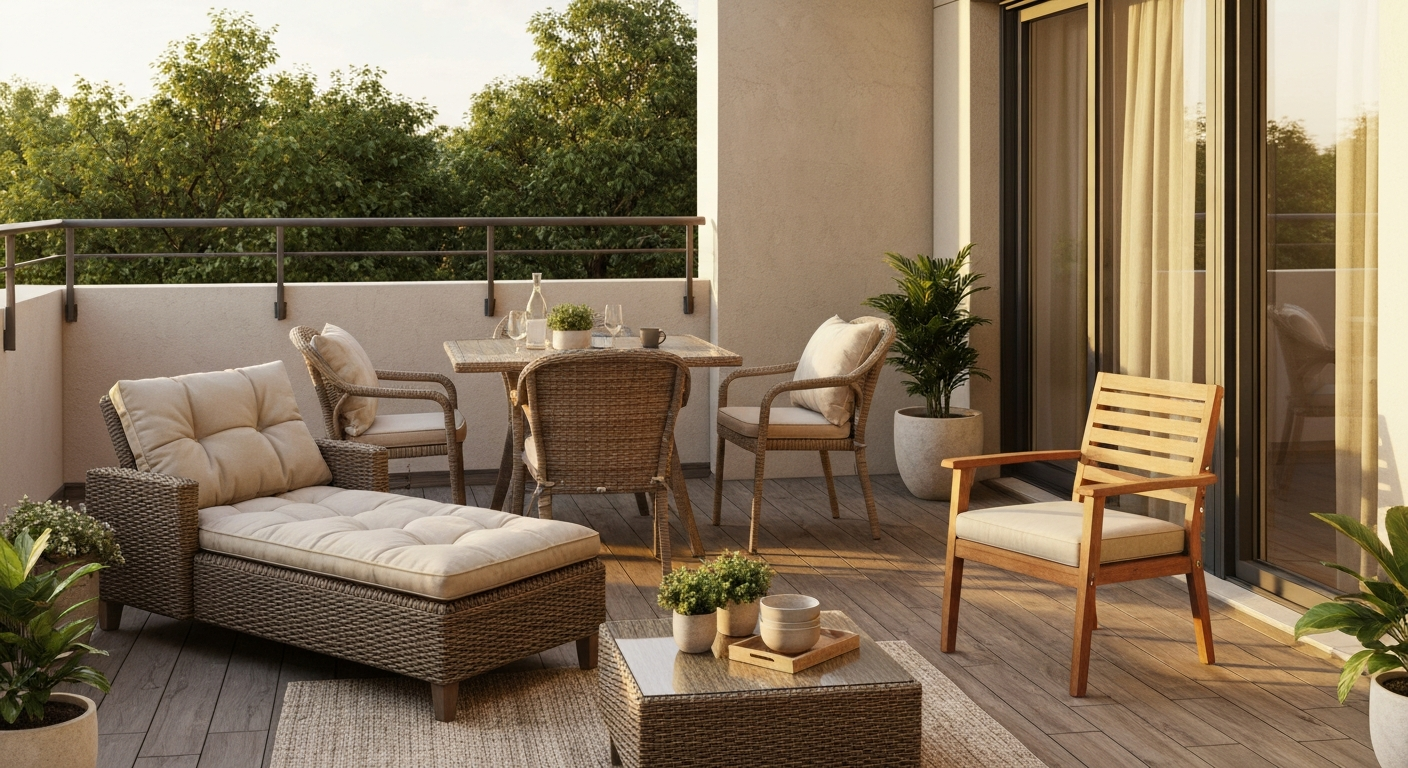
If you've ever dragged a patio chair out, sat down for ten minutes, and gone back inside because your lower back complained, this guide is for you. It's written for homeowners and renters who are done settling for decorative chairs that look great in photos but feel punishing after a single drink. Whether you're furnishing a full backyard, a balcony, or a small apartment patio, and whether your budget is $80 or $1,800, the goal here is the same: find a chair you'll actually want to sit in for hours, not just one that photographs well. We cover dining chairs, lounge chairs, recliners, swivel rockers, and compact space-savers, across budget, mid-range, and premium price points.
Top picks by use case
Best for dining: Pottery Barn Huntington All-Weather Wicker Dining Chair
The Huntington is the chair I'd put at a dining table if I were spending my own money in the $300-per-chair range. It uses all-weather wicker over a powder-coated aluminum frame, and Pottery Barn offers the cushions in their Performance fabric and Sunbrella options, both of which resist fading and moisture far better than standard polyester. Cushion thickness runs in the 2 to 2.5-inch range typical for dining use, which is enough support for a two-hour dinner without the bulk that makes dining chairs awkward to tuck under a table. Assembly is straightforward, and the fact that cushions are sold separately (and in replaceable sizes) is genuinely useful for long-term ownership. The main trade-off is price: at around $250 to $350 per chair depending on fabric, you're spending mid-premium money. But the Sunbrella warranty backing and PB's cushion availability make that cost defensible.
Best for lounging: Frontgate Small Palermo Lounge Chair
Frontgate's Small Palermo Lounge Chair is the most complete package in the premium lounge category. The handwoven all-weather wicker sits over a powder-coated aluminum frame with a 10-year structural warranty, and the cushions use multilayer high-resilience foam with a polyester wrap and a quick-dry core option. That cushion construction matters: high-resilience (HR) foam retains its shape over time in a way that standard polyurethane foam does not, which is why this chair still feels like new after a full season while cheaper alternatives go flat by August. The seat depth and back height are genuinely generous. The price range is $600 to $900 depending on configuration and fabric, which is real money, but for a primary outdoor lounge chair you'll use daily, it earns it.
Best for reclining: Mid-range adjustable chaise or reclining lounge chairs
For true reclining use, the sweet spot is a powder-coated aluminum chaise with a thick (4 to 6-inch) quick-dry cushion in a solution-dyed acrylic or olefin fabric. Several Wayfair and AllModern mid-range models in the $250 to $500 range hit this spec well. Look specifically for chairs listing HR foam cores rather than just "polyurethane foam," because the density matters enormously over a full season. A 4-inch HR foam cushion at 1.8 to 2.0 lb/ft3 density will outlast a 6-inch standard foam cushion by two or three seasons, based on foam industry performance data.
Best for small spaces: IKEA ÄPPLARÖ Armchair
The ÄPPLARÖ Armchair is one of the few chairs under $150 I'd actually recommend without caveats for small balconies. Its dimensions (24 3/8" wide by 25 5/8" deep, 16 1/8" seat height) are compact enough for tight spaces but proportioned well for most adults. The acacia wood with semi-transparent stain looks genuinely good, holds up reasonably in mild climates, and IKEA's replacement part availability is a real practical advantage. It does require seasonal oiling in drier climates to prevent cracking, and the cushion sold separately is a thin 2-inch pad, so if lumbar support is a priority, add a small foam roll. For the price and footprint, though, nothing else competes.
Best value buy: Costway PE Rattan Lounge Chair
Costway's PE rattan lounge chairs typically retail in the $130 to $200 range and represent the most comfort per dollar in the budget segment. The PE wicker is woven over a steel frame (not aluminum), the cushion runs about 2.5 inches thick, and weight capacity is typically rated at 360 lbs. Those are respectable numbers for the price. Steel frames do rust faster than aluminum in humid or coastal climates, so if you live near salt air, either apply a clear coat annually or plan to replace it in three to four years rather than five to seven. But for an inland patio or a covered balcony, it's a legitimate buy.
Best premium splurge: West Elm Coastal Wicker Outdoor Swivel Chair
West Elm's Coastal Wicker Swivel Chair is around $650 to $800 and uses a high-resiliency polyurethane foam core in the seat cushion over a wicker and powder-coated aluminum frame. At roughly 53 lbs, it's a substantial chair that doesn't shift or rock unintentionally. The swivel mechanism adds genuine daily-use comfort, especially for watching a yard or having a conversation without twisting your torso. The aesthetics lean modern-coastal and are a clear step above mass-market offerings. If you're building a full outdoor living space and want chairs that photograph as well as they feel, this is the splurge that makes sense.
At-a-glance comparison
| Chair / Model | Price Range | Frame Material | Cushion Type | Cushion Thickness | Weight Capacity | Weather Resistance | Warranty (Frame) |
|---|---|---|---|---|---|---|---|
| Frontgate Small Palermo Lounge | $600–$900 | Powder-coated aluminum + all-weather wicker | Multilayer HR foam, polyester wrap, quick-dry option | 4–5" | Not published | Excellent | 10-year structural |
| Pottery Barn Huntington Dining Chair | $250–$350 | Powder-coated aluminum + all-weather wicker | Sunbrella or Performance fabric, sold separately | ~2–2.5" | Not published | Excellent (Sunbrella) | Limited (1–3 yr typical) |
| West Elm Coastal Wicker Swivel Chair | $650–$800 | Powder-coated aluminum + wicker | HR polyurethane foam core | ~4" | Not published | Very Good | Limited (1–2 yr typical) |
| IKEA ÄPPLARÖ Armchair | ~$100–$150 | Acacia wood, semi-transparent stain | Cushion sold separately (thin pad ~2") | ~2" (add-on) | Not published | Good (mild climates) | IKEA limited warranty |
| Costway PE Rattan Lounge Chair | $130–$200 | Steel frame + PE wicker | Polyurethane foam, fixed cushion | ~2.5" | 360 lbs | Fair–Good (no salt air) | 1 year typical |
| Wayfair/AllModern Camela Dining Chair | $180–$280 | Powder-coated aluminum | Sunbrella removable cushion, HR foam | ~2.5" | 325 lbs | Very Good (Sunbrella) | 1–2 yr typical |
| Target POLYWOOD / Threshold Chair | $80–$200 | HDPE (recycled plastic) + metal hardware | None included (HDPE slatted) | N/A | 250–325 lbs | Excellent (HDPE) | Limited (varies) |
How we assess comfort, durability, and value
Every chair reviewed here is evaluated against a consistent set of criteria, not vibes. On the comfort side, we look at seat depth, seat height, back height, lumbar placement, and cushion construction (foam density, thickness, and cover fabric). Where available, we reference pressure-mapping research: academic and applied seating studies using systems like Tekscan CONFORMat quantify sitting comfort through metrics like peak interface pressure and contact area, and those findings back our preference for wider seat pans and denser foam. Subjective panel testing across multiple body types supplements the spec analysis.
For durability, we assess frame material and finish quality (with reference to industry corrosion benchmarks like ASTM B117 salt spray testing), hardware grade, weld quality, and cushion foam density (measured in lb/ft3, or PCF, using Polyurethane Foam Association guidance). ScienceDirect's 'Test cabinet' topic summarizes ASTM B117 (neutral salt spray) as a standard accelerated corrosion test commonly used to evaluate coating and finish corrosion resistance ScienceDirect: Test cabinet – ASTM B117 overview. A higher-density foam of 1.8 PCF or above indicates better structural durability and support retention over time, while IFD (Indentation Force Deflection) tells you how firm the cushion feels initially. Both matter, but density is the better long-term predictor. For value, we compare what you're actually getting in materials and construction against the asking price and the realistic lifespan, not just the sticker price.
Comfort metrics that actually matter
Ergonomics research is clear on what makes a seat comfortable for extended sitting. ISO 9241-5 identifies seat height, seat depth, seat width, and back support as core design parameters. In practical terms: seat height should roughly match your popliteal height (the crease behind your knee when seated, typically 16 to 18 inches for most adults), seat depth should be slightly less than your buttock-to-popliteal length so the front edge doesn't cut off circulation, and lumbar support should contact the natural curve of your lower back, typically 7 to 10 inches above the seat surface.
For patio chairs specifically, back height matters more than many buyers realize. A dining chair with a back height under 30 inches may look sleek but offers essentially no upper back support during a long meal. Lounge chairs with backs under 36 inches can feel unsupported if you're taller than 5'8". Seat depth in lounge chairs should be at least 20 inches for adults; dining chairs can get away with 17 to 19 inches because you're typically sitting upright and forward. Cushion thickness for dining use is adequate at 2 to 2.5 inches; for lounging, you want at least 4 inches, and for an all-day chaise, 5 to 6 inches of HR foam is where comfort really holds up.
Sling vs. slatted vs. upholstered: which sitting surface is most comfortable?
Sling seats (a taut fabric stretched across the frame) offer excellent breathability and dry almost instantly, which makes them genuinely practical in humid climates. Their downside is that they provide minimal pressure distribution compared to a padded cushion, and cheaper slings sag and lose tension within two to three seasons. Slatted seats (wood or HDPE) are durable and easy to clean but concentrate pressure on contact points, making them uncomfortable without a cushion after about 20 to 30 minutes of sitting. Upholstered/cushioned chairs are the most comfortable for extended use but require more maintenance: cushion care, storage, and eventual foam replacement. The best seating research confirms that the combination of adequate cushion thickness, foam density, and a resilient cover fabric (not any one factor alone) predicts both comfort and longevity.
Frame materials: what your chair is built on
The frame material is the single biggest determinant of how long a patio chair lasts, and it affects comfort too, because a flex-prone frame undermines even the best cushion.
| Material | Weight | Corrosion Resistance | Comfort Impact | Typical Lifespan | Best For |
|---|---|---|---|---|---|
| Powder-coated aluminum | Light | Excellent (naturally rust-free) | Rigid, stable base; holds cushion geometry | 10–20 years | Most climates, especially coastal |
| Steel (powder-coated) | Heavy | Fair–Good (rusts if finish chips) | Very stable, but heavy to move | 5–10 years inland; 3–5 coastal | Budget and mid-range inland use |
| Teak | Medium-heavy | Excellent (natural oils repel moisture) | Warm, slightly yielding, naturally anti-fatigue | 20–30+ years if oiled | Premium coastal or humid climates |
| Wicker/rattan over aluminum | Light-medium | Excellent (aluminum sub-frame) | Comfortable contoured shapes possible | 10–15 years | Lounge, poolside, covered patios |
| HDPE (Polywood) | Medium | Excellent (won't rot, rust, or splinter) | Hard without cushion; very stable | 25+ years | Low-maintenance, all-weather use |
Powder-coated aluminum is my default recommendation for most buyers. It's light enough to rearrange easily, doesn't rust, and the coating performance is well-documented: quality powder coats are rated against AAMA standards and tested with ASTM B117 salt spray methods, so better brands can cite specific hours of corrosion resistance. Steel is fine inland and saves money, but if you're within five miles of salt water, the cost savings evaporate when you're replacing a rusted frame in year three. Teak is the only material worth the premium if you want decades of low-intervention ownership and don't mind annual oiling. HDPE (like POLYWOOD) is genuinely excellent for buyers who want near-zero maintenance and don't need cushion comfort.
Fabrics and weatherproofing: what the cover is actually doing
The fabric on a patio cushion is doing several jobs simultaneously: blocking UV to prevent foam degradation, resisting moisture to prevent mildew inside the foam, managing surface temperature (some fabrics get extremely hot in direct sun), and holding up against abrasion. The differences between fabric types are real and worth understanding before you buy.
- Sunbrella (solution-dyed acrylic, Glen Raven): The gold standard for outdoor upholstery. Colorfast because the dye goes through the fiber, not just on the surface. Sunbrella's upholstery and specialty fabrics carry a 5-year limited warranty from the mill; marine and shade grades carry a 10-year limited warranty. Cleans with mild soap and water; highly mildew-resistant. Breathability is good for a woven fabric. This is what I'd spec on any chair I planned to own for more than three years.
- Solution-dyed acrylic (generic/brand-specific): Similar technology to Sunbrella but without the mill's warranty backing. Quality varies. Ask specifically whether it's solution-dyed (dye in the fiber) or piece-dyed (dye applied after weaving), because piece-dyed fabrics fade significantly faster.
- Olefin (polypropylene): Lighter and often cheaper than acrylic, with good UV resistance and excellent moisture resistance. Doesn't absorb water at all, which is great for quick drying. Slightly less soft than acrylic and can feel warmer on skin in direct sun, but a practical choice for high-use chairs where budget matters.
- Polyester (standard): The most common fabric on budget-to-mid chairs. Adequate for covered patios or occasional use but fades noticeably faster than acrylic under continuous UV exposure, often within two seasons in high-sun climates. Look for solution-dyed polyester if polyester is your only option.
- Coated sling fabric: Typically PVC-coated polyester on dining and lounge sling chairs. Very durable mechanically, dries instantly, and breathes reasonably well. Comfort without a cushion is limited by the lack of padding.
Cushion construction: foam density, thickness, and what to replace
The Polyurethane Foam Association distinguishes between foam density (measured in lb/ft3 or PCF, indicating durability and support retention) and IFD firmness (how firm a cushion feels when you first sit down). These are independent properties, and both matter. A low-density foam at 1.2 PCF might feel firm initially but will permanently deform after one season of regular use. A high-density foam at 1.8 to 2.0 PCF will maintain its geometry much longer. For patio chairs you plan to use daily, look for cushions specifying HR (high-resilience) foam, which meets specific ASTM D3574 performance criteria for support factor and resilience.
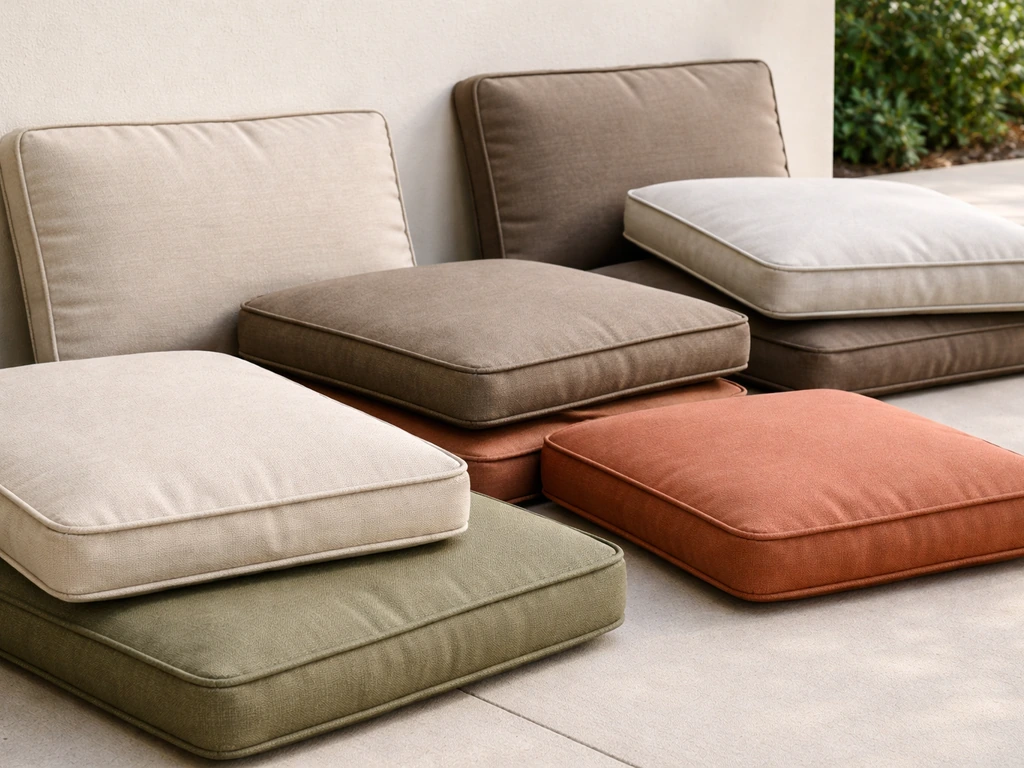
Cushion thickness ranges widely by chair type. Dining chairs typically ship with 1 to 2.5-inch cushions, which is ergonomically adequate for upright seated dining but insufficient for extended lounging. Lounge chairs and sectionals more commonly spec 4 to 6-inch cushions, and that extra thickness (combined with HR foam density) is what separates a genuinely comfortable lounge chair from one that bottoms out. The Frontgate Palermo's multilayer construction (HR foam plus polyester wrap) is a specific example of how layering materials handles both support and surface comfort simultaneously.
Removable cushions and replacement options
Removable, washable cushion covers are a practical non-negotiable if you live somewhere with real weather. They let you clean the cover without risking the foam, and they extend the life of the cushion by years. Even more valuable is the ability to replace just the foam or just the cover when one component fails before the other. Pottery Barn's Huntington, for example, offers cushions sold separately and linkable to replacement guidance, which means you're not forced to buy a new chair when the foam compresses after five years. For independent evaluations of replacement cushions and user feedback, see patio-furniture-cushions.com reviews. Similarly, many mid-premium brands offer standard quick-fit cushion sizes (16x16, 19x19, and common chaise dimensions) that work with aftermarket foam inserts. This is worth checking before you buy, since some chairs use proprietary cushion shapes that trap you into buying from the original brand.
When shopping for replacement foam, look for open-cell polyurethane at 1.8 PCF or higher for seating applications. Closed-cell foam (common in some budget replacements) doesn't breathe, traps moisture, and degrades faster outdoors. If you're evaluating replacement cushion sources, the related coverage on patio direct replacement cushions is a useful companion resource for understanding sizing and foam grades across popular patio chair lines. See our patio direct replacement cushions reviews for sizing and foam-grade comparisons across popular chair lines.
Buyer's checklist before you purchase
- Measure your space first. Note the available floor area, the height of your table if buying dining chairs (standard patio tables are 28 to 30 inches; pair with chairs at 17 to 19 inches seat height), and whether you need stackable or foldable designs for storage.
- Identify your climate. Coastal (salt air + humidity): specify powder-coated aluminum or teak frames only. High-UV/desert: prioritize solution-dyed acrylic or Sunbrella fabrics. Rainy/damp: quick-dry foam cores and drainage holes in the frame are worth the premium.
- Define your use case. Dining (2-hour sessions upright) vs. lounging (extended relaxed sitting) vs. reclining (near-horizontal). Each needs different seat depth, back angle, and cushion thickness.
- Check the foam spec. Ask or look for HR foam and PCF density in the product listing. If it only says 'polyurethane foam' without density, assume it's 1.2 to 1.4 PCF and budget-grade.
- Verify cushion replaceability. Are cushion covers removable and washable? Are replacement cushions sold separately? Are they standard or proprietary dimensions?
- Read the warranty terms carefully. Separate frame warranty from fabric/cushion warranty. A 10-year frame warranty with a 1-year cushion warranty is common at premium brands and is a reasonable split. A 1-year warranty on both is budget-tier.
- Account for assembly. Most mid-range and budget chairs ship flat-pack. Factor in assembly time (typically 30 to 90 minutes per chair for wicker/aluminum combinations) and check that hardware is included and labeled.
- Calculate cost-per-year, not just sticker price. A $200 chair replaced every three years costs more than a $500 chair lasting ten years. Teak and powder-coated aluminum frames with Sunbrella cushions reliably reach the ten-year mark with reasonable care.
Care, maintenance, and making your chairs last
The single most impactful maintenance step for any cushioned patio chair is storing cushions when not in use, or at minimum keeping them under a quality furniture cover during extended rain and off-season storage. For detailed maintenance guidance and product-specific tips, see chair care patio reviews. UV and moisture are the two primary degradation forces on both foam and fabric, and a cover extends cushion life meaningfully. For frame care: aluminum needs almost nothing beyond an occasional wash; steel frames should be inspected annually for chips or scratches in the powder coat and touched up with outdoor metal primer before rust starts; teak should be cleaned and re-oiled once a year with teak oil or a teak sealer to maintain its water-resistant properties.
For wicker and rattan (PE wicker specifically), cleaning is easy: a soft brush, mild soap, and a hose rinse removes most dirt and prevents mildew from taking hold in the weave. Natural rattan is not suitable for full outdoor exposure and should be reserved for covered porches. For fabric and cushion cleaning, Sunbrella's guidelines (mild soap, water, rinse thoroughly, air dry) apply to most solution-dyed acrylic fabrics and prevent the mildew that builds up when soap residue is left in the weave. Never machine-dry patio cushion covers with high heat; it degrades the water-resistant treatment faster than anything else.
If you're also evaluating how your chairs fit into a broader outdoor setup, the chair care patio reviews section of this site covers brand-specific maintenance guidance in more detail, and patio set reviews can help if you're building out a matched dining or conversation set rather than sourcing chairs individually. For accessories that complement an evening on the patio, patio essentials citronella candle reviews covers practical outdoor ambiance options that pair naturally with a comfortable seating area. For practical, buyer-tested citronella candle options and performance notes, see patio essentials citronella candle reviews.
Final recommendations by budget
Under $200: Go with the Costway PE rattan lounge chair for lounging or the IKEA ÄPPLARÖ for a small-space dining or side chair. Both deliver honest value without hiding major construction compromises. Expect to replace the Costway in four to five years on an inland patio; the ÄPPLARÖ can last longer with annual oiling. Avoid steel-frame chairs with very thin powder coats in this price range if you're in a humid or coastal environment.
$200 to $500: The Wayfair/AllModern Camela-style dining chairs with Sunbrella cushions and powder-coated aluminum frames are the best buy in this range for dining use. For lounging in this budget, look for aluminum-frame chaises with 4-inch HR foam cushions in olefin or solution-dyed acrylic. Target's POLYWOOD line is the right call if you want zero-maintenance slatted seating and don't need cushion depth.
$500 and above: The Pottery Barn Huntington Dining Chair and West Elm Coastal Wicker Swivel Chair are both justified at their price points for buyers who will use them heavily and want chairs that age gracefully. The Frontgate Small Palermo Lounge Chair is the clearest value at the premium tier for anyone who prioritizes lounging comfort: the 10-year structural warranty and HR foam cushion construction mean you're buying a chair for a decade, not a season. At these price points, cushion cover options in Sunbrella or comparable performance fabrics should be treated as the default, not an upgrade.
FAQ
What are the top patio chair picks for different use cases (dining, lounging, reclining, small spaces, value, premium)?
Dining: powder‑coated aluminum frame with Sunbrella cushion (mid‑range) — best balance of support, weather resistance, and seat height for table seating. Lounging: Frontgate Palermo Small Lounge Chair (handwoven all‑weather wicker, HR foam cushions, 10‑yr structural warranty) — deep seat, thick cushions, high comfort rating. Reclining: premium zero‑gravity or multi‑position chaise with quick‑dry foam and powder‑coated frame — best for extended reclining with low peak pressure. Small spaces: compact sling or folding teak/dining chair (IKEA ÄPPLARÖ-style) with 16–18" seat height and shallow seat depth. Value buy: Costway/Temu PE‑wicker chair with 2–2.5" cushion — lowest upfront cost, acceptable for occasional use. Premium splurge: West Elm or Pottery Barn swivel/lounge chairs with high‑resilience foam cores and Sunbrella performance fabrics — superior materials, refined ergonomics, and longer warranties.
How do we measure and compare comfort across patio chairs?
Comfort is evaluated with a combined objective+subjective methodology: (1) Objective pressure mapping (peak pressure, mean pressure, contact area, SPD%) using thin‑film sensors to see pressure distribution; (2) Cushion specs — foam density (PCF), IFD/firmness, cushion thickness (inches), and core type (quick‑dry vs standard HR foam); (3) Ergonomic fit — seat height vs popliteal height, seat depth vs buttock‑popliteal length, back height, lumbar support; (4) User and expert subjective ratings for initial comfort, comfort after 1 hour, and comfort after prolonged use; (5) Durability proxies — fabric abrasion or AATCC ratings when available, and frame finish corrosion resistance (ASTM B117 salt‑spray benchmarks). We report combined comfort scores and separate ergonomics and cushion performance subscores.
What specific specs should I look for on product pages to judge comfort and durability?
Key specs: materials (frame: aluminum/steel/teak/HDPE/wicker), frame finish (powder coat/anodize and any AAMA class), cushion thickness (inches), foam density (PCF) and type (HR foam, quick‑dry core), fabric type (Sunbrella/solution‑dyed acrylic, olefin, polyester), seat dimensions (width, depth, height), back height, weight capacity, and warranty terms (frame vs fabric/cushion). Also note assembly complexity and shipped cushion cover removability for washing.
How do cushion type and thickness affect measurable comfort and longevity?
Thickness and foam density interact: thicker cushions increase contact area and reduce peak interface pressure; higher foam density (PCF) improves long‑term support and reduces bottoming out. Quick‑dry cores improve durability in wet climates by minimizing moisture retention and mold risk. Dining cushions commonly run 1–2.5" (adequate short‑term comfort); lounge cushions typically 2.5–6" (better for prolonged sitting). IFD (firmness) affects perceived sink vs support — medium‑firm HR foam with higher density is usually the best compromise for outdoor seating.
Which frame materials are best for outdoor comfort and durability trade‑offs?
Aluminum: light, rust‑resistant when properly anodized/powder‑coated, good longevity; ideal for mid‑to‑premium chairs. Stainless/galvanized steel: stronger but heavier; steel must have quality powder coat and corrosion protection to avoid rust. Teak: warm, comfortable, ages well if maintained — high upfront cost but excellent long‑term value for durability. HDPE/POLYWOOD: low maintenance, weatherproof, heavy, good for dining; may feel firmer without cushions. All‑weather synthetic wicker over aluminum: aesthetic and comfortable with cushions; quality depends on resin and weave construction.
What do fabric choices (Sunbrella, olefin, polyester) mean for comfort and maintenance?
Sunbrella/solution‑dyed acrylic: best UV/fade resistance, mildew resistance, and cleanability — top choice for longevity and comfort. Olefin: good colorfastness and lower cost but less UV/mildew resistance than premium acrylics. Polyester: cheapest, tolerates water poorly and can fade/mildew faster. Removable covers in Sunbrella or performance fabric make cleaning and replacement easier, improving long‑term comfort.
Patio Direct Replacement Cushions Reviews: Fit, Comfort, Durability
Patio Direct replacement cushion reviews plus a fit checklist, comfort and durability tips, and weather care red flags.