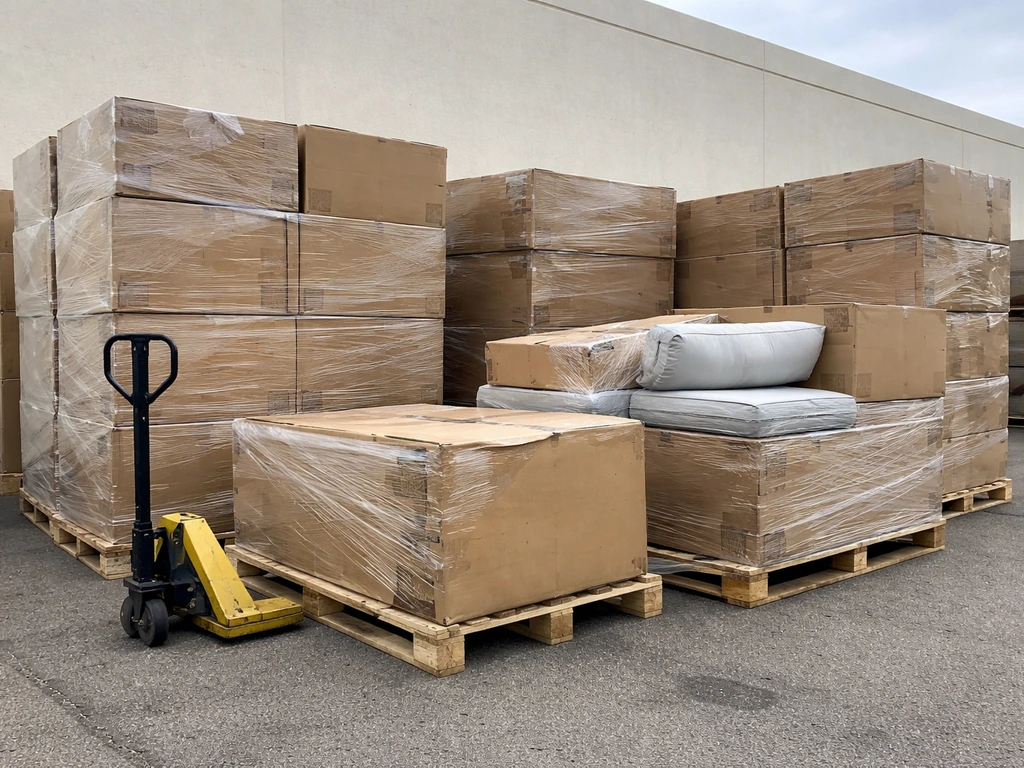
The patio furniture supplies worth buying in 2026 are protective covers made from 2-ply polyester or 420D Oxford fabric with a PU or PVC waterproof lining, replacement cushions filled with quick-dry foam, Sunbrella-grade solution-dyed acrylic fabric protector, and a mild detergent cleaning kit. Skip cheap single-layer covers, foam cushions with no drainage, and any fabric treatment not rated for UV and mildew resistance. Which specific products make sense for you depends on your climate, how often you actually use the patio, and whether your furniture came from a budget retailer like Costway or Temu versus a premium line from Frontgate, Pottery Barn, or West Elm. If you want a more direct starting point, look for patio 1 furniture reviews that match your climate and how often you use your patio.
Patio Furniture Supplies Reviews: Costway to Frontgate Picks

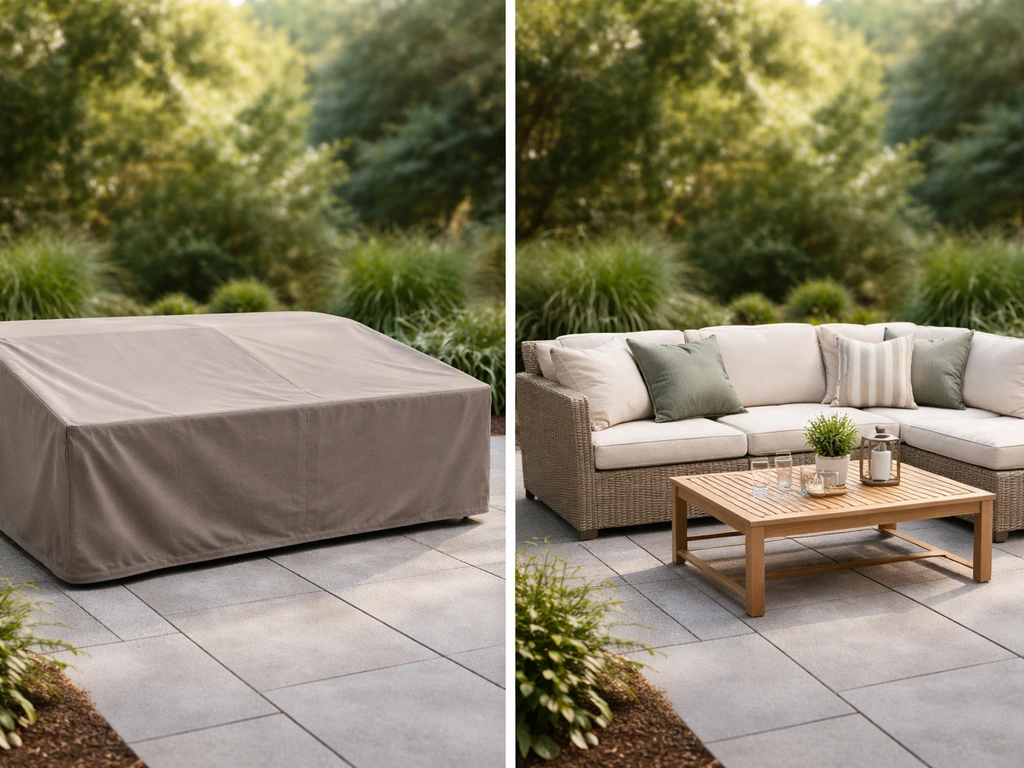
What actually counts as 'patio furniture supplies'
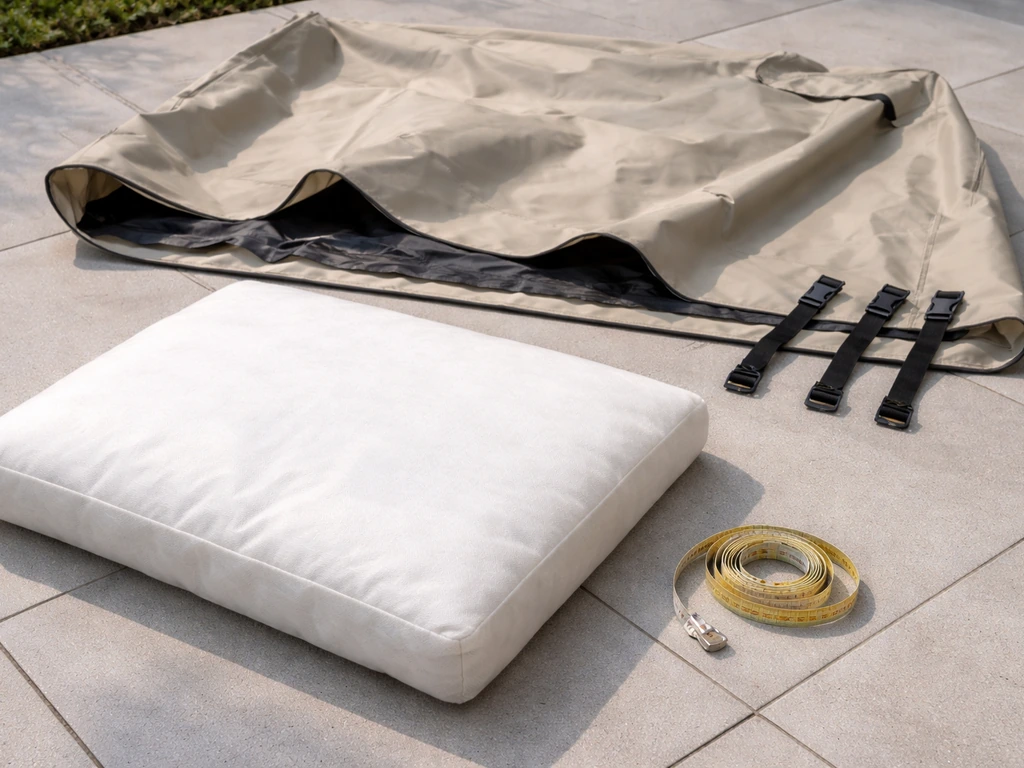
People searching for patio furniture supplies reviews are usually trying to figure out what they need beyond the furniture itself to keep it looking good and lasting longer. Think of supplies as the supporting cast: protective covers, replacement or upgrade cushions, fabric and frame cleaners, fabric protector sprays, and tie-down or windproofing hardware. Some shoppers also include umbrellas, base weights, and furniture glides under this umbrella. All of these have real quality variation between brands and price points, and reviews reveal that variation more honestly than product descriptions ever will.
- Protective furniture covers (shaped or universal fit, waterproof lined)
- Replacement or supplemental outdoor cushions and cushion covers
- Fabric protector sprays (anti-fade, anti-mildew, water-repellent)
- Frame and finish cleaners (metal, resin wicker, teak, powder-coated steel)
- Tie-down straps, windproof buckles, and weighted base accessories
- Umbrella canopies and replacement umbrella covers
- Furniture glides and foot caps to protect decking and prevent rust transfer
Knowing what falls into this category matters because a $600 sectional from Costway can fail in two seasons if the cover you pair it with is garbage, and a $3,000 West Elm dining set can fade badly if you skip fabric treatment. The supplies often determine longevity more than the furniture price tag does.
How to actually use reviews to judge durability and value
Expert reviews and user reviews serve different purposes, and combining them gives you a much clearer picture. Expert reviews tend to focus on materials and construction specs. They'll tell you whether a cover uses single-ply polyester or a true 2-ply construction with a separate waterproof backing, whether a cushion uses solution-dyed acrylic versus a cheaper polyester blend, and whether a fabric protector spray actually bonds to the fiber type you have.
User reviews reveal real-world performance across seasons, shipping damage, whether assembly hardware is adequate, and whether a product's claims hold up after a winter in a wet climate or a summer in full Arizona sun. If you want another adjacent perspective on durability claims, look up patio furniture liquidators reviews and compare the failure modes people report against the specs.
When reading user reviews, filter specifically for reviews posted after the first winter or summer the buyer experienced with the product. First-month reviews are almost useless for durability assessment. Look for language around fading, seam splitting, cover blowing off, cushion flattening, zipper failure, and rust bleed. On sites like Home Depot, where Costway cushions are sold and reviewed, you can sort by lowest rating and read the specific failure modes people describe. That's the most useful thing you can do before spending money on supplies.
One pattern that shows up repeatedly in reviews is confusion between what a product is and what it needs. West Elm buyers, for example, sometimes report frustration that the brand's cleaning guidance focuses almost entirely on removable cushion covers and doesn't give clear direction on the furniture frame itself. That's a signal to proactively source separate frame care products rather than assuming the brand covers everything. Similarly, Temu patio furniture reviews on Reddit frequently surface quality inconsistencies that are hard to predict from a product listing alone, so for Temu purchases especially, user review aggregation is your primary research tool.
Covers, cushions, and protection supplies: what to look for by material
Protective covers
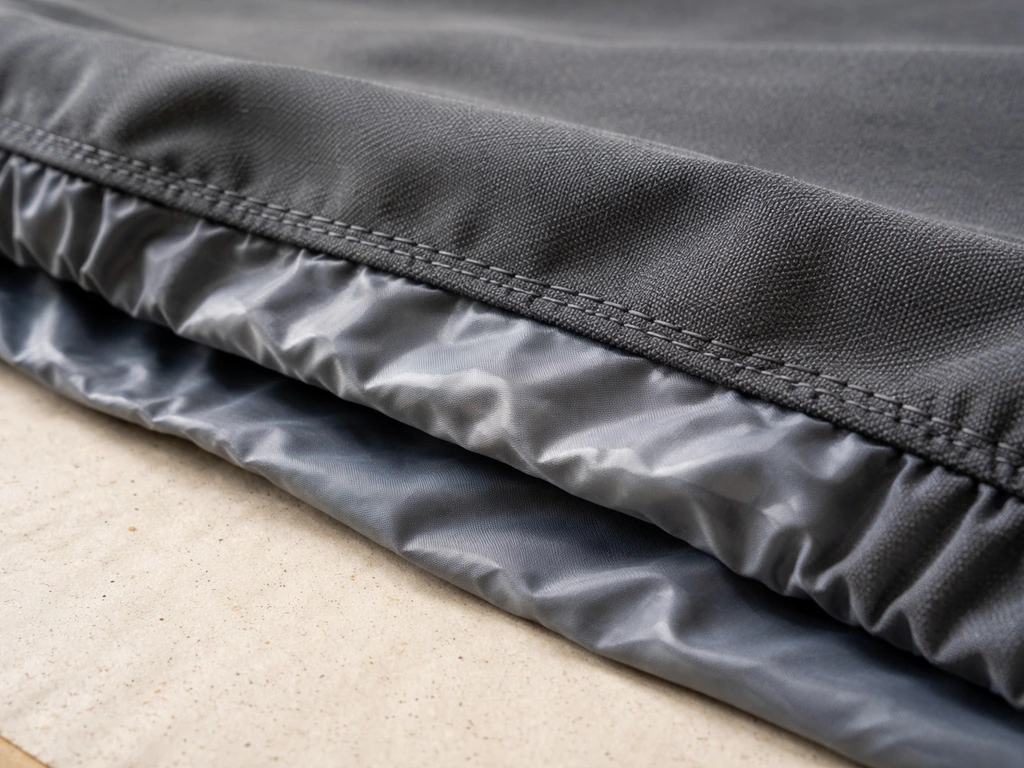
A good outdoor furniture cover needs two things working together: a durable outer layer that handles abrasion and UV, and a waterproof inner lining that stops moisture from soaking through. Frontgate's covers use heavy-duty 2-ply polyester with a second layer of waterproof PVC lining, plus elastic edging, drawstrings, and reinforced ties. That's the construction benchmark to measure everything else against. Budget covers marketed on sites like Best Buy often describe 420D Oxford fabric with a PU coating, double stitching, waterproof tape at seams, windproof buckles, and elastic hem cords. That spec list sounds solid, but PU coatings on budget covers tend to crack and peel after 18 to 24 months of UV exposure, whereas PVC-lined polyester holds up significantly longer.
One detail that's easy to overlook: Frontgate's buying guide specifically recommends sizing your cover so it sits slightly above ground level rather than pooling on the ground, because ground contact draws moisture up into the cover and defeats the waterproofing. That's a genuine tip worth following regardless of which brand cover you buy. Costway's own cover products use polyester with a PU coating and a drawstring bottom closure. They claim 100% waterproof, and in fair-weather climates they hold up reasonably well, but in high-humidity or high-rain environments, PVC-lined covers are worth the extra cost.
Cushions and cushion covers
For cushion fabric, Sunbrella is still the material standard to compare everything against. It's 100% solution-dyed acrylic, meaning the color is bonded into the fiber before weaving rather than applied as a surface dye. That process is what makes it genuinely resistant to fading, water, mold, mildew, and stains. Frontgate describes premium solution-dyed acrylic fabrics as engineered to last up to 10 times longer than conventional fabrics, and Sunbrella backs this with a 5-year limited warranty on upholstery. No budget cushion fabric comes close to that warranty or that construction.
Pottery Barn's Palmetto cushion slipcovers use zippered, machine-washable construction, which is genuinely useful for maintenance. The ability to remove, wash, and replace a cushion cover extends the life of your cushion set significantly and reduces the need for spot-cleaning sprays. Look for this feature at any price point. Frontgate also offers quick-dry cushion fill options with multiple foam layers designed to maintain loft without sagging over time, and they maintain a dedicated replacement cushions section for long-term sourcing. That kind of replacement ecosystem availability is worth factoring into a premium purchase decision.
Fabric protector and cleaning supplies
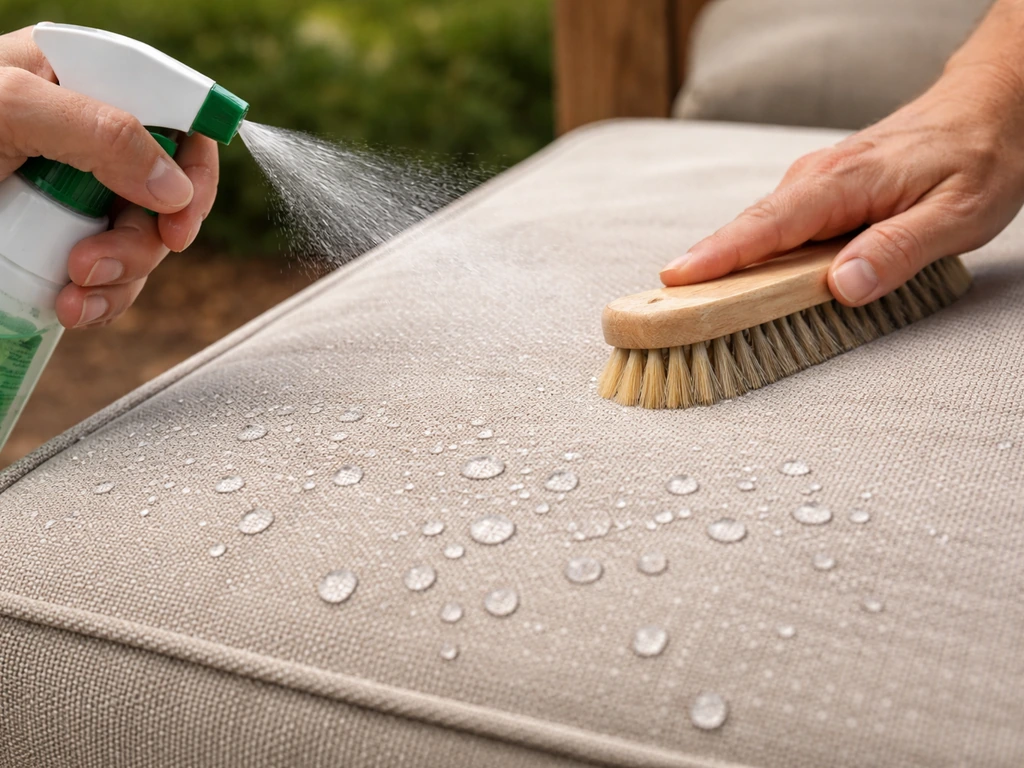
Fabric protector sprays work by making the surface of the fabric water and dirt repellent while also inhibiting mold and mildew growth. The application process matters: apply the protector to a dry, clean fabric surface, saturate it thoroughly, and let it dry completely in a ventilated area before use. Pottery Barn recommends their own Fabric Guard product for their cushion covers. Sunbrella-compatible fabric protectors are widely available and work on most solution-dyed acrylic fabrics.
For cleaning, a soft-bristled brush and mild detergent is the right approach for most covers and cushion fabric. Architectural Digest specifically warns against pressure washing cushion upholstery, as it can tear seams and even eject foam fill. Don't let anyone talk you into pressure washing outdoor cushions.
Frame, fabric, and finish quality: red flags to look for in reviews
Reviews are most useful when they surface failure modes that product listings never mention. Here are the most common red flags to specifically look for when evaluating patio furniture supplies across any brand.
| Red Flag in Reviews | What It Signals | Where It Shows Up Most |
|---|---|---|
| Cover seams splitting after one season | Single-ply construction or inadequate stitching; PU coating failure | Budget covers from Costway, Temu, generic Amazon brands |
| Cushion color fading in under 12 months | Surface-dyed polyester instead of solution-dyed acrylic | Budget cushions across all retailers including Temu |
| Mold/mildew under cover after winter | Poor breathability or cover pooling on ground, trapping moisture | Any brand if cover is oversized or improperly fitted |
| Foam flatness or lumping within a season | Low-density foam without drainage holes or quick-dry fill | Budget to mid-range cushions without quick-dry specs |
| Zipper failure on cushion covers | Low-quality zipper hardware, usually on non-branded covers | Budget lines; also reported on some mid-range products |
| Rust bleed staining the deck or cushions | Inadequate powder coating on steel frames, no frame caps | Budget steel-frame furniture from Temu and Costway |
| Cover blowing off in moderate wind | No reinforced ties, no windproof buckles, no elastic edging | Flat covers without tie-down systems, any price tier |
Frame finish quality is especially important because it affects what cleaning products you can safely use. Powder-coated aluminum frames can be wiped down with mild soap and water. Untreated steel frames from budget lines need additional rust inhibitor treatment, which is a recurring extra cost and effort. Teak and eucalyptus frames need teak oil or similar wood conditioner applied annually. Knowing your frame material before you shop for cleaning supplies saves you from buying the wrong product.
Budget vs premium: how Costway and Temu compare to West Elm, Pottery Barn, and Frontgate
The honest answer is that budget and premium supplies serve different needs and carry different real-world risk profiles. Here's how they stack up across the key supply categories.
| Supply Category | Budget (Costway/Temu) | Premium (West Elm/Pottery Barn/Frontgate) |
|---|---|---|
| Protective covers | Polyester + PU coating, drawstring closure; adequate in mild climates for 1-2 seasons | 2-ply polyester + PVC lining, reinforced ties and elastic edging; rated for multi-season, high-rain/snow use |
| Cushion fabric | Polyester or olefin blends; surface-dyed; fades faster, lower mildew resistance | Sunbrella or equivalent solution-dyed acrylic; 5-year warranty, high fade/mildew resistance |
| Cushion fill | Single-layer foam; no quick-dry design; flattens faster under heavy use | Multi-layer quick-dry foam; maintains loft; replacement availability through brand |
| Cushion covers | Non-removable or basic zipper; spot clean only | Zippered and machine-washable (Pottery Barn Palmetto); easy maintenance |
| Fabric protector | Generic spray, inconsistent compatibility claims | Brand-matched or Sunbrella-compatible protector; documented application process |
| Frame cleaning | Mild soap and water; budget steel may need extra rust treatment | Clear care codes provided (Frontgate); brand-specific cleaners available |
| Warranty coverage | Limited warranty with broad exclusions (Costway) | Product-specific warranties; Sunbrella 5-year upholstery warranty included on premium cushions |
For someone in a mild climate like coastal California or the Pacific Northwest lowlands who uses their patio seasonally and stores furniture indoors in winter, Costway's cover and cushion offerings are a reasonable value. You're not asking them to survive a Northeast winter outdoors. But if you're in a humid Southern climate, a high-UV desert environment, or a snowy Midwest zone, and you leave furniture outside year-round, the cost difference between a Costway cover and a Frontgate cover is trivial compared to replacing furniture every three years. The same logic applies to cushions. Sunbrella-grade fabric costs more upfront but won't need replacing after one humid season.
It's also worth knowing that some brands reviewed on this site fall between these two extremes. Patio Festival, Anmutig, and similar mid-range brands sometimes use better construction than pure budget lines without hitting premium pricing. If you're researching those specific brands, checking their individual reviews alongside the supply accessories they're sold with gives you a fuller picture of total cost of ownership.
What reviews reveal about maintenance and long-term care
Long-term reviews (12 months and beyond) consistently show that maintenance habits matter more than purchase price for multi-season durability. A few patterns show up clearly across the review landscape.
Covers last longer when they're used on clean, dry furniture. Frontgate explicitly recommends cleaning and drying your furniture before putting a cover on, air drying covers rather than machine drying them, and cleaning covers each season with a soft-bristled brush and mild detergent before storing them. Those steps sound basic, but reviews of covers that failed prematurely almost always involve skipping them. A cover stored while still damp, or placed over furniture with mold already forming on it, will fail in ways that look like a product defect but are actually a maintenance failure.
Cushion longevity is closely tied to how quickly they dry after rain. Reviews of cushions with quick-dry fill and drainage holes consistently report better long-term performance than cushions with sealed foam construction, regardless of the fabric type used. Removing cushion covers for washing rather than spot cleaning is also a significant differentiator. BBQGuys' cleaning guidance reinforces this: removing covers from the fill and letting both dry separately is one of the most effective ways to prevent mold and mildew growth inside the cushion.
For frames, regular dusting with a soft dry cloth is genuinely important and often ignored. Dust and debris that sits on a powder-coated frame in humid conditions accelerates surface corrosion. Frontgate's care documentation specifically calls out regular dry dusting as part of the baseline cleaning routine. If you have teak, eucalyptus, or untreated wood elements, annual oiling is non-negotiable for preventing cracking and gray weathering. None of this is complicated, but reviews make clear that buyers who skip these steps consistently report poor durability outcomes regardless of what they paid.
Your buying checklist and next steps by patio type and climate
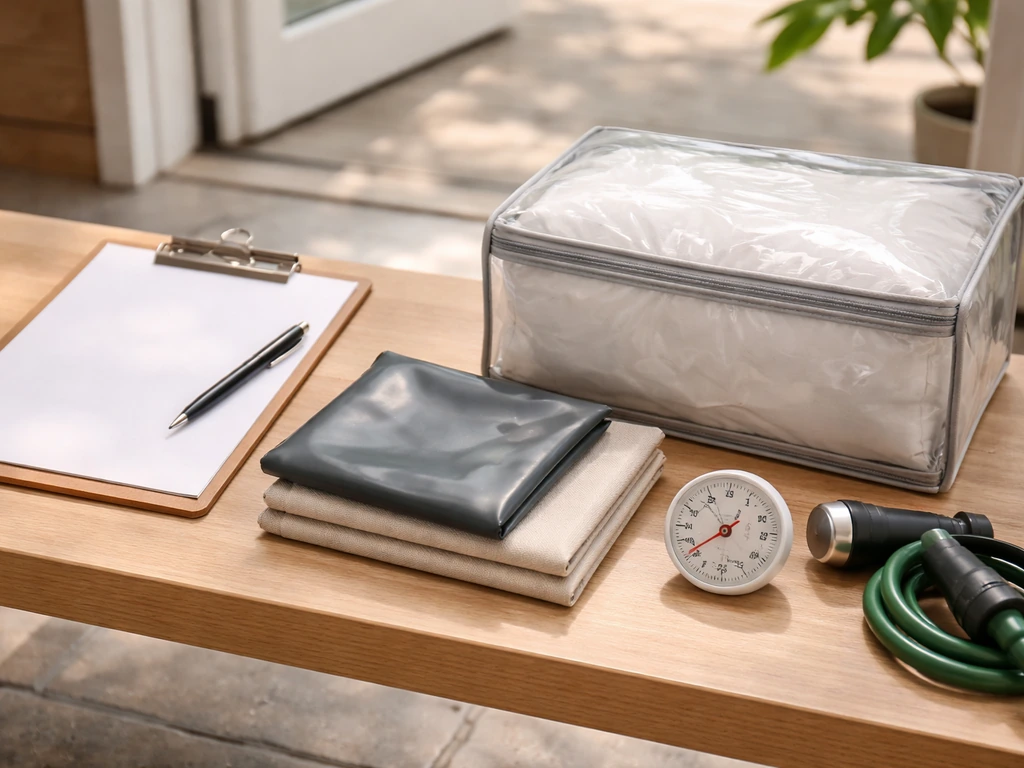
Use this checklist to shortlist supplies before you buy. Match your climate zone and patio situation to the recommendations below.
Pre-purchase checklist for any patio furniture supply
- Confirm the cover material: 2-ply polyester with PVC or PU lining is the minimum; PVC is better for year-round outdoor use in wet climates.
- Check the closure system: reinforced ties, elastic edging, and windproof buckles are essential if you live in a windy region or plan to leave covers on unsupervised.
- Verify cushion fabric type: look for '100% solution-dyed acrylic' in the spec sheet; 'polyester' or 'olefin blend' are signals of a shorter lifespan.
- Confirm cushion cover removability: zippered, machine-washable covers are worth paying extra for, especially in humid climates.
- Check for quick-dry fill: drainage holes and open-cell or quick-dry foam construction matter significantly in rain-heavy regions.
- Read 12-month-plus user reviews specifically: sort by lowest rating and search for keywords like 'fading,' 'mold,' 'seam,' and 'rust.'
- Match your frame type to the right cleaning product: powder-coated aluminum, steel, teak, and resin wicker each need different care.
- Confirm warranty terms: note exclusions; Sunbrella's 5-year upholstery warranty is a meaningful differentiator over unwarrantied budget fabric.
- Check brand replacement availability: Frontgate's replacement cushion ecosystem is a real long-term advantage; budget brands rarely offer this.
Recommendations by climate and use case
| Climate / Use Case | Cover Recommendation | Cushion Recommendation | Key Maintenance Supply |
|---|---|---|---|
| Mild, seasonal use (coastal CA, Pacific NW lowlands) | Costway or 420D Oxford PU-coated cover; adequate for light-duty seasonal protection | Mid-range polyester or olefin cushion with removable cover; replace every 2-3 seasons | Mild detergent spray + soft brush |
| Hot, high-UV (Southwest desert, Florida sun) | Premium PVC-lined 2-ply cover (Frontgate tier); UV degradation destroys budget covers fast | Sunbrella or equivalent solution-dyed acrylic only; light colors fade less visibly | Sunbrella fabric protector spray + UV-rated fabric cleaner |
| Humid, year-round rain (Gulf Coast, Southeast) | PVC-lined cover with elevated fit (not ground-touching); ventilation grommets a plus | Quick-dry foam fill, zippered machine-washable cover; mildew resistance is non-negotiable | Mildew inhibitor spray + regular air-dry routine |
| Cold winters, snow/ice (Midwest, Northeast) | Heaviest-duty PVC-lined cover available; drawstrings and elastic edging to prevent wind lift under snow weight | Store cushions indoors for winter; Sunbrella fabric if left out in shoulder seasons | Dry-dusting routine before covering; rust inhibitor for any steel frame elements |
| High-wind areas (plains, hilltops, rooftop patios) | Any cover with windproof buckles, reinforced tie-down points, and elastic hem; fit is critical | Heavy-weight cushions or cushions with tie-loops attached to furniture frame | Windproof straps or furniture anchors; check tie hardware seasonally |
Your next practical step is to identify your primary climate challenge (UV, moisture, cold, or wind), match it to the supply tier that addresses it honestly, then cross-reference at least 10 user reviews from buyers in a similar climate before purchasing. If you want faster guidance, look up patio furniture rehab reviews to see which recovery methods and products hold up in the real world.
If you're evaluating specific furniture brands alongside their recommended supplies, check the individual brand reviews available on this site for Patio Festival, Anmutig, Patio Kingdom, and others to see how their furniture performs alongside the supplies they're typically paired with. If you’re looking for patio kingdom furniture reviews, compare how the brand’s chairs and cushions perform alongside the covers, cleaners, and protectors they recommend.
After you review brand-specific pages, focus on patio festival furniture reviews that describe real performance during setup, peak use, and breakdown. The furniture and its supplies are a system, and reviewing them together gives you a far more accurate picture of what you're actually buying.
FAQ
How can I tell from reviews whether a patio furniture cover is truly windproof and not just “waterproof”?
Check whether the cover has both a waterproof inner backing and a separate wind-lock design (ties, buckles, or strap system). If the fabric is only “water-resistant” or it uses a single closure, you’re more likely to get seam leaks or bottom wicking in heavy rain or windy storms.
What should I measure so I don’t buy the wrong-size cover for a sectional or dining set?
Do a quick fit test using the furniture footprint plus cushions in their typical summer position. Covers that are only listed by chair count often mismatch on sectionals, because arm height and cushion overhang change how the cover sits and whether it can drain properly.
What’s the most common reason covers fail early even when the material specs look good?
If the cover is damp when stored, most failures show up later as mildew smell, zipper resistance, and delamination of coatings. A practical fix is to store covers in breathable bags or keep them in a dry area, then fully air-dry after storms.
How do I evaluate cushion drainage and dry time from patio furniture supplies reviews?
Look for cushions described as having drainage holes or open channels, and confirm the fabric is solution-dyed or backed for mildew resistance. Reviews that mention long drying times, “soggy weeks later,” or foam clumping are usually pointing to sealed-fill designs.
When are zippered cushion slipcovers worth it, and what failure signals to watch for?
For removable cushion slipcovers, reviews that mention “washable and stays shaped” are a good sign, but still confirm the zipper quality and how the cover fits over the filled cushion. If users report zipper splits or bunching, expect uneven wear and harder re-fitting.
Can I machine wash cushion covers and still keep the cushion insert in good shape?
Yes, but only after you confirm the cushion insert can tolerate it. Many foam inserts degrade faster if they trap moisture. Safer routines are removing the cover for washing and letting the insert dry completely, with airflow and time between rain events.
What’s the correct way to apply fabric protector so it performs like the reviews claim?
Use protector only on clean, fully dry fabric, then apply evenly until it stops soaking and reaches a consistent sheen. If a protector is applied over dirt, reviews often describe rapid water beading loss, uneven dark spots, or faster mold growth.
Why do some reviews say pressure washing outdoor cushions is a bad idea, and what should I do instead?
Avoid it unless the brand explicitly allows it for that fabric and insert type. Pressure washing can force water into seams, separate stitching, and damage foam structures. If reviews mention seam tearing after pressure washing, treat that as a hard stop.
How do I choose the right frame cleaner based on what reviews say about rust and corrosion?
Different frame materials need different cleaners. Reviews that mention rust “coming back” after cleaning often indicate an incompatible cleaner, lack of rust inhibitor follow-up for steel, or leaving cleaner residues that attract moisture.
Do teak and eucalyptus frames actually need yearly oiling, and what failures show up when it’s ignored?
If you have teak or eucalyptus, annual oiling (or whatever conditioner your product recommends) prevents cracking and greying. In reviews, the biggest red flag is “dry splintering” or persistent grey patches, which usually means oiling was skipped or applied incorrectly.
Are all fabric protectors interchangeable across solution-dyed acrylic, polyester blends, and Sunbrella-like fabrics?
Check for compatibility language like “solution-dyed acrylic” and whether the protector is meant for outdoor fabric. If users report water soaking in quickly right after application, it’s often a mismatch between the protector chemistry and the fabric type.
Which review timeframe and keywords should I prioritize if I live in a humid coastal climate?
In coastal or high-humidity regions, rust bleed and mold are common, so reviewers’ comments about “staying damp,” “musty smell,” and “hardware corrosion” matter more than looks in the first month. Filter for reviews from buyers who used the set through at least one wet season.
For Costway or Temu-style purchases, how can I judge long-term replacement availability from reviews?
If you buy from a budget retailer, confirm whether replacement cushion covers or whole replacement cushions are available through the brand, not just generic replacements. Reviews that mention “no way to source replacements” translate into longer downtime and higher total cost.
Patio Furniture Liquidators Reviews: How to Decide Wisely
Learn how to judge patio furniture liquidators reviews for shipping, damage, returns, warranty, and long-term durability