Title: Patio 1 Furniture Reviews: Top Picks, Brand Comparisons & Buying Guide (2026)
Patio 1 Furniture Reviews: Top Picks, Budget to Premium

Holly Dawson
11 Aug 2026
Meta description: Unbiased patio 1 furniture reviews plus comparisons of Anmutig, Patio Kingdom, and Patio Furniture Liquidators, with ratings, price ranges, and buying tips.
If you're searching for honest patio 1 furniture reviews, the core truth is this: Patio 1 sits in the mid-range segment where build quality is genuinely decent for the price but varies noticeably by product line. Across the broader landscape of outdoor furniture brands and retailers covered here, from Anmutig and Patio Kingdom to liquidator channels and rehab suppliers, your best outcome depends less on brand loyalty and more on matching the right materials to your climate, getting the warranty terms in writing, and knowing what red flags to look for before you hand over your credit card.
Quick Top Picks
| Category | Top Pick | Why It Wins | Approx. Price Range |
|---|---|---|---|
| Overall Best | Patio Kingdom Livli™ Rope Sofa Set | Rope-woven construction ages well, modern silhouette, solid return policy | $800–$1,400 |
| Best Budget | Anmutig 35" Square Dining Table + Chairs | Affordable entry price, respectable powder-coat finish, ships direct | $250–$450 |
| Best Premium | West Elm / Pottery Barn Teak Sets | FSC-certified teak, proven 15+ year lifespan, strong warranty | $1,800–$4,500+ |
| Best Small-Space | Anmutig Convertible Sofa Bistro Set | Compact footprint, converts from sofa to table configuration | $300–$550 |
| Best for Cushions | Patio Kingdom Perli™ HDPE Set | Pairs well with Sunbrella-grade cushions; HDPE frame won't rust under cushion contact points | $600–$1,100 |
| Best Value | Patio 1 Aluminum Conversation Set | Reasonable powder-coat thickness, includes cushions, good value per seat | $400–$750 |
How to Use This Guide
This guide is written for homeowners who are ready to spend real money on outdoor furniture and want to avoid the most common traps: buying something that rusts by summer's end, paying a 30% restocking fee on a return, or discovering that 'assembly required' means three hours on your knees with a stripped Allen wrench. Whether your budget is $200 or $4,000, the framework here applies the same way.
Each brand section gives you a reputation snapshot, what real customers and our hands-on assessment found, pros and cons, and representative price ranges as of mid-2026. The comparison table lets you line up options side by side. The buyer's checklist near the end gives you a portable reference you can actually use while shopping. If you're specifically researching one category, liquidators, refurbished pieces, replacement parts, or seasonal collections, jump to that section directly, because those channels involve meaningfully different risks and tradeoffs than buying new from a brand.
What We Evaluated: Testing and Rating Factors
Our ratings draw on a combination of hands-on assessment, aggregated verified-purchase reviews from Amazon and Trustpilot, and established industry testing benchmarks. Consumer Reports' blank" rel="noopener noreferrer">Product Testing and Research - Consumer Reports explains they buy products anonymously, combine lab performance testing with large-scale consumer surveys, and document testing procedures to produce evidence-based ratings. We reference standard protocols including ASTM B117 (salt spray corrosion resistance for metal frames and powder coatings), ASTM G154 (UV weathering for fabrics, plastics, and topcoats), ASTM D610 (rust evaluation per BIFMA outdoor furniture guidelines), and EN 581-2 (mechanical strength and stability for seating). We also consult Consumer Reports' lab-and-survey methodology and Good Housekeeping Institute's Home Improvement and Outdoor Lab findings where those assessments overlap with brands covered here.
Specifically, here is what each rating factor means in plain terms:
- Durability: Frame and joint integrity after simulated multi-season exposure; how welds, rivets, and connection hardware hold up over time.
- Materials: Frame material (teak, aluminum, steel, HDPE), fabric grade (solution-dyed acrylic vs. polyester vs. basic olefin), and hardware quality (stainless vs. galvanized vs. zinc).
- Construction: Weld quality on metal frames, thickness of aluminum extrusions (16-gauge and above is preferable), resin wicker tightness, and joinery on wood pieces.
- Comfort: Seat depth, cushion density (look for 2.5 lb per cubic foot minimum for long-term shape retention), back angle, and armrest height.
- Weather resistance: Coating durability under UV and moisture exposure, drainage design on seats, rust performance on any ferrous hardware.
- Warranty: Length, what is actually covered (frame vs. fabric vs. cushion), and how straightforward the claims process is.
- Delivery and returns: Estimated lead times, packaging quality, assembly complexity, restocking fee policies, and whether return shipping is covered for defects.
Patio 1 Furniture: What You're Actually Getting
Reputation and Typical Quality
Patio 1 operates as a mid-market outdoor furniture brand most visible through regional retailers and online marketplace listings. Its reputation is solidly average, not the cheapest option on the market and not the most premium, but a reasonable middle ground for buyers who want something that looks put-together without committing to a four-figure price tag. Customer feedback is mixed but not alarming: most positive reviews praise the visual appeal and initial build feel, while negative reviews cluster around cushion quality degrading faster than expected and occasional frame finishing issues on steel components.
Pros and Cons
| Pros | Cons |
|---|---|
| Competitive price-to-feature ratio in the $400–$750 range | Cushion foam density is often below the 2.5 lb/cu ft benchmark |
| Aluminum frame options resist rust well in humid climates | Steel-frame models show surface oxidation after 2–3 seasons without covers |
| Wide range of set configurations (conversation, dining, sectional) | Warranty terms can be vague; coverage window typically 1 year |
| Assembly instructions are generally clear and complete | Delivery packaging damage reported by a small but consistent percentage of buyers |
| Neutral design aesthetic works across most outdoor spaces | Replacement cushions are not always easy to source directly from the brand |
Representative Price Ranges
- Two-seat bistro sets: $180–$320
- 4-piece conversation sets (2 chairs, loveseat, table): $400–$650
- 6-piece dining sets: $550–$900
- Sectional sets (5–7 piece): $700–$1,200
Anmutig Patio Furniture: Build, Design, and Real-World Performance
What Anmutig Is
Anmutig is a direct-to-consumer outdoor furniture brand selling through its own website (anmutig-us.com) and third-party platforms. Its catalog includes a 35-inch square patio dining table, a 37-inch square glass-top dining table, and convertible sofa configurations that shift from seating to dining setups. For more detailed analysis and model-specific feedback, see our Anmutig patio furniture reviews. The brand targets buyers who want contemporary styling at accessible price points, and the direct-ship model keeps costs lower than traditional retail markups.
Build and Design
Anmutig frames are powder-coated steel or aluminum depending on the product line. The glass-top dining tables use tempered glass, which is the correct choice for outdoor use, but the frame-to-glass fitment and edge-sealing quality varies. The convertible sofa pieces are modular by design, which means the connection points get more wear over time than a fixed-frame sofa, check those joints after the first full season. The visual design language is clean and contemporary: thin-profile frames, neutral colorways, and simple silhouettes that will fit most modern or transitional outdoor spaces.
Shipping and Returns: The Details Matter
Anmutig's published shipping policy is specific: orders take 2 to 4 business days to process before shipment, with an overall processing window of 4 to 7 business days. They do not ship to P.O. boxes, and buyers in U.S. territories should confirm availability before ordering. The return window is 30 days from the order date for purchases made on anmutig-us.com. Importantly, return shipping costs are deducted from your refund for non-defective returns, only defective or damaged items qualify for a prepaid return label. That means if you simply decide the piece doesn't fit your space, you're absorbing outbound shipping costs.
Pros and Cons
| Pros | Cons |
|---|---|
| Competitive pricing for direct-to-consumer brand ($250–$550 range) | 30-day return window is tighter than industry-standard 60 days |
| Contemporary design stands out against generic big-box alternatives | Return shipping is buyer's cost on non-defective items |
| Tempered glass top on dining models is the correct outdoor material choice | Convertible sofa joint durability is unclear beyond first season |
| Direct website ordering gives more product transparency than marketplace listings | No P.O. box delivery; U.S. territory restrictions apply |
| Modular configurations allow flexible space planning | Customer service responsiveness is inconsistent based on aggregated reviews |
Representative Price Ranges
- 35" square dining table (table only): $150–$220
- 37" square glass dining table (table only): $200–$280
- Convertible sofa bistro set: $300–$550
- Complete dining sets (table + 4 chairs): $380–$620
Patio Kingdom: Range, Strengths, and Where It Falls Short
What Patio Kingdom Offers
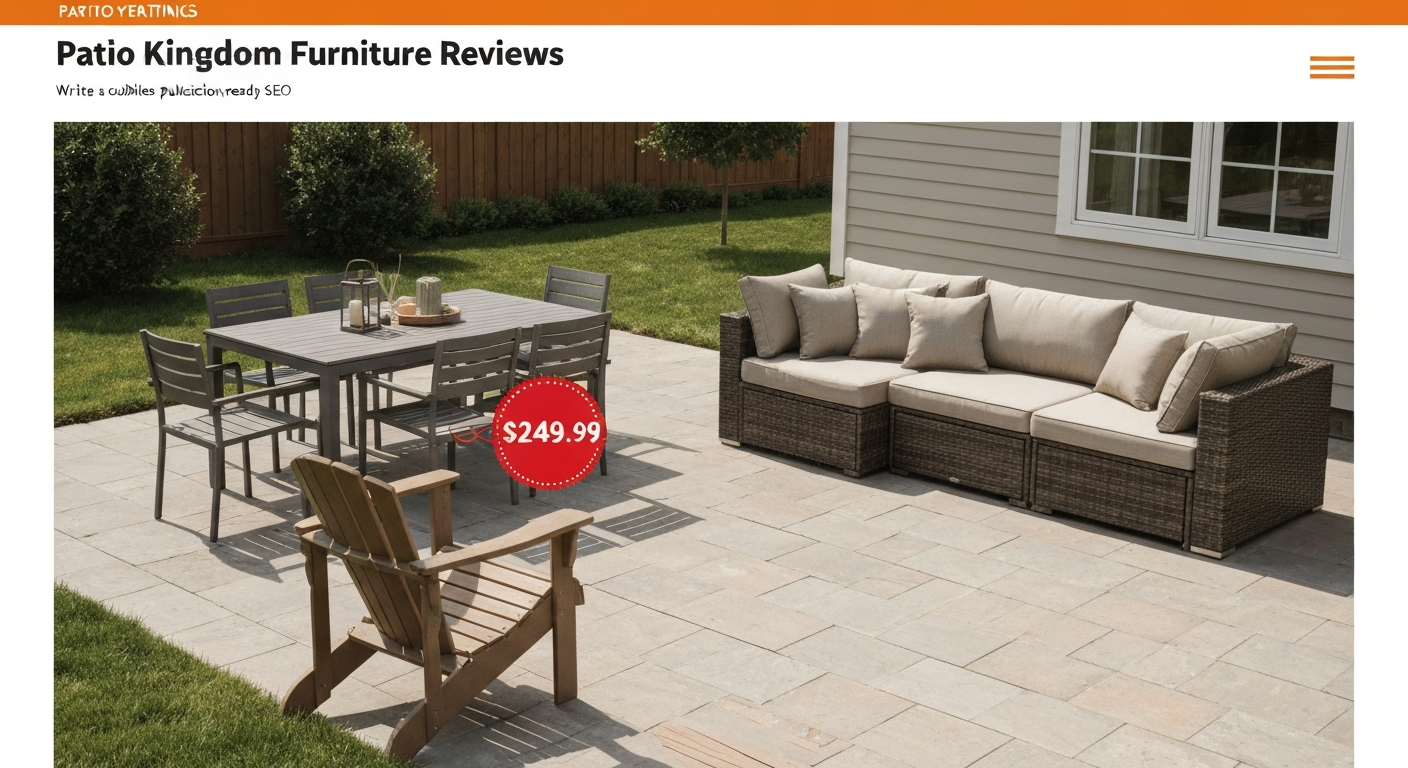
Patio Kingdom (patiokingdom. For full Patio Kingdom furniture reviews, see our dedicated Patio Kingdom furniture reviews page for detailed ratings, pros and cons, and representative pricing. com) has built a more differentiated catalog than most mid-market competitors, with three distinct product families worth knowing: Perli HDPE sets, Livli rope-woven sofas, and cantilever umbrellas. HDPE (high-density polyethylene) lumber is genuinely weather-resistant, it will not rot, splinter, or need annual sealing the way wood does, and it's the right material choice for humid climates or buyers who want low-maintenance longevity. The Livli rope-woven sofa line uses wrapped cord over aluminum frames, which gives a premium look without the premium price of comparable pieces from Restoration Hardware or Pottery Barn.
Return Policy: Read This Before You Order
Patio Kingdom's published return policy includes several terms that buyers frequently encounter only after they've already made a purchase. Returns are eligible within 30 days, but the customer pays return shipping on non-defective items, and a 30% restocking fee may apply to opened items. That 30% figure is aggressive, on a $1,000 sofa set, that's $300 lost on a change-of-mind return. For defective items or transit damage, the company covers return shipping, but photo evidence may be required. Trustpilot reviews for Patio Kingdom flag delivery delays and return friction as recurring themes, so document your order and unboxing carefully.
Pros and Cons
| Pros | Cons |
|---|---|
| HDPE lumber on Perli line: no rot, no splinter, no sealing needed | 30% restocking fee on opened items is one of the highest in this category |
| Rope-woven Livli sofa line looks high-end for the price | Delivery delays flagged consistently in Trustpilot reviews |
| Aluminum cantilever umbrellas pair well with the sofa lines | Return shipping cost falls on buyer for non-defective returns |
| Genuinely differentiated product lineup vs. generic mid-market options | Photo documentation required for defect/damage claims — adds friction |
| Good for humid climates where HDPE outlasts powder-coated steel | 30-day return window leaves little time to assess seasonal performance |
Representative Price Ranges
- Perli HDPE dining sets (4-6 piece): $600–$1,100
- Livli rope-woven sofa sets (3-5 piece): $800–$1,400
- Cantilever umbrellas: $180–$380
- Individual HDPE chairs: $120–$220 each
Patio Furniture Liquidators: What to Expect and What to Watch For
How Liquidator Inventory Works
Patio Furniture Liquidators operates regionally, the most established presence is in the Dallas-Fort Worth area, and sources inventory from store closeouts, manufacturer overstock, returned merchandise, and discontinued lines. See our patio furniture liquidators reviews for full store-by-store assessments and customer feedback. The appeal is obvious: you can sometimes find pieces from recognizable brands at 30 to 60 percent below original retail. The risk is equally real: liquidator stock is not standardized. One pallet might contain pristine open-box merchandise; the next might contain customer returns with missing hardware, faded cushions, or pre-existing frame damage that wasn't disclosed.
Evaluating Reliability: Use the BBB and Verify Before You Commit
Patio Furniture Liquidators of Dallas has a BBB business profile, and checking that profile before buying is not optional, it's the starting point for evaluating any liquidator's reliability. Look at the complaint history, resolution rate, and any patterns in how disputes were handled. Liquidators typically have limited or no return windows on final-sale items, which means your only real protection is inspecting in person before purchase or getting written item-condition disclosure on any delivery order. Never buy from a liquidator sight-unseen if you can avoid it.
Pros and Cons
| Pros | Cons |
|---|---|
| Deep discounts possible: 30–60% below original retail on known brands | Inventory is inconsistent; condition varies widely between lots |
| Opportunity to find premium-brand pieces (e.g., Brown Jordan, Tropitone) at budget prices | Many items sold as-is with no return or warranty coverage |
| In-person inspection possible at regional locations | Online/delivery orders carry significant undisclosed-condition risk |
| Good source for replacing single pieces lost to damage from a set | Restocking fees or no-return policies are common |
| Seasonal clearance pricing can be excellent (especially late summer) | Delivery and customer service infrastructure is typically limited vs. full retailers |
Typical Price Ranges and Risks to Watch For
Liquidator pricing fluctuates with inventory, but rough benchmarks help: expect 4-piece conversation sets from known brands at $200 to $500 (original retail $600 to $1,200), and individual chairs from premium brands at $80 to $200. The risks to watch for specifically include missing hardware (always ask for a complete hardware inventory before buying), faded or stained cushions sold alongside frames as 'sets,' frame rust on steel pieces stored outdoors before sale, and mismatched cushion sizes if components were mixed between lots. If you're open to the liquidator channel, compare it against eBay's Yard, Garden and Outdoor Living category, which lists hundreds of thousands of used and overstock items, to benchmark prices and spot deals that are genuinely below market versus those that have been inflated back up.
Full Comparison: Recommended Sets and Pieces Across Price Tiers
| Brand / Source | Product Type | Frame Material | Price Range | Weather Resistance | Warranty | Return Policy |
|---|---|---|---|---|---|---|
| Patio 1 | 4-pc Conversation Set | Aluminum / Steel | $400–$750 | Good (aluminum lines) / Fair (steel lines) | ~1 year | Varies by retailer |
| Anmutig | Square Dining Set | Powder-coated Steel | $380–$620 | Fair to Good | Limited | 30 days; buyer pays return ship |
| Patio Kingdom (Perli) | HDPE Dining Set | HDPE + Aluminum | $600–$1,100 | Excellent | Manufacturer warranty | 30 days; 30% restock on opened |
| Patio Kingdom (Livli) | Rope Sofa Set | Rope + Aluminum | $800–$1,400 | Very Good | Manufacturer warranty | 30 days; 30% restock on opened |
| Patio Furniture Liquidators | Mixed brand closeouts | Varies | $200–$500 (discounted) | Varies by source brand | As-is / None typical | Final sale typical |
| Premium (West Elm / PB / Frontgate) | Teak / Aluminum Sets | FSC Teak / Cast Aluminum | $1,800–$4,500+ | Excellent | 3–5 year frames | 30–60 days; often free returns |
| Budget (Costway / Temu) | Lightweight Sets | Steel / Thin Aluminum | $100–$300 | Fair | 90 days typical | Varies; check platform policy |
Buyer's Checklist: Materials, Cushions, Assembly, and Long-Term Care
Choosing the Right Frame Material for Your Climate
The frame material decision is the single most important call you make, and it should be driven by where you live and how much maintenance you're willing to do. Here's the practical breakdown:
| Material | Best Climate | Maintenance Level | Lifespan (with care) | Watch Out For |
|---|---|---|---|---|
| Teak | Any; especially coastal/humid | Low (oil occasionally) | 15–25+ years | High upfront cost; sourcing ethics (look for FSC certification) |
| Aluminum (cast or extruded) | Any climate | Very low | 10–20 years | Thin-gauge extrusions dent easily; check wall thickness |
| Steel (powder-coated) | Dry/low-humidity climates | Medium (cover when not in use) | 5–12 years | Rust at chips and welds; check coating thickness |
| HDPE Lumber | Humid, coastal, rainy | Very low | 15–20+ years | Heavier than wood; limited stain color options |
| Resin Wicker (PE) | Any; avoid direct UV+heat in desert climates | Low | 5–10 years | Cheap wicker cracks; look for 6mm+ round resin strand |
Cushions: What Actually Determines Long-Term Comfort
Cushions are where mid-market brands cut corners most visibly. The fabric spec matters: solution-dyed acrylic (the standard behind Sunbrella and equivalent brands from Phifer and Twitchell, which are also used by patio furniture supplies and rehab specialists) resists UV fading and mildew at a meaningful level above basic polyester. The foam density is equally important, you want at least 2.5 pounds per cubic foot for chair cushions that will hold their shape after a full season. Most budget cushions use 1.5 to 1.8 lb foam, which compresses permanently within one to two years. If the brand doesn't publish foam density, that's a yellow flag.
Assembly: What to Expect Before the Box Arrives
- Most mid-market sets (Patio 1, Anmutig, Patio Kingdom) require 45–90 minutes of assembly for a 4-piece set with basic hand tools.
- Check whether the hardware bag includes a spare bolt kit — missing hardware on delivery is one of the most common complaints across all price tiers.
- For heavy sets (HDPE dining sets, cast aluminum sectionals), plan for two-person assembly; frames are not manageable solo.
- Photograph every component immediately after unboxing, before assembly — this is your protection if you need to file a damage or defect claim.
- Leveling adjustable feet are worth checking for on dining sets; uneven patios will stress frame joints if the set can't self-level.
Covers and Seasonal Maintenance
A fitted outdoor furniture cover extends the lifespan of any set regardless of price tier, this is the single highest-ROI maintenance step you can take. Cover grade matters: look for 600D polyester or higher with a UV-inhibitor coating and a vented hem to prevent moisture buildup underneath. For aluminum and HDPE frames, an annual wipe-down with a mild soap solution is sufficient. Steel frames should be inspected for chips in the powder coat at the start of each season; touch those up with matching outdoor paint before rust initiates. Teak benefits from a light teak oil application once per year, though many owners prefer the silver-gray weathered look and skip the oil entirely. Cushions should be stored indoors or in a deck box during winter in climates with freezing temperatures.
Spotting Low-Quality Listings and Understanding the Liquidator vs. Rehab Difference
Red Flags in Online Listings
Whether you're shopping Amazon, eBay, or a brand's direct site, a few signals consistently point to low-quality or misrepresented products. Unverified reviews without Amazon's Verified Purchase badge carry less evidential weight than verified ones, Amazon's own documentation distinguishes these, and a product with thousands of unverified five-star reviews and very few verified ones deserves skepticism. On marketplace listings, watch for stock photos used in place of actual product photos, vague material descriptions ('metal frame' without specifying steel or aluminum), and cushion fabric listed only as 'polyester' without any further specification.
- No gauge or wall-thickness specification on metal frames (look for '16-gauge' or similar).
- Cushion fabric described only as 'polyester' or 'fabric' with no UV or mildew resistance claim.
- Weight listed as unusually low for the piece category — light weight in aluminum sets is fine, but a 'steel' dining chair under 8 lbs is likely very thin-gauge.
- Warranty section missing entirely from the product page.
- Return policy hidden or linked to a generic platform policy rather than a brand-specific one.
- Assembly time claims under 15 minutes for a multi-piece set — this is almost always unrealistic and suggests instructions are vague.
Liquidators vs. Rehab Suppliers: Two Very Different Channels
Patio Furniture Liquidators and Patio Furniture Supplies represent opposite ends of the secondary market. Liquidators move closeout and overstock merchandise as-is: you're getting the original product at a discount, but with no standardization of condition and typically no return rights. Rehab suppliers like Patio Furniture Supplies (patiofurnituresupplies.com) do something different: they provide replacement parts and refinishing services, replacement slings, vinyl straps, Sunbrella fabrics, and powder-coat refinishing, for premium brands including Brown Jordan, Tropitone, Lloyd Flanders, Woodard, and Winston. If you already own quality frames from one of those brands and the cushions or slings have worn out, a rehab supplier can restore the set for significantly less than full replacement. That's a genuinely valuable option that most buyers don't know exists. The two channels serve different needs, and it's worth understanding the difference before assuming 'cheaper than new' means 'good deal.'
Warranty, Delivery, and Return Considerations Across Channels
Warranty terms across the brands reviewed here range from essentially nothing (liquidator as-is sales) to multi-year frame coverage from premium brands. For mid-market brands like Patio 1, Anmutig, and Patio Kingdom, the typical warranty covers manufacturing defects in the frame for one year, with cushions and fabric often excluded or covered for 90 days only. The practical implication: if frame corrosion, weld failure, or joint separation happens after year one, you're paying out of pocket. For premium brands in the $2,000-plus range, three-to-five year frame warranties are standard and enforcement is typically more straightforward.
Delivery timing and packaging quality are underrated purchase factors. Anmutig's stated 4 to 7 business day processing window, combined with standard carrier transit time, means budget two weeks from order to delivery for most locations. Patio Kingdom's Trustpilot reviews flag delivery delays as a recurring issue, if you're furnishing for a specific event or the start of patio season, order at least four weeks ahead. For any large set delivered by freight carrier (rather than standard parcel), inspect the outer packaging before signing the delivery receipt. Note any visible damage on the receipt itself, and photograph everything before signing. This is your primary protection for transit damage claims regardless of brand or retailer.
Patio Festival and Seasonal Collections: What Changes, What Doesn't
Patio festival and seasonal collections, the lines that retailers refresh annually with new colorways, limited-edition fabric patterns, and updated silhouettes, use the same underlying frames and construction quality as the permanent catalog. For a broader set of comparisons and user ratings on seasonal pieces, see our patio festival furniture reviews for targeted guidance. The meaningful difference is that seasonal SKUs are retired after one cycle, which means replacement cushions, slings, or parts may become unavailable within two to three years. If you're buying a festival or seasonal piece because you love the specific fabric or color, buy a spare set of cushions at the same time. Otherwise, you may find yourself three years in with a solid frame and no way to replace the worn fabric at the original spec.
Final Buying Recommendations
Here's the condensed version of everything above, organized by situation:
- If you want the safest mid-range buy with minimal maintenance: Patio Kingdom's Perli HDPE line or Livli rope sofa sets. HDPE and aluminum together give you the best durability-to-maintenance ratio in the $600–$1,400 range. Read the return policy carefully before ordering.
- If you're on a tight budget and need to furnish quickly: Anmutig's dining sets or Patio 1 aluminum conversation sets give you the best value under $600. Accept that cushions may need replacing in two to three years and price that into your decision.
- If you want to invest once and never deal with it again: FSC-certified teak sets from West Elm, Pottery Barn, or Frontgate. The upfront cost is real, but a well-maintained teak set lasts 20-plus years and the resale value holds better than any other outdoor material.
- If you're considering liquidator purchases: Go in person when possible, inspect condition before paying, check the BBB profile of the specific location, and never buy sight-unseen from a liquidator without a written condition description and return option.
- If you own premium frames that need new fabric: Contact a rehab supplier before buying a full replacement set. Patio Furniture Supplies and similar operators can re-sling or re-cushion most major brand frames at a fraction of full-set replacement cost.
- If you're buying for a small space: Anmutig's convertible bistro sets are the most space-flexible option in the budget-to-mid range. Measure your space before ordering and confirm the assembled dimensions against the product spec sheet, not just the product photo.
For deeper dives into any of these channels, the related coverage on this site walks through patio furniture liquidators, patio furniture supplies and rehab services, Anmutig's full product range, and Patio Kingdom in more detail, each with updated pricing and user feedback. For insights on restoring used or damaged sets, see our patio furniture rehab reviews for hands-on evaluations of repair services, parts availability, and cost-versus-replace analysis. The broader patio furniture review coverage also spans budget marketplace brands and premium tier comparisons for buyers working at either end of the price spectrum.
FAQ
What high-level categories of information must be collected to produce an accurate, buyer-focused review and comparison article for “patio 1 furniture reviews” and related retailer/brand queries?
Collect: product metadata (model names, SKUs, MSRP, current street prices); material and construction details (frame metal type, finish, weave type, wood species, fastener types, weld quality); dimensional and weight specs; advertised weather ratings and warranties; retailer policies (returns, shipping, restocking, lead times); representative real-world pricing (new, refurb, used) across marketplaces; lab and field test results (durability, corrosion, UV, fabric performance); aggregated user reviews and verified-purchase signals; customer-service interactions and resolution records; delivery and damage incidence rates; assembly complexity and tools required; and high-quality photos and videos documenting condition, finishes and failure modes.
Which authoritative testing standards, labs and industry references should be used to validate material and durability claims?
Use established standards and labs: ASTM B117 (salt spray) for corrosion/resistance; ASTM G154 for accelerated UV/weathering of nonmetals and fabrics; EN 581 (mechanical safety/test methods for outdoor seating) for strength/stability; BIFMA’s Outdoor Furniture Whitepaper for test guidance and visual-evaluation protocols; Intertek/NRTL/third-party lab mechanical test methods for fatigue, strength and joint/weld testing; and Consumer Reports and Good Housekeeping Institute methodologies as models for combining lab and user-feedback testing. Cite specific test parameters and lab reports when available.
What hands-on and lab tests should reviewers perform or aggregate to assess durability and comfort?
Perform/aggregate: mechanical fatigue/cycle loading on seats and tabletops (EN/ASTM-based protocols); static load and tipping/stability tests; salt-spray/coating adhesion and rust-spot mapping per ASTM B117; accelerated-UV/colorfastness tests per ASTM G154; fabric abrasion (Martindale/Toronto) and water repellency tests; cushion compression/recovery and foam density measurement; seam and sling pull-through tests; hardware corrosion checks (fasteners, hinges); drainage/water pooling assessments; outdoor soak/rain tests where possible; measured assembly time and parts accuracy; and multi-week outdoor exposure for real-use comfort and color-fade observations.
How should reviewers source expert and user feedback to support claims and detect patterns?
Aggregate: Consumer Reports and Good Housekeeping Institute lab findings; industry whitepapers (BIFMA); third-party lab certificates (Intertek/UL); retailer documentation (warranties, materials spec sheets); Trustpilot, BBB, Google Reviews, Yelp and platform-specific verified-purchase reviews (Amazon/eBay) for customer experience patterns; forum threads and Reddit for long-term user anecdotes; local resale marketplaces (Craigslist, Facebook Marketplace, OfferUp) for used-condition pricing and common failure modes; and direct interviews/emails with manufacturer/retailer support for policy clarifications. Record sample sizes, timeframe, and common themes (delivery damage, cushions, warranty denials).
What sampling and statistical practices ensure representative and defensible conclusions across brands/retailers?
Use stratified sampling across price tiers (budget, midrange, premium), product types (sets, single loungers, umbrellas), and sources (new, liquidator, rehab/refurbished). Ensure minimum sample sizes per stratum (e.g., 10–30 user reviews or N lab tests where feasible) and report confidence inferences or observed frequencies (e.g., % of complaints about broken welds). Timestamp data snapshots (prices and review counts). Where lab testing is not possible, disclose reliance on aggregated credible sources and note limitations.
What retailer- and brand-specific data should be collected (Anmutig, Patio Kingdom, Patio Furniture Liquidators, Patio Furniture Supplies, festival/seasonal lines, rehab/refurbished sellers)?
Collect each seller’s: product catalog examples and representative price ranges; published shipping and processing lead times; return/refund and restocking fee policies; warranty terms and claim procedures; customer-service responsiveness metrics (response time, escalation patterns from reviews); typical packaging and freight method (LTL, parcel, white-glove); common complaint themes from BBB/Trustpilot/Google Reviews; photos of actual shipped product condition from customers; and any unique offerings (refurbishing services, OEM replacement slings, season-sale practices). For rehab/refurbished sellers record grading criteria, parts replaced, and whether original warranty transfers.
Next Article
Patio Kingdom Furniture Reviews: Complete Buyer’s Guide 2026
Patio Kingdom furniture reviews: unbiased buyer guide with ratings, pros/cons, comparisons, maintenance tips.